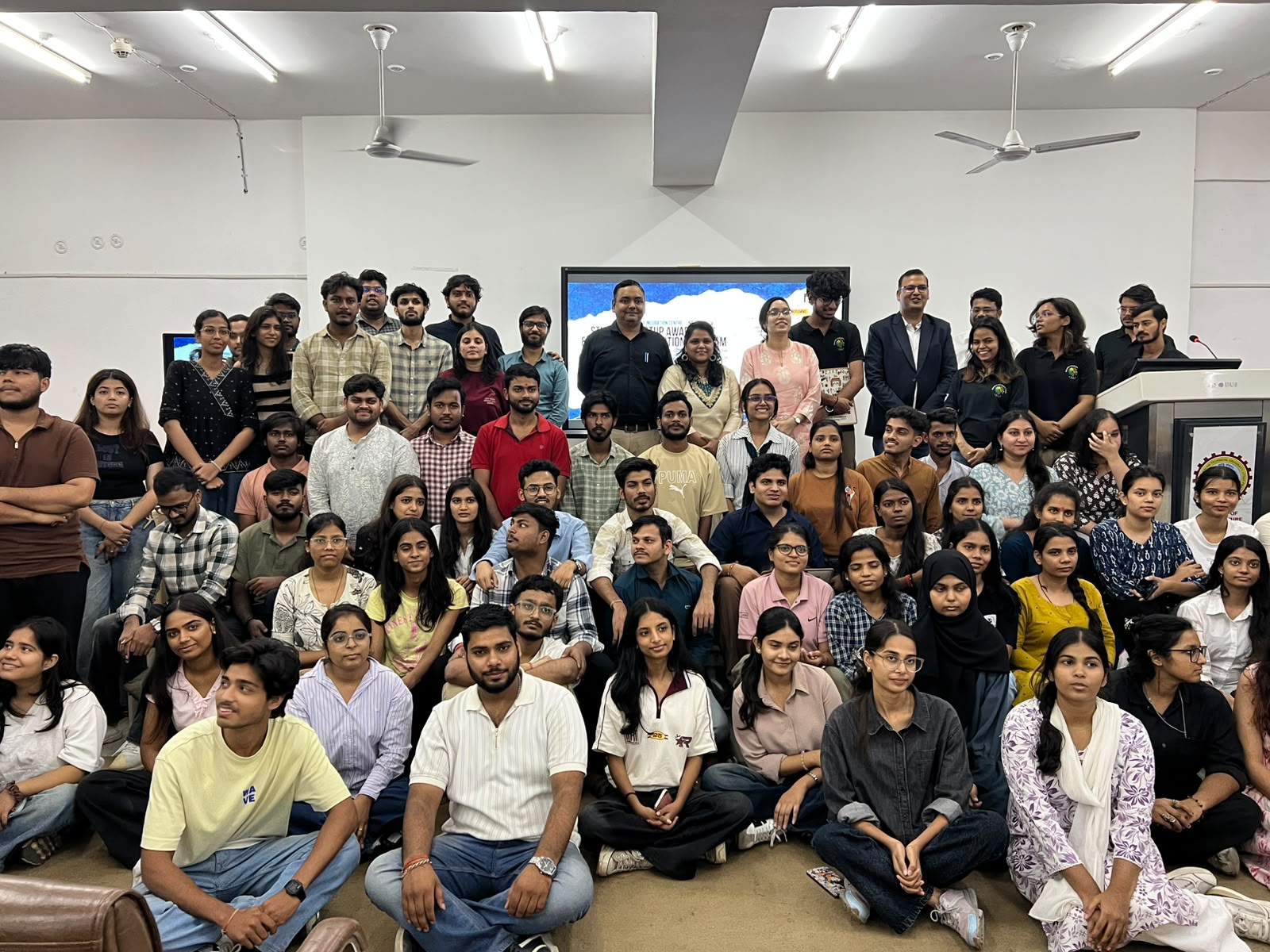
Lucknow: The Navachar Incubation Centre at the Faculty of Architecture and Planning (FOAP), Dr. A.P.J. Abdul Kalam Technical University (AKTU), Lucknow, successfully concluded a two-day Student Startup Awareness and Innovation Promotion Programme on October 13 and 14, bringing together startup mentors, entrepreneurs, financial experts, social innovators and students to explore opportunities in entrepreneurship, innovation and sustainable enterprise development.
Organised under the theme “From Ideas to Enterprise – Start Building Your Tomorrow,” the programme aimed to foster an entrepreneurial mindset among students and equip aspiring entrepreneurs with practical knowledge of startup registration, business development, funding opportunities, statutory compliance and the creation of commercially viable and socially responsible enterprises. StartupTrak served as the digital media partner for the event.

Through expert interactions, discussions and hands-on activities, the initiative highlighted how innovative thinking, strategic planning and responsible resource utilisation can help students transform ideas into sustainable business ventures.
Experts Share Practical Insights into Startup Development
The programme featured sessions by Vikas Kalra, strategic consultant and startup ecosystem mentor; Dr. Anuj Kumar Sharma, Associate Dean (Innovation), AKTU; Sachin Modi, Assistant General Manager, Small Industries Development Bank of India (SIDBI); Sunil Jaiswal, co-founder of Mr. Professional and Startup India mentor; and Jyotsna Kaur Habibullah, social entrepreneur and founder of Lucknow Farmers Market and the Awadh Mango Growers Association.
The speakers addressed key aspects of entrepreneurship, including strategic planning, institutional incubation, startup registration, regulatory compliance, financial assistance, market opportunities and sustainable business models. Their discussions encouraged students to identify real-world challenges, develop innovative solutions and assess the commercial and social potential of their ideas.
Vikas Kalra highlighted the importance of strategic planning and collaboration with industry in developing successful startups. Dr. Anuj Kumar Sharma emphasised the role of academic institutions and incubation centres in nurturing creativity, supporting emerging entrepreneurs and creating an enabling environment for innovation.
Sachin Modi shared insights into startup financing and financial assistance available to emerging enterprises, helping students understand the importance of financial planning and identifying appropriate funding opportunities. Sunil Jaiswal discussed the practical requirements of establishing a startup, including registration, statutory compliance and business development.
The sessions provided students with an understanding of the different stages involved in building an enterprise, from identifying a business opportunity and developing a viable model to meeting regulatory requirements and exploring market access.
Jyotsna Kaur Habibullah Highlights Sustainable Startups and Rural Entrepreneurship
Jyotsna Kaur Habibullah, founder of Lucknow Farmers Market and the Awadh Mango Growers Association, spoke about sustainable entrepreneurship, agritecture, women-led enterprises and rural livelihood generation.
She encouraged students to explore emerging opportunities in eco-friendly architecture, urban food production and sustainable rural tourism. Her session highlighted the importance of connecting innovative business ideas with local resources, community participation and market requirements.
The discussion also drew attention to the potential of entrepreneurship to address social and environmental challenges while creating livelihood opportunities. Students were encouraged to consider business models that combine economic viability with community development and environmental responsibility.
Scrapshala Workshops Introduce Students to Upcycling and Circular Economy
Sustainable design and waste upcycling emerged as major highlights of the programme, with interactive sessions conducted by the Scrapshala team. The organisation, which has been working in the field of upcycling and sustainable livelihood creation for around a decade, demonstrated how discarded materials can be transformed into useful, attractive and value-added products.
One interactive session led by Madhu Shah and the Scrapshala team engaged approximately 100–150 students. It explored the environmental importance of upcycling, the business potential of waste materials and the role of design thinking in developing functional products.


Students participated in hands-on activities involving electronic waste and paper waste. They also created vision boards using discarded materials, gaining practical exposure to creative reuse, responsible resource management and innovative product development.
The session was facilitated by Madhu Shah, Madhusha and Anish Kumar from the Scrapshala team. Through demonstrations and guided activities, participants were encouraged to look beyond the conventional perception of waste and recognise its potential as a resource for creativity, enterprise and sustainable development.
A separate sustainable-design workshop conducted by Shikha Shah, founder and CEO of Scrapshala, engaged around 80 students. The workshop featured paper-mâché lamp making, vision-board creation, upcycled photo frames and textured seed-paper making.
Shikha Shah also shared insights from her entrepreneurial journey, explaining how discarded materials can be converted into innovative lifestyle and décor products. The activities demonstrated how design, creativity and resource efficiency can be combined to develop products with both functional and aesthetic value.
Together, the Scrapshala sessions introduced students to the principles of the circular economy, in which materials are reused and repurposed to reduce waste and maximise resource value. They also highlighted opportunities for entrepreneurship in sustainable product design, upcycling and environmentally conscious manufacturing.
Experiential Learning Connects Innovation with Enterprise
The programme combined expert guidance with practical exercises to help students understand the journey from ideation to enterprise creation. While the expert sessions focused on business planning, financial assistance, regulatory requirements and market development, the workshops demonstrated how creative problem-solving can generate innovative products and address environmental concerns.
The initiative underscored the growing scope for startups that integrate sustainability with commercial objectives. By exploring waste management, responsible resource use and community-oriented business models, students were encouraged to view environmental and social challenges as opportunities for innovation.
The programme also highlighted the importance of mentorship and institutional incubation in helping aspiring entrepreneurs navigate the early stages of business development.
Faculty Leadership and Coordination
The programme was organised under the patronage and guidance of Prof. (Dr.) Vandana Sehgal, Principal and Dean, FOAP, and Prof. (Dr.) Ritu Gulati, Head of the Department, under the leadership of AKTU Vice-Chancellor Prof. (Dr.) J. P. Pandey.
The event was coordinated by Ar. Gaurav Singh, Ar. Deepti Sagar, Ar. Priyanka Rastogi and Ankit Jain.
The initiative reaffirmed the commitment of the Navachar Incubation Centre and FOAP–AKTU to strengthening the university’s startup ecosystem, encouraging student-led innovation and promoting sustainable and socially responsible entrepreneurship.
By bringing together industry expertise, financial insights, entrepreneurial experiences and hands-on learning, the two-day programme encouraged students to move beyond ideas and explore practical pathways to enterprise creation. It also reinforced the importance of developing ventures that can generate economic opportunities while contributing to environmental protection and social well-being.








 https://www.youtube.com/watch?si=RtToJsBhYBatUrym&v=mOuYNSdhjHA&feature=youtu.be