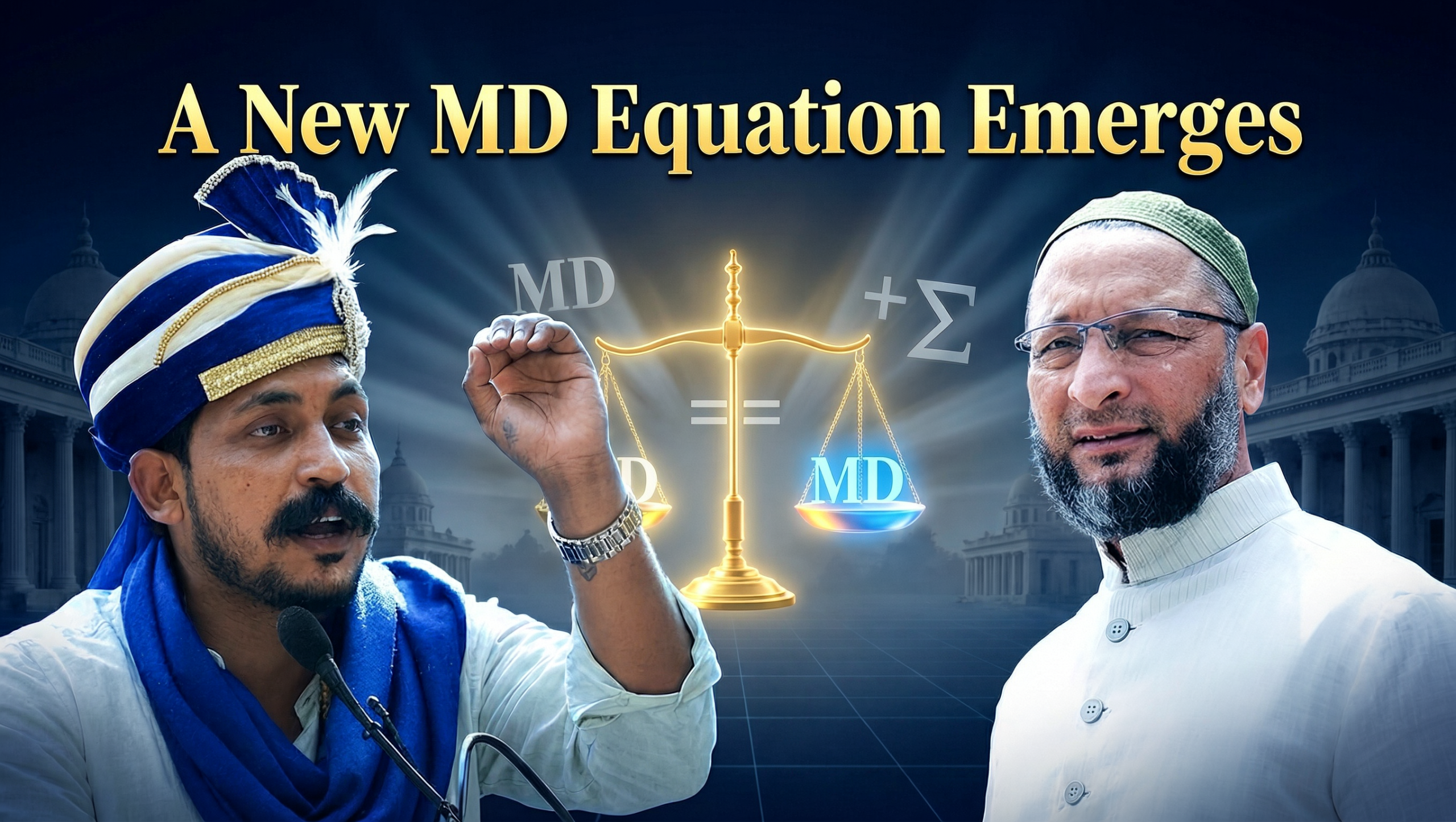
Lucknow: Uttar Pradesh politics is shifting ahead of the 2027 Assembly elections. On 11 November 2026, multiple reports said AIMIM chief Asaduddin Owaisi and Azad Samaj Party (ASP) leader Chandrashekhar Azad, also known as Ravan, have agreed to contest together. A joint press conference is set for 12 November in Lucknow to announce the alliance, seat-sharing and strategy. Many see it as an attempt to move beyond the Muslim-Yadav (MY) formula tied to the Samajwadi Party (SP) and build a Muslim-Dalit combination.
Where MY came from
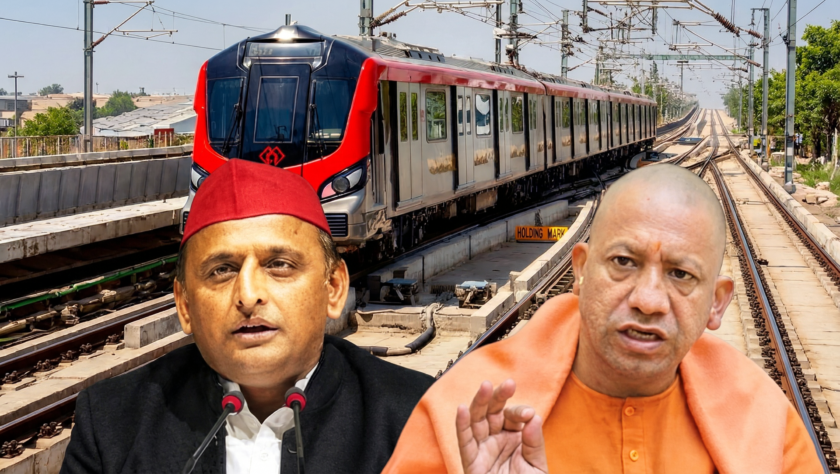
For decades, MY was the backbone of SP’s success. Under Mulayam Singh Yadav and later Akhilesh Yadav, the party joined Muslim voters, about 19% of the state, with Yadavs and other OBCs. That arithmetic won power in 2012 and delivered strong results afterwards. Lately SP has pushed “PDA” (Pichhde, Dalit, Alpsankhyak) to bring Dalits in more openly while keeping its core. Meanwhile, Mayawati’s BSP, long the dominant Dalit voice, especially among Jatavs, has declined sharply since its 2007 peak.
Azad’s rise has opened room for another Dalit voice. He won Nagina in the 2024 Lok Sabha election on an ASP ticket, backed by the Bhim Army’s organisation. Owaisi has tried to take AIMIM beyond Hyderabad by courting Muslim voters in North India, arguing that mainstream parties take their support for granted without giving real representation.
What the alliance looks like
After several rounds of talks, the two parties reportedly agreed on a third front aimed mainly at Muslim- and Dalit-dominated seats, especially in western UP and Rohilkhand. AIMIM is expected to contest many Muslim-heavy seats (reports range from 40 to 60), while ASP works to consolidate Dalit support. Together they may target around 100 to 150 of the 403 seats rather than a statewide fight. Reports also mention efforts to bring in smaller parties or leaders.
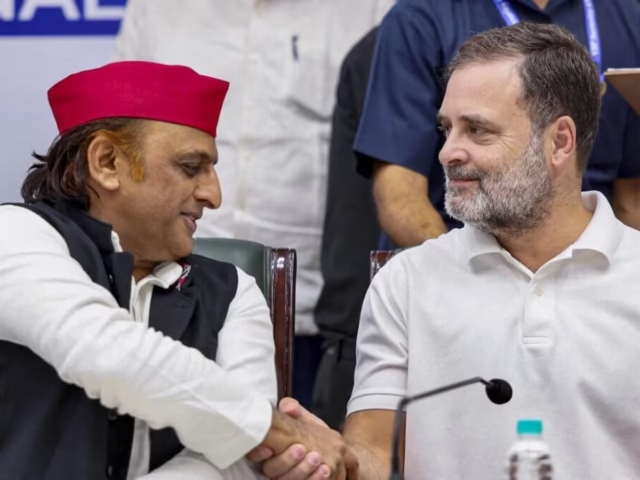
Owaisi had earlier shown interest in joining the INDIA bloc or aligning with SP and Congress, but was rebuffed. Akhilesh Yadav has kept AIMIM at a distance, protecting SP’s claim on Muslim votes. Azad has also signalled limited openings with the main opposition. Both sides now present the partnership as a platform for communities they call marginalised whichever major party is in power.
The numbers
Dalits make up roughly 21% of UP’s population and Muslims nearly 19%, about 40% together. In several dozen constituencies, particularly in western UP, their combined share passes 50%, which could make those seats decisive if votes transfer. Areas around Rampur, Moradabad and Saharanpur are examples.
The baseline is thin, though. In 2022, AIMIM contested 95 seats and took about 0.49% of the statewide vote without winning any. ASP contested over 100 seats and got roughly 0.13%. Success depends on Muslim voters moving away from SP, and on Dalit voters, especially younger and non-Jatav sections, leaving BSP or the BJP’s outreach.

Who is affected
For SP, the front challenges the PDA pitch directly. The party did well among Muslims and gained among some Dalit groups in the 2024 Lok Sabha elections. A credible third option centred on these two communities could split the opposition vote in key western UP seats, which might benefit the BJP-led NDA. For an already weakened BSP, further loss of Dalit support would deepen its crisis. The BJP, which has widened its Dalit and OBC outreach while consolidating Hindu votes, will watch whether the alliance gathers or scatters opposition strength.
The limits
Several factors constrain the alliance. Its organisation is small next to SP, the BJP or even the residual BSP network. Vote transfer between Muslims and Dalits isn’t automatic; the two groups have often voted differently depending on local equations, candidate quality and polarisation. A “Muslim-Dalit” framing also risks reinforcing identity-based mobilisation in a state where coalitions have proved fluid. And both leaders carry baggage: Owaisi is seen as polarising outside Muslim circles, and Azad’s electoral breakthrough is recent.
Earlier consolidation experiments have had mixed results. Forty per cent looks compelling on paper, but turning it into seats takes steady cadre work, credible candidates and the ability to withstand the resources and narrative advantages of larger parties. Where the two communities are not a majority, the alliance’s influence will be marginal.
The bigger picture
The development reflects deeper currents in UP politics: fragmenting vote banks, a search for new coalitions as BSP declines, and established opposition parties’ reluctance to give assertive minority or Dalit outfits large seat shares. It also fits Owaisi’s strategy of building independent platforms rather than serving as a junior partner, and Azad’s ambition to become a major Dalit leader outside Mayawati’s shadow.
Whether this marks a lasting break from the MY era will be tested in 2027. If it consolidates even part of that 40% in key regions, SP may have to recalibrate its PDA pitch. If it stays marginal, it will confirm the staying power of the big parties. As of 11 November 2026, the formal announcement is still pending, but the reported agreement already adds a new variable to UP’s electoral math. The coming months will show whether demographic arithmetic can become organisational and electoral reality, or whether politics stays centred on the BJP versus the SP-led opposition.







 https://www.youtube.com/watch?si=RtToJsBhYBatUrym&v=mOuYNSdhjHA&feature=youtu.be