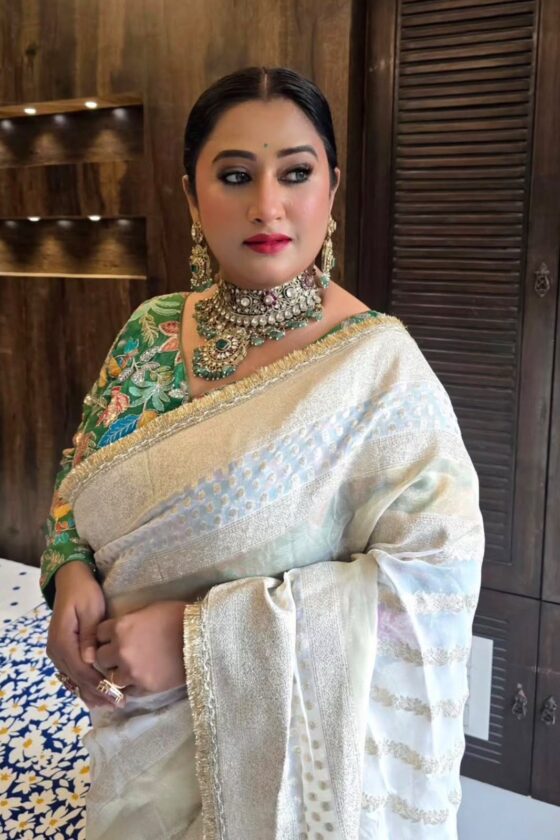

“I believe fashion criticism must be more sophisticated than saying an outfit is beautiful or bizarre. We need to examine the intention behind the design and whether that intention has been successfully translated into a garment,” she said.
She points to Uorfi Javed’s rose-inspired outfit conceived for Cannes 2025 as an example. “The idea of a flower moving from bud to bloom offered a clear visual narrative. The sculptural petals, embroidery, and dramatic volume created theatrical potential,” she said.
However, the practical aspects of the garment also matter. “At the same time, reports noted that the garment was extremely heavy and difficult to walk in,” she said.
For Anjali, this raises an important question about couture: “Can a designer preserve the drama of a concept while improving mobility, balance, and wearability?”


She assesses such looks through four elements: silhouette, material intelligence, construction, and styling. “Does the volume flatter the intended form? Does the fabric hold its shape? Are the seams and finishing precise? Do the hair, makeup, footwear, and accessories reinforce the design rather than compete with it?” she said.
She also credits Uorfi for recognizing when an experimental design does not meet expectations. “Uorfi has also publicly shown experimental outfits she chose not to wear because the fit or execution did not meet her expectations,” she said.
For Anjali, that willingness to reject an unsuccessful result is an important part of the creative process. “That is an important reminder that creative experimentation involves editing as much as invention,” she said.
She sums up her approach simply: “My philosophy is that the concept earns attention, but the execution earns respect. A strong idea deserves equally strong craftsmanship,” she said.












 https://www.youtube.com/watch?si=RtToJsBhYBatUrym&v=mOuYNSdhjHA&feature=youtu.be