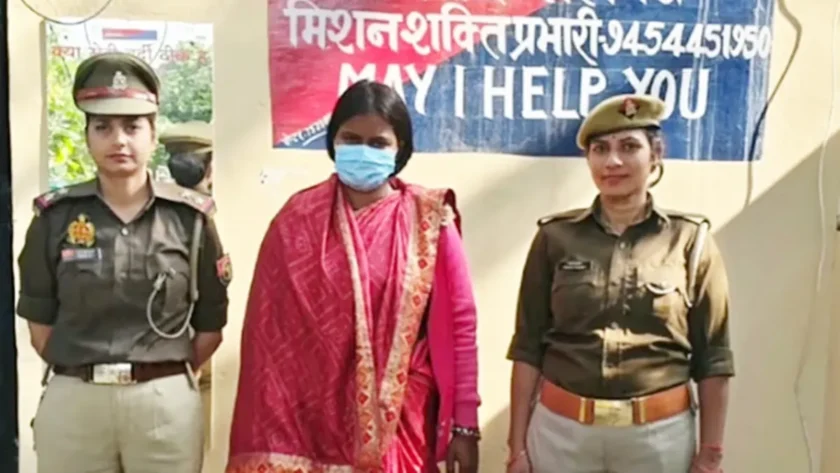

Palghar, Maharashtra: Police in Maharashtra’s Palghar district have arrested seven men following the discovery of an alleged cyber fraud operation targeting people in the United States. Investigators suspect that the group operated from a bungalow in Bhopoli village, Vikramgad, where victims were allegedly tricked into making payments through gift cards.
The suspected operation was exposed after the Palghar Crime Branch received information about unusual activities at the property. A police team conducted a raid on November 24, 2026, and arrested seven individuals. Details of the arrests were reported on November 25.
According to investigators, the suspects allegedly posed as technical-support representatives and sent fraudulent security alerts to American residents. These messages falsely indicated that their computers or mobile devices had been compromised by viruses. Victims were subsequently instructed to purchase gift cards and provide the redemption codes.
Palghar Superintendent of Police Yatish Deshmukh confirmed the arrests. During the search, officers recovered seven laptops, 14 mobile phones, one car and a two-wheeler. A separate media report, citing an official statement, placed the estimated value of the seized equipment and vehicles at approximately ₹21.83 lakh.
Fake Technical-Support Alerts Allegedly Used to Defraud US Residents
The investigation points to a suspected technical-support scam in which fabricated security warnings were used to frighten potential victims into making payments.
Police believe the suspects contacted individuals in the United States and claimed that their electronic devices had been infected with malicious software. The messages allegedly created a sense of urgency by warning recipients about possible threats to their personal information and banking security.
After gaining the recipients’ confidence, the accused reportedly asked them to purchase gift cards and communicate the corresponding activation or redemption codes.
Gift cards can be particularly useful to fraudsters because their codes can be shared remotely and redeemed without requiring a direct bank transfer from the victim to the accused.
Once the codes were obtained, the suspects allegedly converted their value into money. This method also makes it harder for victims to recover their payments, particularly after the codes have been redeemed.
Authorities have not yet released information about the number of people allegedly defrauded, the overall financial loss or the period during which the suspected operation remained active.
Crime Branch Raid Leads to Seven Arrests in Vikramgad
The alleged fraud centre was located inside a bungalow in Bhopoli village, within Vikramgad taluka of Palghar district.
Following intelligence about suspicious activities at the location, Crime Branch personnel carried out a search operation on November 24. Seven men present at the premises were taken into custody and subsequently arrested.
Police have registered the case under relevant provisions of the Bharatiya Nyaya Sanhita (BNS) and the Information Technology Act.
The electronic equipment recovered during the raid is expected to assist investigators in examining the suspected operation. Laptops and mobile phones may contain digital conversations, contact lists, account information and records of communications with potential victims.
Investigators are likely to examine these devices to determine how the alleged fraud was organised and whether other individuals participated in the activities.
The authorities have not publicly released the names of the arrested individuals or provided a detailed account of their respective responsibilities. The precise connection between the seized vehicles and the alleged criminal activities has also not been established publicly.
The seven arrested men remain accused in the case. Their involvement and the allegations against them will be determined through the legal process.


Investigators Examine Alleged Hawala Transactions
Another important element of the investigation concerns the suspected transfer of money through hawala channels.
According to police, the value obtained from the gift-card codes was allegedly converted into cash and moved through informal financial networks.
Hawala involves the transfer of money or financial value through intermediaries, often without a conventional bank transfer taking place between the original sender and final recipient. Investigating such transactions can be difficult because authorities may need to identify multiple intermediaries and establish how funds moved between different locations.
Police have not disclosed the total amount allegedly transferred through this system. Details about the people who may have received the money are also awaited.
The suspected use of hawala could lead investigators to examine financial links beyond the seven individuals arrested in Vikramgad. However, no additional arrests or confirmed international connections have been announced in the information currently available.
Investigation Could Expand Beyond Maharashtra
The alleged targeting of American residents from a location in Maharashtra presents a cross-border cybercrime investigation for local authorities.
Investigators may need to establish the identities of the people contacted, determine how many victims responded to the fraudulent messages and calculate the total financial damage.
Digital evidence recovered from the premises could also help police identify communication channels, payment arrangements and any other individuals who may have been involved.
The case follows a pattern seen in technical-support fraud investigations, where criminals impersonate service providers or security personnel to persuade people that their devices are infected or their financial information is at risk.
Such schemes frequently rely on fear and urgency. Victims are encouraged to follow instructions quickly, often without independently checking whether the warnings are genuine.
At present, investigators have not established any direct connection between the Palghar case and other previously reported fake call-centre operations.
Further details about the suspected financial network, the number of victims and the possible involvement of additional individuals may emerge as the investigation progresses.
How to Protect Yourself From Fake Technical-Support Scams
Cybersecurity experts regularly warn users against responding to unexpected messages or calls claiming that their computers or smartphones have been infected.
A few precautions can help reduce the risk of financial loss:
- Do not trust unsolicited virus warnings: A message or pop-up claiming that your device is infected does not establish that a security breach has occurred.
- Avoid purchasing gift cards for technical support: Genuine technology companies and legitimate support providers do not ask customers to pay for repairs using gift-card redemption codes.
- Never disclose gift-card details: Sharing an activation or redemption code can allow someone else to use its full value.
- Verify support requests independently: Contact a company through its official website or verified customer-service number rather than using details supplied in an unexpected message.
- Do not provide remote access to unknown callers: Fraudsters may use remote-access software to view personal information or interfere with a device.
Anyone who has shared gift-card codes or financial details with a suspected fraudster should contact the relevant gift-card issuer and financial institution immediately. Suspected cybercrime in India can also be reported through the National Cyber Crime Reporting Portal at cybercrime.gov.in or by calling the cybercrime helpline 1930.
The Palghar investigation remains underway, with police examining the seized electronic devices and the alleged financial transactions to establish the full extent of the operation.











 https://www.youtube.com/watch?si=RtToJsBhYBatUrym&v=mOuYNSdhjHA&feature=youtu.be