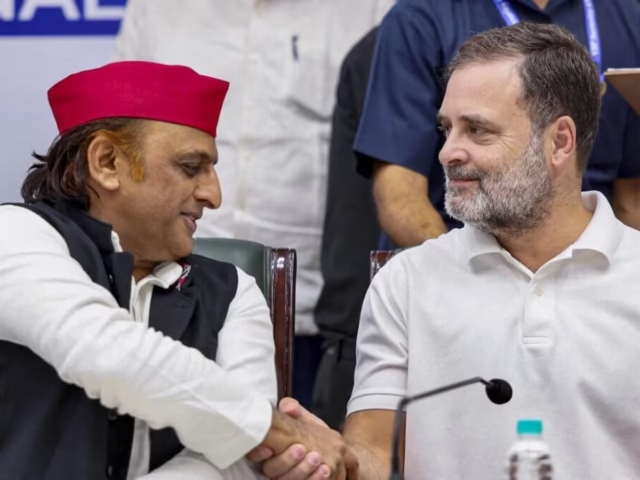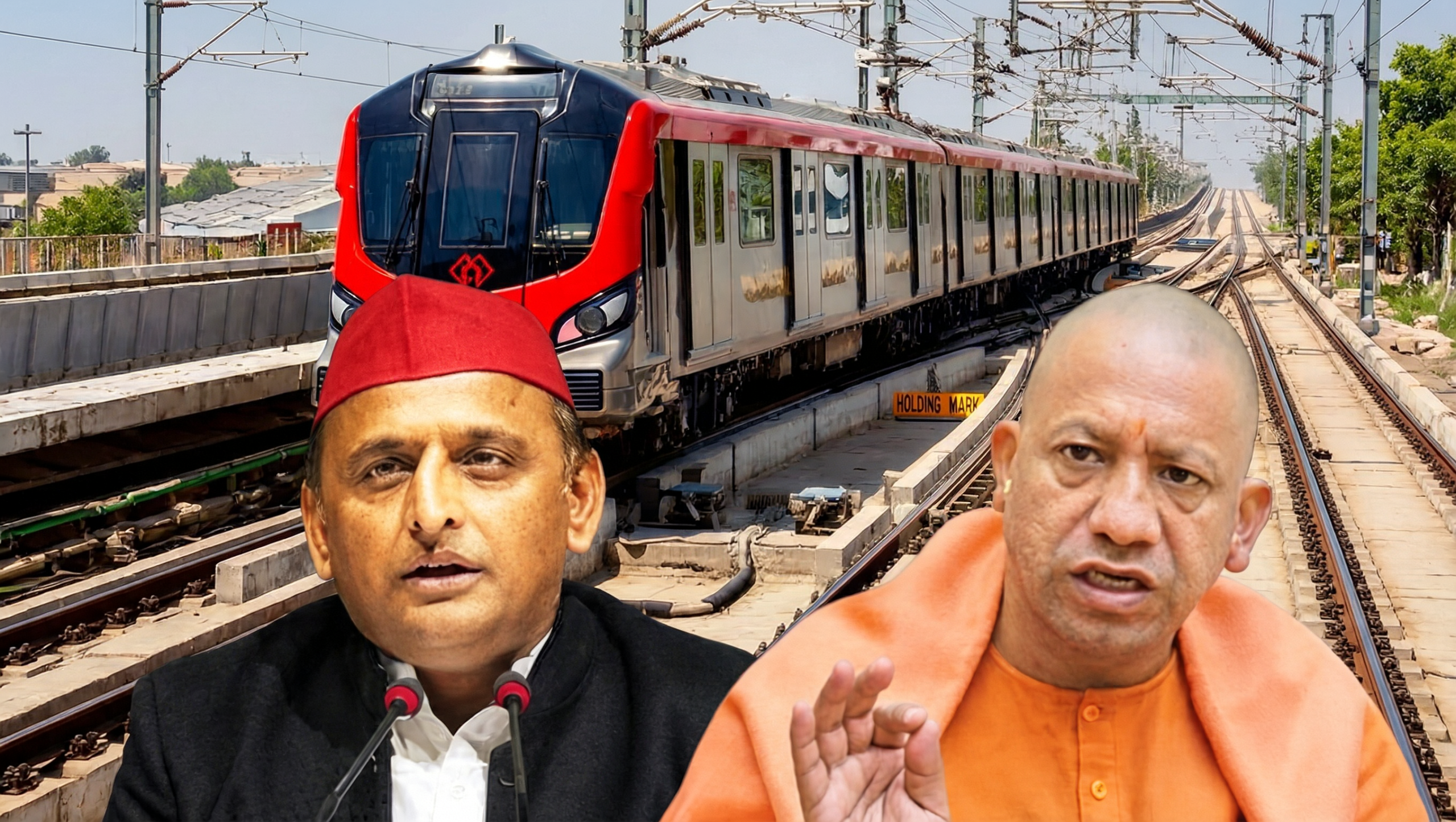
Lucknow: Samajwadi Party president Akhilesh Yadav recently said the BJP government “has not been able to extend the metro network even by 10 centimetres in 10 years.” He also credited the earlier SP government with starting the Lucknow, Kanpur and Agra metro projects. With the 2027 Assembly elections drawing closer and politics heating up, the claim invites a simple question: is it true?
The honest answer is that it depends on what you count. Lucknow’s only working line is the North-South Red Line, which runs 22.9 km from CCS Airport to Munshipulia with 21 stations. The priority section opened in September 2017 and the full corridor in March 2019. Since then, not a single extra kilometre has gone into service. In that narrow sense, Akhilesh’s “10 cm” jab holds up. The city still runs on the same one line it has had for nearly eight years.
Look at what is happening now, though, and the picture shifts. The long-delayed East-West Corridor (Phase 1B) is an 11.165-km line from Charbagh to Vasant Kunj with 12 stations, seven underground and five elevated. The Union Cabinet cleared it in August 2025 at a cost of ₹5,801 crore. By mid-to-late 2026, major contracts had been handed out. The elevated packages were awarded in June, and in October 2026 Afcons Infrastructure received the letter of acceptance for the crucial 6.5-km underground stretch from Charbagh to Chowk, which includes seven stations. Foundation-stone ceremonies were planned around October and Navratri 2026. So the project has moved off paper and into execution, though it is still years from carrying passengers, with about five years expected from the start of work.
Where the metro goes, and where it doesn’t
The Red Line follows a rough north-south spine: Airport, Transport Nagar, Alambagh, Charbagh, Hussain Ganj, Hazratganj, IT College, Indira Nagar and Munshipulia. It works well for airport-bound travellers and for some central and eastern neighbourhoods, and Charbagh is the main interchange with the railway station.
The East-West line will cross that spine at Charbagh and push into the Old City: Aminabad, Pandeyganj, City Railway Station, Medical Chauraha and Chowk. Elevated sections then run through Thakurganj, Balaganj, Sarfarazganj, Musa Bagh and Vasant Kunj. When it is finished, some of the city’s densest and most congested areas will finally get a metro.
Until then, large parts of Lucknow stay outside the network. IIM Road, which links the southern and eastern parts of the city, runs almost entirely on road traffic. So do big stretches around Charbagh beyond the immediate station area, and the commercial heart of Hazratganj. Commuters on these routes describe chronic peak-hour jams. Traffic police have tried U-turn models at Charbagh and other junctions to cut down conflict points, yet festival seasons and daily rush hours still see vehicles crawling. Hazratganj regularly clogs up with shopping crowds, illegal parking and spillover into side lanes, while IIM Road leans heavily on private vehicles, autos and buses.

What commuters actually do
Without a wider metro, Lucknow gets around on a mixed and often strained system. App-based cabs and autos handle most short trips. City buses and private operators cover longer routes, though reliability and crowding vary. Two-wheelers remain the backbone for many middle-class households, precisely because congestion and last-mile gaps make public options incomplete. The result is easy to predict: more vehicles, longer journeys and heavier pressure on the main roads while the city’s population and built-up area keep growing.
A new layer has been added by the approval of the base map for the Uttar Pradesh State Capital Region (UPSCR), which covers Lucknow and five neighbouring districts. The regional plan being prepared lists metro expansion among its mobility projects, alongside orbital rail and major road corridors. Officials describe it as a longer-term framework that could eventually fold Lucknow’s metro into a wider capital-region transport system.
The political and practical gap
Akhilesh’s charge points to a real weak spot. For nearly a decade after the Red Line opened, no new operational track was added. The BJP government’s defence rests on the approvals, funding and contract awards secured for the East-West corridor in 2025 and 2026, and it argues that the project is finally moving after years of planning. Critics respond that planning without visible progress on the ground leaves daily commuters in the same traffic they faced in 2019.
For ordinary residents, the argument is less about credit and more about convenience. Until the East-West line opens and further extensions follow, the city will keep outgrowing its high-capacity public transport. The metro remains one useful spine, while the rest of Lucknow still moves on roads never designed for today’s crowds.
The UPSCR Master Plan and the live construction contracts suggest the next chapter is beginning. Whether it arrives fast enough for a rapidly expanding city is the question that will shape Lucknow’s mobility, and its politics, in the years ahead.










 https://www.youtube.com/watch?si=RtToJsBhYBatUrym&v=mOuYNSdhjHA&feature=youtu.be