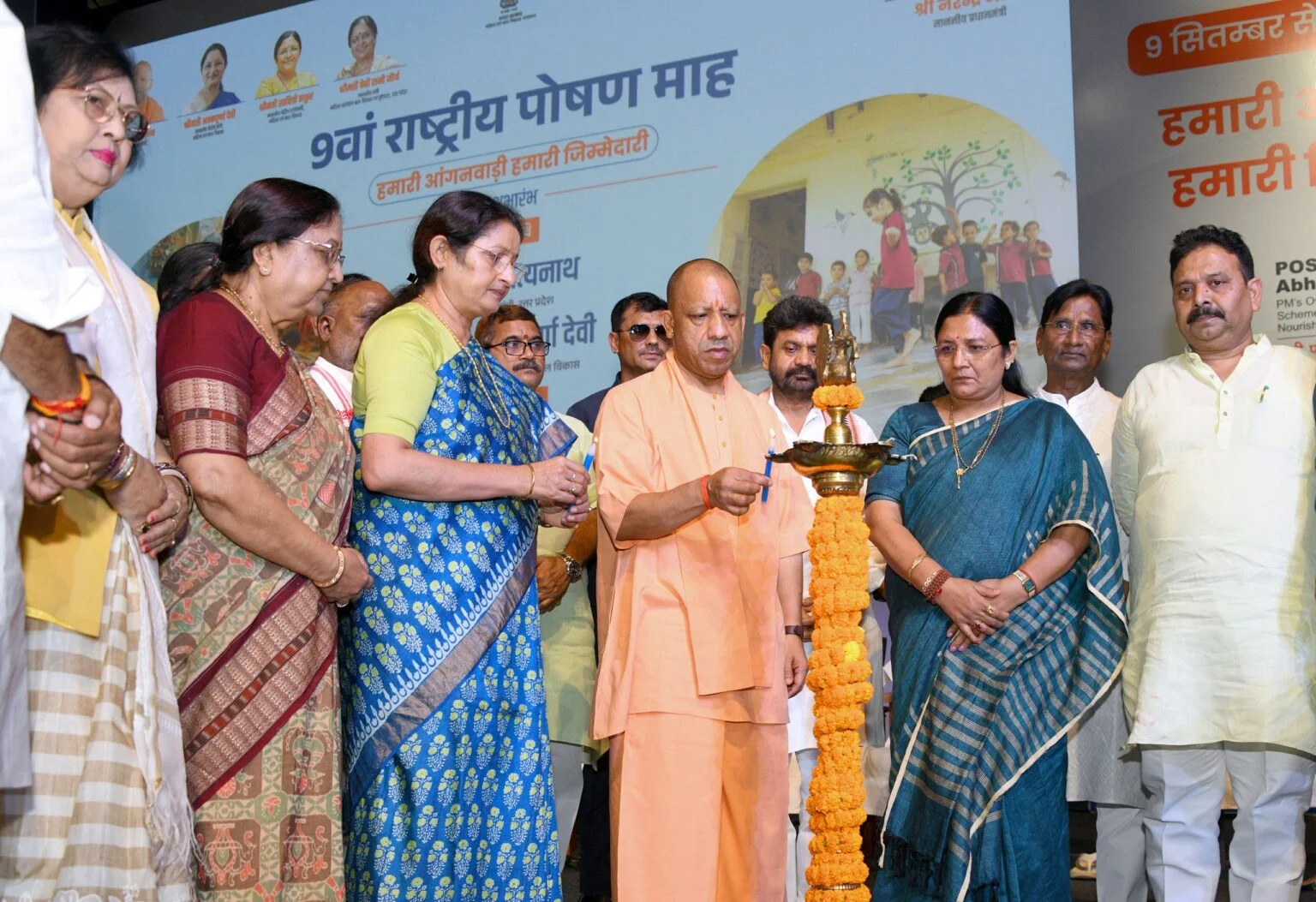
Varanasi: The 9th National Nutrition Month 2026 was inaugurated in Varanasi with a focus on child nutrition, maternal health, early childhood development and community participation. Uttar Pradesh Women Welfare, Child Development and Nutrition Minister Baby Rani Maurya said this year’s theme, “Hamari Anganwadi, Hamari Zimmedari,” reflects the important responsibility of Anganwadi workers in ensuring children receive proper nutrition and care. By supporting children’s nutrition and early development, she said, Anganwadi workers are helping build a strong foundation for a developed India.
Baby Rani Maurya said initiatives being implemented through Anganwadi centres include hot cooked meals, community ownership and accountability, early childhood care and education, nutrition support and maternal health interventions under the Pradhan Mantri Matru Vandana Yojana. Books and toys are also being made available at centres to support children’s early development.
Union Women and Child Development Minister Annapurna Devi said National Nutrition Month represents the country’s collective resolve to eliminate malnutrition and build a healthy and empowered India. She recalled that Prime Minister Narendra Modi launched the Poshan Abhiyaan in 2018 and said the campaign has increasingly become a people’s movement through public participation. She noted that more than 14 lakh Anganwadi centres across the country are contributing to the goal of a healthier India.
Union Minister of State for Women and Child Development Savitri Thakur, while paying tribute to Kashi, said more than 150 crore awareness activities have been conducted across the country under the nutrition campaign during the past eight years. She highlighted the role of the Pradhan Mantri Matru Vandana Yojana in providing financial assistance to pregnant women and the Sukanya Samriddhi Yojana in supporting the future of girl children.
A major highlight of the programme was the interaction between Chief Minister Yogi Adityanath and Anganwadi workers and helpers from Odisha, Tamil Nadu, Gujarat and Gorakhpur. During the interaction, Tamil Nadu Anganwadi worker R. Ranjani began her conversation with the Chief Minister with a traditional “Vanakkam” and shared an emotional experience from her work.
Ranjani recalled the case of a family where the mother of 21-day-old twin babies had died. She said she counselled the family and helped take responsibility for the children’s care through the Anganwadi centre, while also extending personal support. The twins have now been attending the Anganwadi centre for nearly two years. Ranjani said seeing them healthy and developing normally gives her immense satisfaction. Her experience highlighted how Anganwadi workers often provide emotional and personal support to families in addition to delivering nutrition and childcare services.
The Chief Minister also interacted with an Anganwadi helper from Odisha about the role of centres in supporting malnourished children. During a conversation with an Anganwadi worker from Basiapur village in Gorakhpur, Yogi Adityanath recalled that he had visited her village. The worker responded warmly that he had also visited her home.
Anganwadi workers from different states also shared their experiences and innovations. Bhavana from Gandhinagar, Gujarat, said improved facilities at Anganwadi centres have strengthened public confidence, with parents increasingly sending their children to the centres and seeking guidance on nutrition and childcare. She said children who were reluctant to eat at home often responded positively when meals were prepared according to their needs at the centres.
R. Shankari from Tiruvannamalai, Tamil Nadu, described Anganwadi workers as frontline warriors in nutrition and child development. She said particular attention is given to the health and development of infants during the first six months after birth.

Sandhya Singh, an Anganwadi worker from the Basiyakhore centre in Gorakhpur, explained that children are regularly monitored through measurements of weight and height. Children showing signs of malnutrition are kept under special observation, while their parents are counselled about nutrition, food and childcare.
The inauguration was accompanied by a nutrition fair at the Rudraksh International Cooperation and Convention Centre, showcasing India’s diverse food traditions, nutrition practices and innovative approaches. A total of 15 nutrition and health-related stalls were set up, including displays connected with Anganwadi services, supplementary nutrition, Early Childhood Care and Education (ECCE), Saksham Anganwadi and health department initiatives.
Representatives from Uttar Pradesh, Rajasthan, Chhattisgarh, Uttarakhand, West Bengal, Haryana, Mizoram and Bihar showcased their respective nutrition programmes, dietary practices and innovations. The exhibition demonstrated that while food traditions and preparation methods vary across states, nutritional value remains a common priority.
Joyla from Mizoram said the fair provided representatives an opportunity to learn about nutrition-based foods and practices from other states. Dr. Manju Yadav, Deputy Director of Integrated Child Development Services, Rajasthan, appreciated Uttar Pradesh’s nutrition initiatives and highlighted the participation of women from self-help groups in running nutrition food plants.
Neetu Pulara, Child Development Project Officer from Uttarakhand, said such platforms enable officials and Anganwadi workers to exchange successful practices. She particularly highlighted the millet noodles showcased at the Mizoram stall as an innovative response to children’s growing preference for fast food. She also referred to programmes being implemented in Chhattisgarh in partnership with UNICEF.
Anganwadi workers from Varanasi and neighbouring districts expressed gratitude to the Yogi Adityanath government for increased honorariums and cashless healthcare facilities. Workers including Shashikala, Sneh Lata and Tara Pandey said they had gained valuable information from the programme and would seek to implement the learnings in their respective centres.
The launch of the 9th National Nutrition Month in Varanasi brought together policymakers, officials and frontline workers to underline the importance of nutrition as a foundation for healthy childhood and national development. The programme emphasised that stronger Anganwadi services, community participation, maternal care and innovative nutrition practices can play a decisive role in improving health and development outcomes among children and families.













 https://www.youtube.com/watch?si=RtToJsBhYBatUrym&v=mOuYNSdhjHA&feature=youtu.be