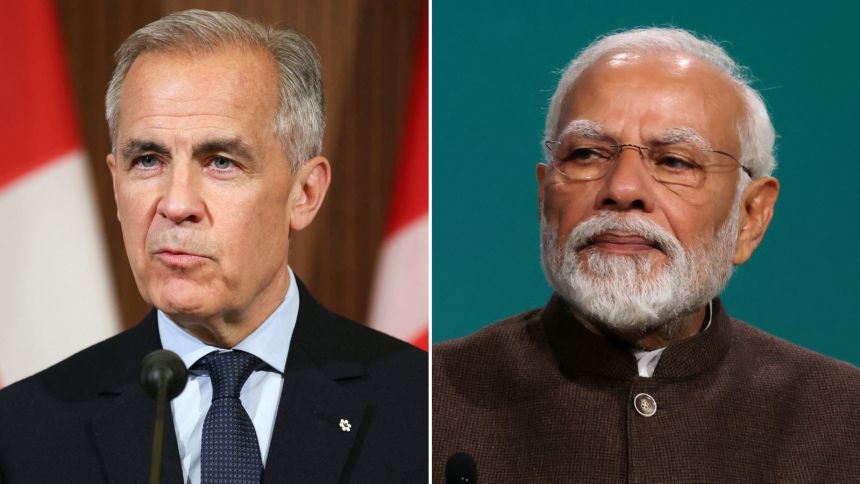
New Delhi/Ottawa: Relations between India and Canada have begun witnessing a noticeable improvement following Canadian Prime Minister Mark Carney’s visit to India earlier this year, with both countries now actively working toward rebuilding trust, reviving trade negotiations and strengthening cooperation across strategic sectors.
Mark Carney visited India from February 27 to March 2, 2026, marking the first bilateral visit by a Canadian Prime Minister in nearly eight years. The visit is widely being viewed as a turning point after a prolonged period of diplomatic strain between the two nations.

During the visit, discussions focused on expanding cooperation in trade, clean energy, artificial intelligence, infrastructure, advanced manufacturing, education and investment. Carney also met leading industrialists and investors in Mumbai to explore new business opportunities and encourage greater Canadian investment in India.
Officials from both countries have indicated that efforts are underway to normalise diplomatic ties following tensions that escalated after the 2023 killing of Khalistani separatist Hardeep Singh Nijjar in Canada. The incident had triggered a major diplomatic dispute after allegations made by the then Canadian leadership were strongly rejected by India. The disagreement had led to suspension of visa services, diplomatic expulsions and a halt in Comprehensive Economic Partnership Agreement (CEPA) negotiations.
Since Mark Carney assumed office in 2025, both sides have shown greater willingness to restore dialogue and strengthen economic engagement. India’s High Commissioner to Canada, Dinesh Patnaik, recently described the renewed engagement as an opportunity to “reset” bilateral relations.
Trade and economic cooperation have emerged as central pillars of the renewed partnership. According to official estimates, annual bilateral trade between India and Canada currently exceeds 21 billion US dollars. India exports pharmaceuticals, telecom equipment, automobile components, jewellery, textiles and seafood products to Canada, while importing coal, wood pulp, lentils, paper products and mining-related materials.
More than 600 Canadian companies currently operate in India, while Canadian pension funds have invested heavily in Indian infrastructure, logistics and real estate sectors. Both countries are now aiming to significantly increase these investments over the coming years.
Energy cooperation has also gained momentum. Discussions have reportedly advanced on a long-term uranium supply agreement worth billions of Canadian dollars to support India’s nuclear energy programme. The two countries are additionally exploring collaboration in liquefied natural gas (LNG), crude oil and clean energy sectors as India seeks stable and diversified energy sources for its rapidly expanding economy.

The revival of CEPA negotiations has become one of the most important outcomes of the renewed diplomatic engagement. The proposed agreement is expected to cover trade in goods, services, agriculture, digital commerce and investments. Both governments are aiming to conclude the agreement within the next year and substantially increase bilateral trade by 2030.
Union Commerce Minister Piyush Goyal, who is currently on an official visit to Canada along with a large business delegation, recently met Prime Minister Mark Carney and senior Canadian leaders to further discussions on trade and investment cooperation. Goyal stated that Carney’s India visit had “completely changed” the way both countries view each other and opened the door for a fresh strategic agenda.
Canadian Prime Minister Mark Carney has also publicly expressed optimism about the proposed free trade agreement, stating that stronger economic ties with India could create major opportunities for Canadian businesses and workers while opening access to one of the world’s fastest-growing markets.
Apart from trade, both countries are also looking to expand collaboration in research, artificial intelligence, quantum computing, higher education and national security cooperation. Senior officials from both sides have already held discussions regarding diplomatic coordination and law enforcement cooperation.
Experts believe the renewed engagement reflects a broader global shift, where countries like India and Canada are seeking to diversify partnerships and reduce excessive dependence on single markets. Analysts also point out that India’s growing economic influence and Canada’s resource-rich economy create strong complementarities for long-term strategic cooperation.
While some political and security-related issues continue to remain sensitive, diplomats and policy experts believe the recent high-level engagements have created a more constructive atmosphere for dialogue. The coming months are expected to be crucial in determining how quickly both nations can fully restore confidence and convert diplomatic outreach into concrete economic and strategic outcomes.