New Delhi: India’s next-generation fighter programme, the Tejas Mk2 Medium Weight Fighter, is advancing rapidly toward its first flight, with key certification and ground-testing activities being fast-tracked by the Centre for Military Airworthiness and Certification (CEMILAC).
The prototype aircraft is nearing completion, while critical First Flight Clearance (FFC) procedures are being expedited. In parallel, low-speed and high-speed taxi trials are scheduled to begin shortly to validate essential systems including braking performance, steering response, and directional control.

A crucial step in India’s air power modernisation
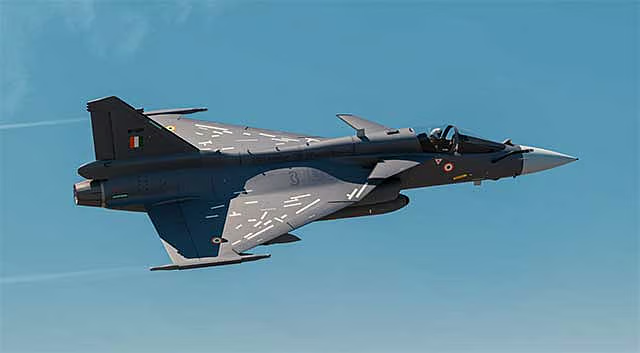
Developed by the Aeronautical Development Agency (ADA) in collaboration with Hindustan Aeronautics Limited (HAL), the Tejas Mk2 is designed as a major upgrade for the Indian Air Force (IAF). The aircraft is intended to replace ageing fleets such as the Jaguar, Mirage 2000, and MiG-29, with projected induction requirements estimated at 110–120 aircraft.
Unlike the lighter Tejas Mk1A, the Mk2 is a true medium-weight combat platform, featuring a larger airframe, extended fuel capacity, and a significantly enhanced payload capability of around 6.5 tonnes across 11 hardpoints.
The fighter will be equipped with advanced avionics, including the indigenous Uttam Active Electronically Scanned Array (AESA) radar, positioning it between light fighters and heavy multirole aircraft in capability and mission flexibility.
Fast-tracked testing approach
To accelerate flight readiness, the first prototype will undergo taxi and ground evaluations in its base primer finish, without final paint. Engineers say this allows focus on structural integrity and system validation without delays linked to cosmetic completion.
The development approach also relies on proven systems, including an upgraded Digital Flight Control Computer (DFCC) derived from the Mk1A programme. The enhanced system is expected to improve flight stability, handling precision, and integration with advanced mission systems.

Engine integration and testing milestones
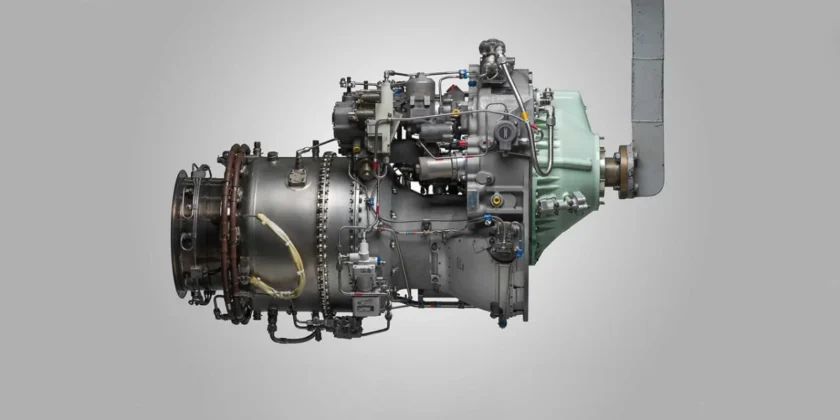
The aircraft is powered by the General Electric F414-INS6 turbofan engine, delivering approximately 98 kN of thrust. Static engine trials are expected to commence soon, focusing on thermal performance, intake efficiency, and propulsion stability under controlled conditions.
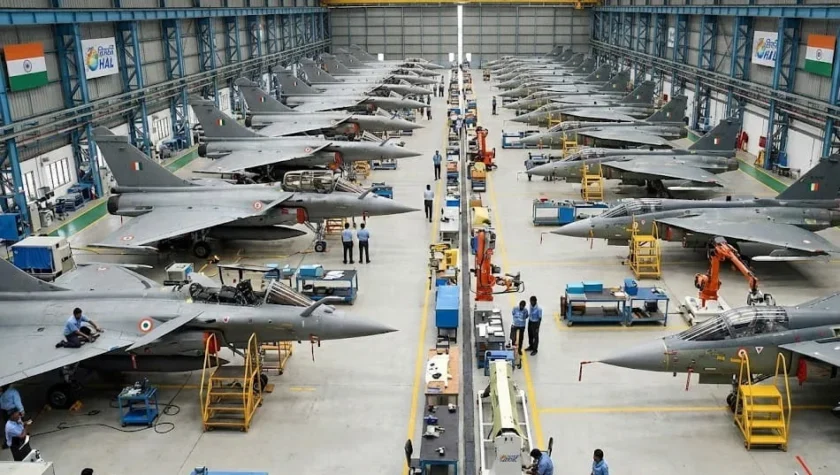
A key development milestone has been the progress toward domestic production of the engine. The programme is aligned with an expanded technology transfer framework enabling greater local manufacturing participation by Hindustan Aeronautics Limited (HAL).
Limited series production roadmap
According to the proposed plan, Limited Series Production (LSP) could begin by the end of 2029, subject to clearance from the Indian Air Force.
Under this phased approach:
- 8 to 12 pre-production aircraft may be delivered early for evaluation by the Aircraft and Systems Testing Establishment (ASTE)
- Weapons integration and operational trials will run in parallel to reduce induction timelines
- Faster evaluation cycles aim to address the IAF’s ongoing squadron shortfall
A key platform for future air capability
Once operational, the Tejas Mk2 is expected to become a central pillar of India’s indigenous combat aviation strategy. With its enhanced payload, modern avionics, and improved range, it is positioned as a bridge between current light combat aircraft and future advanced fighter programmes.
As ground trials begin and certification progresses, the programme marks a significant step forward in India’s effort to expand self-reliance in advanced military aviation.