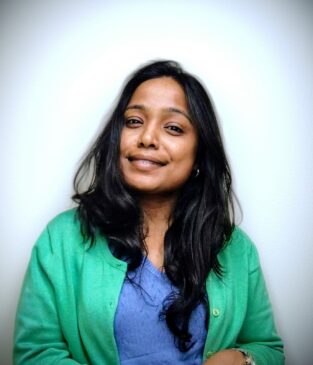
This Dalit History Month, Usha Kumari writes on growing up Dalit, wearing education as armour, and the questions that still have no comfortable answer.
Days ago, I was discussing caste and casteism with one of my colleagues. He asked me, quite gracefully, “What if I encounter casteist remarks?” I replied that it usually comes from those who know that I belong to a Scheduled Caste. To them, I don’t deserve reservation, and almost everything they say to me revolves around it.

Growing up, I read comics, books, and novels. My father would carefully bring us Babasaheb’s caricature books, and we also read a lot about Abraham Lincoln. We were not allowed to watch television.
When I look back, I often wonder whether it was his fear that we might not focus on our education, or his worry that he might fail as a father — especially given that we belong to the Dalit community. I was rarely asked about this identity, except by a few of my school friends’ mothers, who were, of course, Savarnas.
I came to know about caste when I was in Grade 3, thanks to the neighbourhood aunties. Aunties in any society are troublemakers. Somehow, these aunties also open gateways to knowledge, self-awareness, and resistance. One of my neighbours, who was an Agrahari, asked me what my caste was. I was clueless. I had no answer. At home, we never discussed caste or religion much. My father had a strong education, and his teacher, a retired colonel, played a significant role in shaping his adulthood. We lovingly called him Nanaji. For us, our father was the coolest cat — or, you could say, he was the black sheep of our family. He had a collection of Boney M. vinyls that we still have.
When I came home after playing, I asked my father what our caste was. My father immediately knew it was not my question. After several rounds of questioning, I told him about the aunty who had asked me. My father instructed me not to interact with her. A week later, I came to know from my mother that he had asked that neighbourhood aunty not to engage with his children. My father was very much capable of doing that. From there, a journey of knowing my caste finally began.

This journey has not been as challenging for me as it has been for other Dalit women, because my father did the groundwork relentlessly. He chose our schools carefully, and the people who taught us. What we learned and where we learned it from had always been a pleasant experience, except for a few classmates. He faced casteism at workplaces and among co-workers. He was transferred multiple times because of his caste identity. He never wanted us to experience that, especially in a social setting. I recall one of my core memories of caste discrimination: one of my classmates’ mothers would often complain about my admissions to the colleges I applied to. She failed to notice that I consistently appeared on merit lists, something I did not think much about until such instances began to occur. I had to take my merit as armour. I never enjoyed it.
The latest encounters are very different from those centred around reservation. During one of my work trips, my driver asked me if I was a Srivastava. I asked him what made him think so. He said I was dressed like one of them. I then asked, “What do you think of Scheduled Castes?” Sensing something in my tone, he replied that they are shabby and not clean. I later told him that I belong to the Scheduled Caste community. He quickly changed the conversation and said that he does not discriminate and often eats with them. The bigger question is that we are still being spoken about in terms of sitting together and sharing a meal. Clothing seems to decide the dignity of a caste. If these are not casteist remarks, then what is? Are we always expected to be beaten, humiliated, and discriminated against?
Another incident I witnessed occurred in a social setting among my friends. One of them, a Savarna, often admired me as a person and was shocked to learn that I was a Dalit. After getting to know my educational background, he said, “You are too privileged to be a Dalit.” I have funded my education often and always strived to learn more. My formal education is based on merit; however, it reminded me of a time when my father returned my sibling’s scholarship money to someone more in need, and my understanding of privilege shifted again. That day, I found myself wondering: what does it mean to be a Dalit? Why do our academic or progressive achievements invite questions about our caste? And why are we expected to behave in ways that are beneath our dignity? I reserve my rights to be a Dalit and privilege is a subjective matter. My privilege is my community’s win.
About the author:
The author is a brand marketing professional and communication expert.