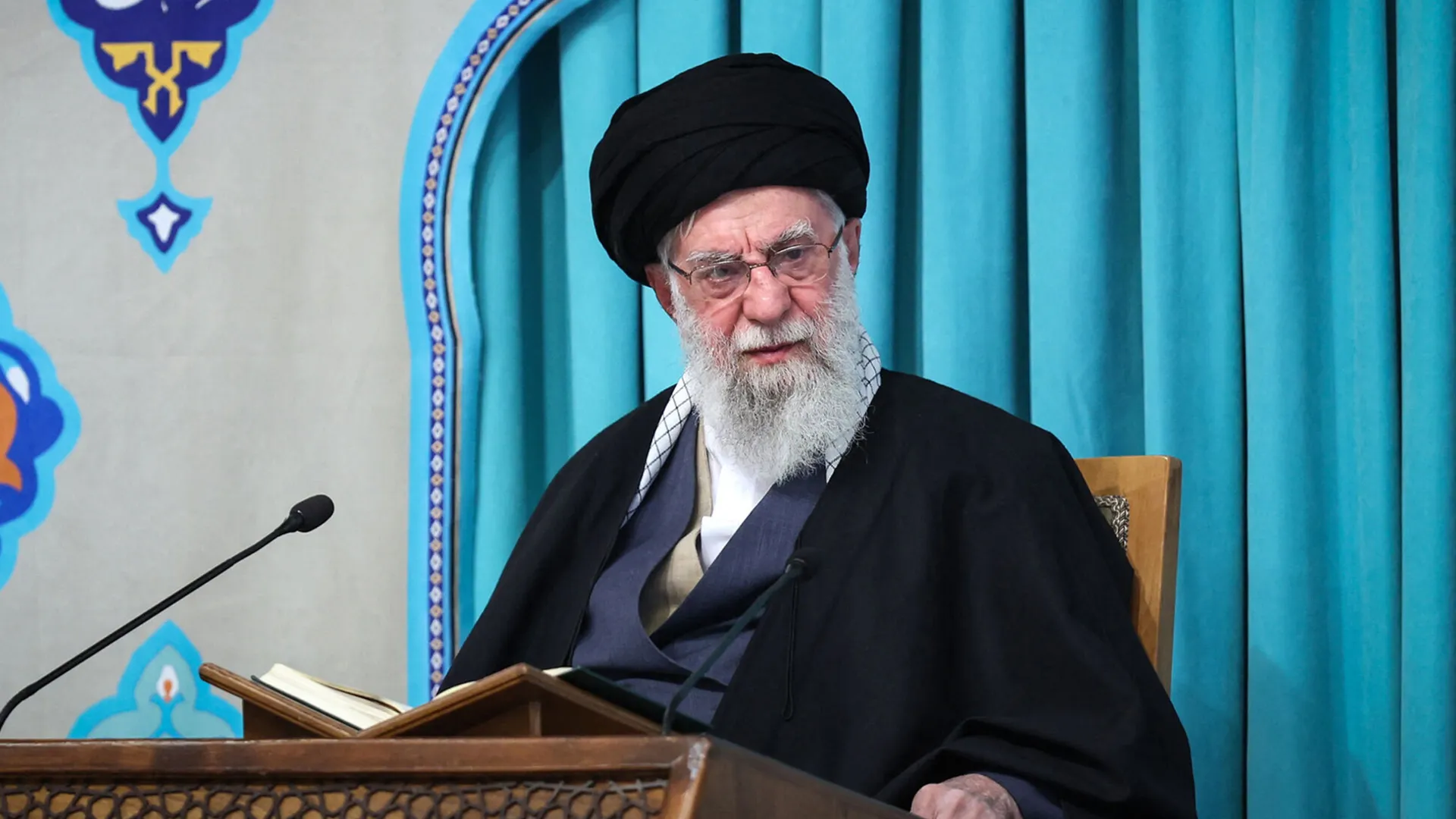
Tehran: The death of Ali Khamenei has pushed Iran into one of the most consequential moments in its modern history. For nearly four decades, Khamenei stood at the apex of the Islamic Republic’s political, military and religious order, shaping not only domestic governance but also Tehran’s posture across the Middle East. His passing comes at a time of active regional conflict, economic strain, and simmering public discontent. The convergence of these crises transforms a leadership transition into a historic stress test for the entire system. What unfolds next will determine whether Iran consolidates, reforms, or fractures under pressure.
1. A Historic Turning Point — Not Just a Leadership Change
The death of Ali Khamenei marks far more than the passing of an aging ruler. It represents the most profound rupture in the political architecture of the Islamic Republic since the upheaval of 1979. For nearly four decades, Khamenei was not merely the Supreme Leader in constitutional terms; he was the central axis around which the entire Iranian state revolved. His authority extended across the executive branch, the judiciary, the armed forces, the intelligence community, the nuclear establishment, and the clerical hierarchy. Few modern political systems have been so deeply personalized in a single figure.

Khamenei’s leadership provided coherence to a factionalized elite. Competing conservative blocs, clerical networks, technocratic administrators, and security hardliners operated under his ultimate arbitration. He balanced rivalries, distributed patronage, and ensured that no single institution—particularly the powerful security apparatus—outpaced the clerical core of the regime. His death removes that balancing force.
The timing compounds the shock. Iran is navigating a period of direct confrontation with the United States and Israel, mounting economic pressure, and deep internal discontent. The disappearance of the figure who embodied regime continuity has accelerated an already fragile political environment. It ushers Iran into its most uncertain era since the founding of the Islamic Republic, when revolutionary fervor masked institutional fragility. Today, that fragility stands exposed under the strain of war and economic exhaustion.
This moment is therefore not a routine succession; it is a systemic stress test. Whether the Islamic Republic emerges consolidated, transformed, or destabilized will depend on how institutions respond to the vacuum left behind.
2. Immediate Reality: War, Chaos, and Consolidation
Iran’s transition unfolds against the backdrop of active conflict. Missile exchanges, drone strikes, and retaliatory operations have expanded across West Asia. Civilian infrastructure in key urban centers, including Tehran, has suffered damage. Public anxiety is high, and everyday life has been disrupted by both security measures and economic dislocation.
Yet despite the turbulence, the state has not fractured. On the contrary, crisis has triggered consolidation. The security apparatus remains intact, and the Islamic Revolutionary Guard Corps (IRGC) continues to dominate both external operations and internal control. The Guard’s intelligence branches, paramilitary units, and affiliated economic networks give it unparalleled leverage during moments of instability.
Large-scale protests have not re-emerged in the immediate aftermath, even though social grievances remain potent. Heightened security surveillance, emergency measures, and wartime nationalism have temporarily dampened mobilization. The state appears to be in survival mode—projecting continuity while operating under immense stress.
The key takeaway is that Iran’s institutional core remains resilient. The combination of centralized command structures, ideological indoctrination, and security penetration into society provides the regime with tools to weather acute shocks. However, resilience does not equal stability. Prolonged conflict and economic hardship may test this endurance over time.
3. Constitutional Transition: Interim Leadership and the Succession Race
Iran’s constitution anticipates leadership transition through the Assembly of Experts, a clerical body tasked with selecting the Supreme Leader. In theory, the mechanism is clear. In practice, it has never been executed under conditions of war and acute geopolitical confrontation.
Interim Leadership
Following Khamenei’s death, authority has temporarily coalesced around an interim council comprising senior officials. Among them is President Masoud Pezeshkian, Judiciary Chief Gholam-Hossein Mohseni-Eje’i, and influential cleric Alireza Arafi. This arrangement ensures constitutional continuity while succession deliberations proceed.
However, this interim structure lacks the symbolic authority of a Supreme Leader. It governs administratively but does not command the same ideological legitimacy. That gap intensifies elite maneuvering behind closed doors.
Succession Dynamics
The upcoming 2026 Supreme Leader selection will likely be the most consequential internal decision in Iran in decades. No candidate possesses Khamenei’s combination of revolutionary credentials, clerical seniority, and institutional loyalty. Several hardline clerics and security-aligned figures are rumored contenders, but none commands overwhelming consensus.
As a result, power may become more diffused. Instead of a towering singular authority, Iran could see a more collective model of governance in which the IRGC, judiciary, and Guardian Council exert expanded influence. Alternatively, a pragmatic conservative might emerge as a compromise candidate to reassure both domestic factions and wary external observers.
The uncertainty itself shapes behavior. Rival factions are likely calibrating alliances, seeking guarantees from security elites, and positioning themselves for influence in a post-Khamenei hierarchy. The succession is as much about institutional recalibration as about choosing a successor.
4. Deep Internal Pressures: Economy, Protest, and Public Discontent
Long before Khamenei’s death, Iran faced profound structural challenges. Years of sanctions, limited foreign investment, inflationary pressure, and currency depreciation have eroded living standards. Youth unemployment remains high, and a significant portion of the population feels economically marginalized.
Mass protests over the past decade revealed widespread frustration—not only with economic conditions but with political constraints and social controls. Younger generations, connected digitally and exposed to global cultural currents, often express aspirations for greater personal freedom and participatory governance.
Wartime conditions have temporarily subdued public mobilization, but grievances persist beneath the surface. If conflict intensity diminishes or economic hardship worsens, renewed protest waves are plausible. Internal fractures between hardliners and reformists could widen, especially if succession politics appear opaque or exclusionary.
The regime’s long-term legitimacy will depend less on ideological rhetoric and more on its capacity to deliver economic stabilization and social reassurance. Without tangible improvement, public patience may erode further.

5. Alternative Visions: Regime Change Movements
Outside official structures, opposition networks continue to articulate alternative futures. Diaspora groups and reformist activists advocate for constitutional revision, expanded civil liberties, or even a post-theocratic order.
One prominent initiative is the Iran Prosperity Project, associated with exiled figure Reza Pahlavi. The project promotes economic liberalization, human rights, and a transitional framework toward democratic governance.
Yet inside Iran, opposition movements face formidable constraints. Security forces maintain extensive surveillance capabilities, and organizational cohesion among dissident groups remains limited. Without elite defections or coordinated mass mobilization, abrupt regime overthrow appears unlikely in the near term.
Still, the symbolic power of alternative visions matters. In times of uncertainty, even fragmented opposition narratives can influence elite calculations and public imagination.
6. Nuclear Policy in Flux
Khamenei’s religious decree against nuclear weapons shaped Iran’s official nuclear discourse. While critics debated its practical implications, it provided a moral and political framework within which policymakers operated.
In the post-Khamenei era, nuclear policy could become less predictable. A successor with stronger security alignment might emphasize deterrence more aggressively. Conversely, a pragmatic leader seeking economic relief could prioritize diplomatic engagement.
The absence of a singular authoritative voice increases ambiguity. Regional rivals and global powers will closely monitor shifts in enrichment levels, transparency measures, and negotiation signals. Nuclear uncertainty adds another layer of volatility to an already unstable environment.
7. Regional and Global Implications
Iran’s trajectory reverberates across West Asia. Escalation risks draw in neighboring states and affect global energy markets. Proxy networks in Iraq and Lebanon could recalibrate their operations depending on signals from Tehran.
Regional actors such as Saudi Arabia, the UAE, and Turkey must assess whether Iran’s leadership transition weakens or hardens its posture. Major powers—including the United States, Russia, China, and the European Union—will weigh diplomatic engagement against containment strategies.
The strategic questions are pressing: Will Iran’s leadership pursue de-escalation to stabilize the domestic front? Or will it double down on confrontation to reinforce revolutionary legitimacy? External pressure could either incentivize reform or entrench hardliners.
8. Four Broad Future Scenarios
A. Regime Continuity Under a New Supreme Leader
The Islamic Republic persists largely intact, albeit under less charismatic leadership. Institutions gain relative prominence, and governance becomes more bureaucratic than personalized.
B. Gradual Reform
Economic necessity and social pressure push the leadership toward incremental political and economic reforms. Engagement with the West cautiously resumes, easing sanctions and reducing tensions.
C. Internal Fragmentation
Prolonged war fatigue and factional rivalry weaken central authority, leading to localized instability. While full state collapse remains unlikely, governance could become uneven and contested.
D. Popular Systemic Overhaul
A coordinated mass movement—combined with elite defections—drives transformative political change. Though currently improbable, history shows that seemingly entrenched systems can unravel under compounded pressures.
At present, continuity with adaptation appears the baseline expectation. Institutional entrenchment and security cohesion favor stability, at least in the short term.
A Turning Point, Not an Ending
The post-Khamenei era places Iran at a historic inflection point. The convergence of leadership vacuum, regional war, economic strain, social discontent, and succession uncertainty creates a uniquely volatile mix.
No single factor guarantees transformation. Yet together, they generate a complex interplay between authoritarian resilience and the forces of change. Iran’s future will be shaped not only by elite maneuvering in Tehran but by the lived realities and aspirations of its people.
Whether the Islamic Republic emerges hardened, reformed, or fundamentally restructured remains uncertain. What is clear is that this moment will define the next chapter of Iranian history—and reshape the geopolitical landscape of the broader Middle East for years to come.