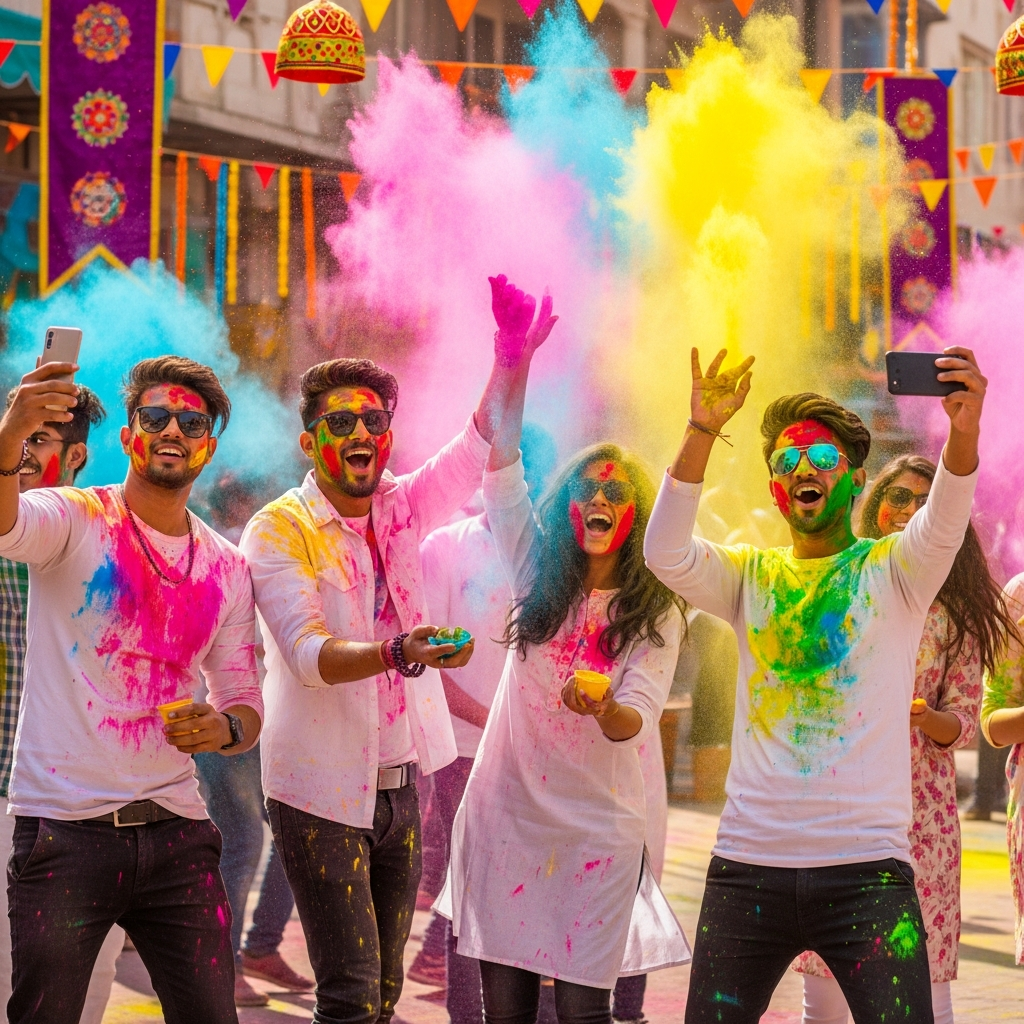
Lucknow: As spring sweeps across the subcontinent, India prepares for one of its most exuberant and culturally layered festivals — Holi. From temple towns steeped in mythology to royal courtyards, university campuses, and snow-clad Himalayan settlements, the festival of colours transforms cities and villages alike into vibrant arenas of devotion, music, and joyous abandon.
In Uttar Pradesh’s twin temple towns of Mathura and Vrindavan, Holi unfolds as both a spiritual and theatrical spectacle. Revered as the birthplace and playground of Lord Krishna, the region hosts week-long celebrations drawing pilgrims and tourists from across the globe. At the famed Banke Bihari Temple, priests shower devotees with gulal amid chants and devotional songs, creating a sea of pinks and reds inside the temple courtyard. The celebrations here are deeply rooted in Krishna lore, blending bhajans, rituals, and colour play into an immersive cultural experience.

Nearby, the town of Barsana stages the world-renowned Lathmar Holi, a centuries-old tradition symbolising the playful banter between Radha and Krishna. Women, armed with sticks (lathis), chase and mock-beat men from neighbouring Nandgaon in a spirited re-enactment of mythological tales. The event draws thousands of spectators who gather to witness the vibrant spectacle of song, satire, and swirling colours in the narrow lanes.
Rajasthan offers a contrasting yet equally grand canvas for Holi celebrations. In Jaipur, royal heritage meets festive fervour. Cultural troupes perform folk dances, and traditional music echoes through palace courtyards. Udaipur’s celebrations around the City Palace and Lake Pichola blend regal ceremony with public festivity, as bonfires marking Holika Dahan light up the skyline. The festival here carries a stately charm, reflecting the state’s rich Rajput heritage.
In eastern India, Holi takes on an artistic hue in Shantiniketan, where it is celebrated as Basanta Utsav. Inspired by Nobel laureate Rabindranath Tagore, the festival emphasizes music, poetry, and dance over raucous revelry. Students dressed in yellow attire perform choreographed cultural programmes, and coloured powders are applied gently in an atmosphere of harmony and aesthetic grace.
Punjab’s Anandpur Sahib marks the occasion differently, observing Hola Mohalla — a martial festival established by Guru Gobind Singh. Instead of colour play dominating the scene, the town witnesses displays of Gatka (traditional Sikh martial arts), horse-riding stunts, kirtans, and community langars. The event underscores valour, discipline, and community solidarity, drawing Sikh devotees in large numbers.
On India’s western coast, Holi has evolved into a contemporary carnival in Goa. Beachside celebrations combine traditional colour throwing with live music, DJ performances, and tourist-driven festivities. Popular beaches transform into open-air dance floors, offering a modern, globalized twist to the ancient festival.

Further north, the Himalayan region of Ladakh offers a unique “snow Holi.” Here, residents celebrate against the stark backdrop of snow-covered peaks, blending local customs with the pan-Indian colour festival. Though more subdued compared to mainland cities, the festivities stand out for their scenic splendour and cultural fusion.
Urban centres such as Delhi, Mumbai, and Pune host large-scale Holi parties featuring music festivals, rain dances, and eco-friendly colour campaigns. Meanwhile, traditional neighbourhood gatherings continue to form the backbone of celebrations, with families preparing gujiyas, malpuas, and thandai as communities come together in shared joy.
Across regions, a noticeable shift toward organic and herbal gulal has gained momentum. Environmental awareness campaigns encourage water conservation and discourage chemical-based colours, reflecting a growing consciousness around sustainability.
Security arrangements have also been intensified in major cities to ensure safe celebrations. Police and municipal authorities coordinate crowd management, traffic diversions, and public advisories, particularly in high-footfall pilgrimage towns and tourist hotspots.
Despite regional variations — from devotional temple rituals and royal ceremonies to martial displays and beach carnivals — a common thread binds India’s Holi: the triumph of good over evil symbolised by Holika Dahan, and the celebration of unity through colour. Social barriers momentarily dissolve as strangers smear gulal on one another, exchange sweets, and greet each other with warmth.
As India steps into another Holi season, the festival once again showcases the nation’s extraordinary cultural diversity. Whether played with flower petals in temple courtyards, celebrated with martial precision in Punjab, performed through art and poetry in Bengal, or danced to electronic beats by the sea, Holi remains a vivid testament to India’s enduring spirit of togetherness, resilience, and joyous expression.




 ---------------------------------------------------------------------------------------------------