
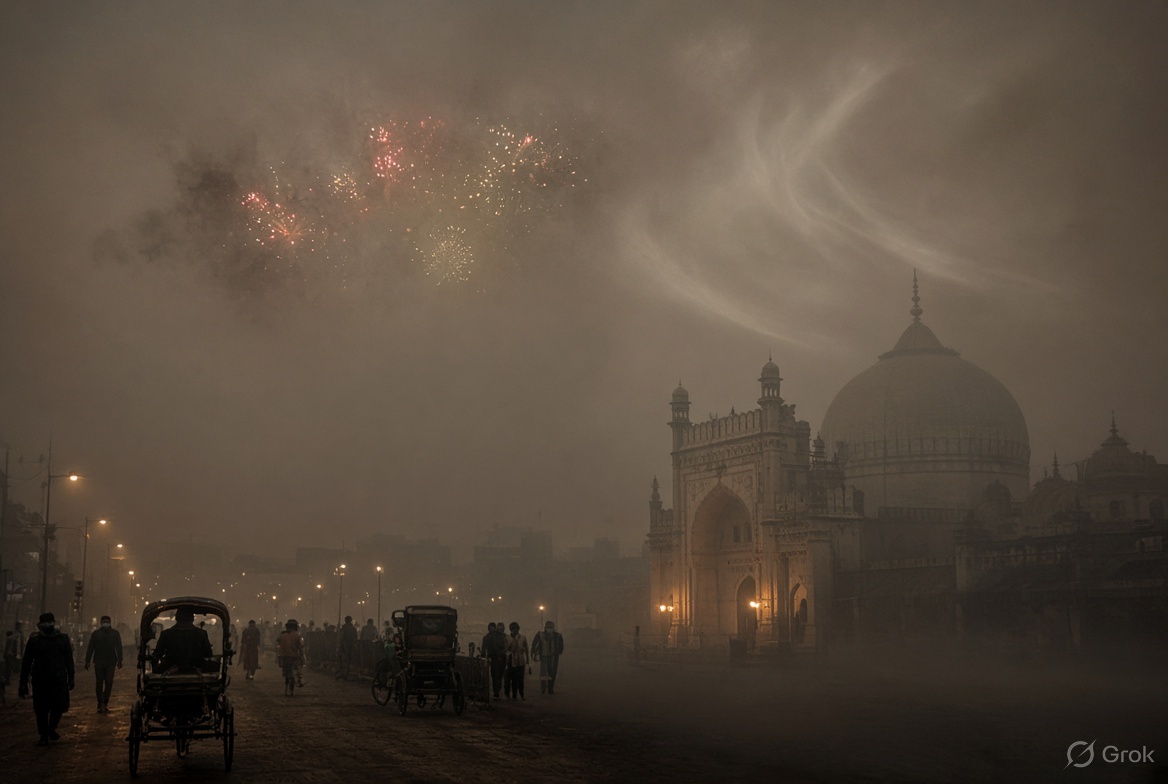
Lucknow: Lucknow witnessed a sharp deterioration in air quality over the Diwali weekend, with the Air Quality Index (AQI) rising from 207 on November 7 to 233 on Diwali, November 8, and reaching 245 on November 9. However, stronger winds brought some relief on Tuesday, November 10, bringing the AQI down to 172.
According to Central Pollution Control Board (CPCB) data, based on readings from six monitoring stations across the city, the AQI remained in the ‘Poor’ category (201–300) on Diwali and the following day. The improvement on Tuesday brought air quality back into the ‘Moderate’ category (101–200).
The post-Diwali pollution spike was largely attributed to firecracker emissions, which increased concentrations of fine particulate matter (PM2.5). Thick smoke and haze covered several parts of the city on Diwali night, reducing visibility considerably. Meteorological observations indicated that visibility fell from around 1,000 metres to nearly 300 metres by early morning, with some areas reportedly experiencing visibility as low as 200 metres.
The deterioration was more pronounced than in 2025. Last year, Lucknow recorded an AQI of 144 on Diwali, which subsequently increased to 250 the following day. The later festival date this year coincided with cooler temperatures and relatively weak winds, allowing pollutants to remain trapped close to the ground.
Health experts have warned that prolonged exposure to poor air quality can cause respiratory discomfort, coughing, eye irritation and breathing difficulties. Children, senior citizens and people with asthma or other respiratory conditions are particularly vulnerable. Residents were advised to limit outdoor activities, especially during morning and evening hours, and use protective masks when necessary.

The improvement on Tuesday was largely weather-driven, as stronger winds helped disperse accumulated pollutants. However, the relief may be temporary, with fog and haze expected to continue during morning hours across parts of Uttar Pradesh.
Chief Minister Yogi Adityanath had defended the decision against imposing restrictions on firecrackers, saying that any temporary rise in pollution would eventually subside and that festival celebrations should not be curtailed.
The latest readings once again highlight the recurring post-Diwali pollution problem in Lucknow. With winter approaching, vehicular emissions, construction dust, industrial activity and other sources of pollution are likely to remain concerns. Sustained improvement will require effective pollution-control measures alongside favourable weather conditions.











 https://www.youtube.com/watch?si=RtToJsBhYBatUrym&v=mOuYNSdhjHA&feature=youtu.be