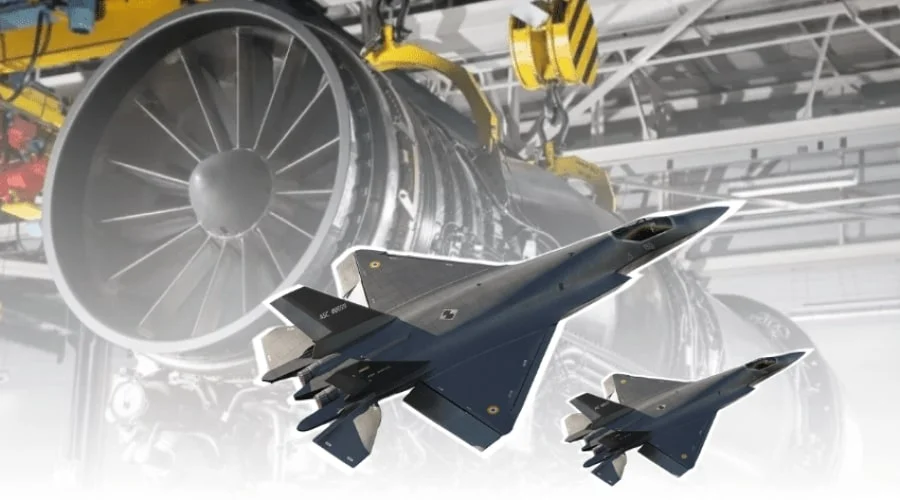
New Delhi: The Indian Air Force (IAF) may consider acquiring more than the initially planned two squadrons of the Advanced Medium Combat Aircraft (AMCA) Mk1 if the development of the indigenous engine intended for the next-generation Mk2 variant faces delays.
The possibility was raised by former Chief of the Air Staff Air Chief Marshal (Retd.) R.K.S. Bhadauria during an appearance on Episode 64 of the Ctrl + Alt + Defence podcast. He indicated that the IAF may need to keep its fighter induction plans flexible to avoid gaps in its future combat capabilities.
India’s AMCA programme is being developed in two phases. The initial Mk1 version is planned to use the American General Electric F414-INS6 turbofan engine, which produces approximately 98 kN of thrust. The subsequent Mk2 variant is expected to feature a more powerful engine in the 110–120 kN thrust category, to be developed indigenously in collaboration with a foreign partner.
Developing a fighter aircraft engine is a technically demanding process involving extensive testing, performance validation and integration with the aircraft’s airframe. Any delay in engine development or certification could affect the production schedule of the Mk2 variant.
In such a situation, expanding the Mk1 fleet could offer the IAF an alternative. Additional aircraft powered by the F414 engine would allow the service to continue inducting fifth-generation fighters rather than waiting for the indigenous propulsion system to become operational.


India also has an established interest in the F414 engine. It has been selected to power the Tejas Mk2 fighter, while GE Aerospace and Hindustan Aeronautics Limited (HAL) have entered into an agreement for its manufacturing in India. These developments could help build domestic manufacturing capabilities and strengthen the supporting supply chain.
Procuring additional Mk1 aircraft could, however, affect the timeline for introducing the more advanced Mk2 version. The approach would effectively prioritise continuity in fighter production while allowing more time for the indigenous engine programme to mature.
The possible expansion of the Mk1 fleet reflects a contingency approach to India’s fifth-generation fighter programme, balancing the need to strengthen the IAF’s combat fleet with the long-term objective of developing indigenous aerospace technology.











 https://www.youtube.com/watch?si=RtToJsBhYBatUrym&v=mOuYNSdhjHA&feature=youtu.be