Poor turnout at PDA workers’ conference prompts Akhilesh Yadav to dissolve district unit, highlighting challenges in grassroots mobilisation and cadre management
KANNAUJ: The Samajwadi Party’s (SP) preparations for the 2027 Uttar Pradesh Assembly elections have come under scrutiny following poor attendance at a PDA workers’ conference in Kannauj, a constituency considered one of the party’s traditional strongholds. The incident has raised questions about the party’s organisational strength, grassroots mobilisation and its ability to sustain the social coalition that contributed to its strong performance in the 2024 Lok Sabha elections.

According to political commentator Ashok Bhatia, the presence of empty chairs at a programme attended by state party president Shyamlal Pal exposed shortcomings in local organisational management. SP chief Akhilesh Yadav subsequently dissolved the district unit, signalling a push for greater accountability among party leaders.
The development is significant for the SP, which has been banking on its PDA formula — Pichhda, Dalit, Alpsankhyak (backward classes, Dalits and minorities) — to challenge the ruling Bharatiya Janata Party (BJP) in the next Assembly elections. The party’s electoral gains in Uttar Pradesh in 2024 had strengthened expectations that the coalition could form the foundation of a broader political mobilisation.
However, the Kannauj episode has raised questions about whether the electoral alliance has translated into a sustained organisational network at the grassroots level. The analysis argues that the unity witnessed during the Lok Sabha elections needs continued engagement, coordination and representation within the party structure to remain effective.
Kannauj, along with Mainpuri, Etawah and Firozabad, has traditionally been regarded as an important centre of SP influence. Weak participation at an official party programme in such a stronghold could affect cadre morale and provide the BJP with an opportunity to question the durability of the SP’s recent electoral gains.
The incident has also highlighted the importance of booth-level organisation and accountability. While prominent leaders and large rallies can generate political momentum, electoral success depends significantly on active local workers, voter outreach and the ability to mobilise supporters on polling day.

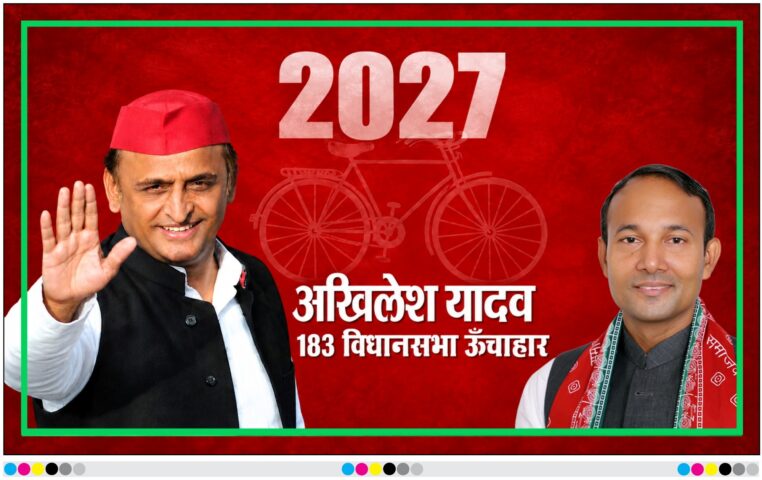
The dissolution of the district unit is being viewed as an attempt by Akhilesh Yadav to make organisational performance a more important consideration in leadership appointments and candidate selection. The analysis suggests that leaders may increasingly be assessed on their public engagement, local influence and ability to fulfil organisational responsibilities rather than seniority or proximity to the party leadership.
The PDA strategy faces additional challenges from the BJP’s counter-mobilisation efforts. According to Bhatia’s analysis, the BJP is seeking to consolidate support among non-Yadav backward communities and non-Jatav Dalits through welfare schemes and its extensive booth-level network. The party’s beneficiary outreach and organisational machinery could pose a challenge to the SP’s efforts to maintain a broad social coalition.
Another concern is whether the SP’s traditional organisational structure has sufficiently accommodated newer social groups. The limited turnout at the Kannauj conference, held in the presence of a non-Yadav backward-class leader, has prompted questions about the participation of sections of the party’s traditional local leadership and the extent to which the PDA formula has been institutionalised.
The contrast between the Lok Sabha and Assembly elections is also important. A coalition that performs well in a national election may require a different level of local coordination and sustained voter engagement to succeed in constituency-level contests.
For the SP, the Kannauj episode could therefore serve as a warning ahead of the 2027 elections. Strengthening booth committees, resolving internal factionalism, improving accountability and giving active grassroots workers greater responsibility will be crucial if the party hopes to convert its PDA strategy into electoral gains.
The coming months will test whether the organisational changes initiated by Akhilesh Yadav can address these weaknesses. The party’s ability to build a disciplined cadre, maintain unity among its social constituencies and sustain engagement beyond election periods could prove decisive in its contest with the BJP in Uttar Pradesh.












 https://www.youtube.com/watch?si=RtToJsBhYBatUrym&v=mOuYNSdhjHA&feature=youtu.be