Rafale, Sukhoi-30MKI, Tejas and Mirage-2000 showcase combat capabilities; PM Narendra Modi witnesses spectacular aerial display at Namo Ghat
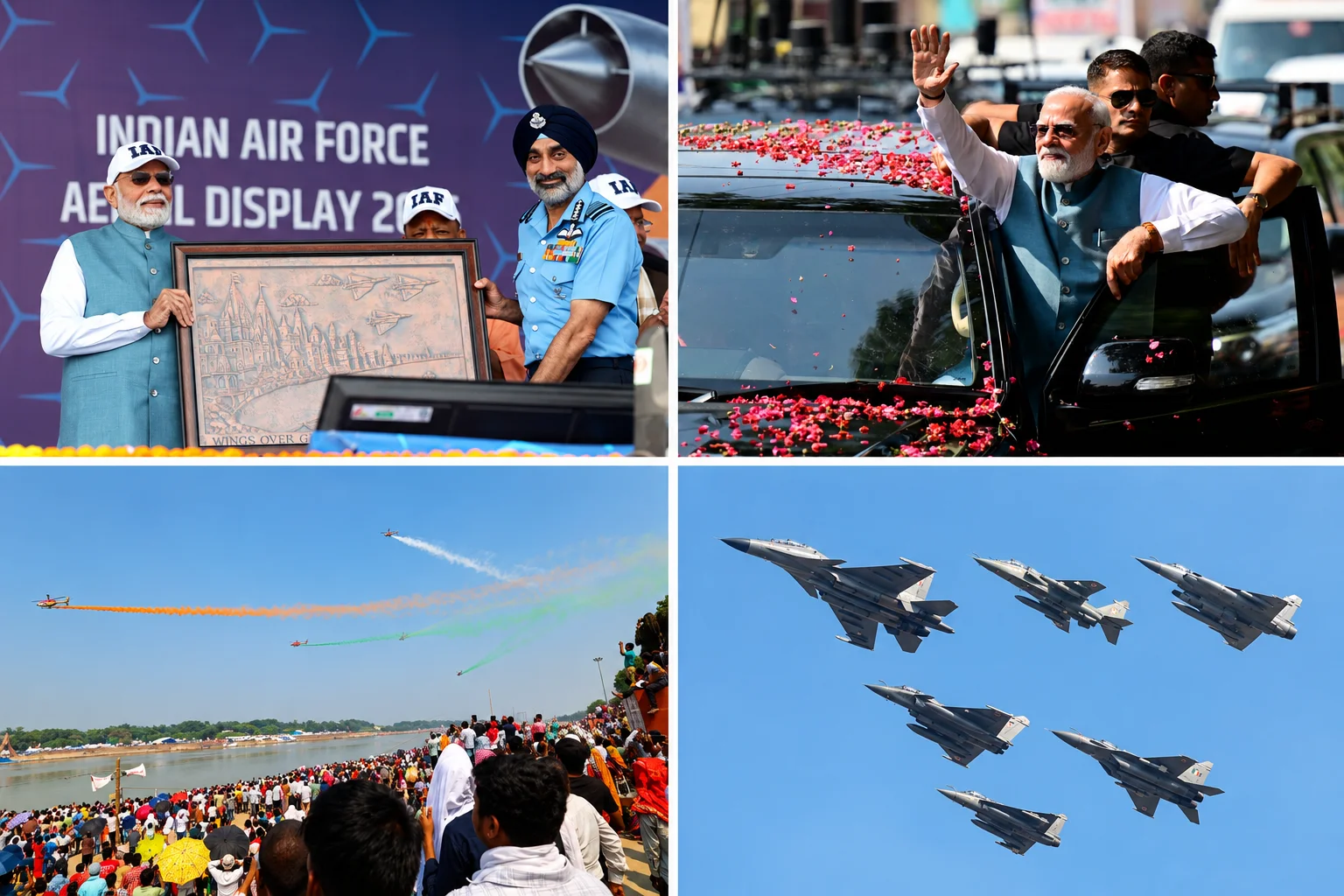
VARANASI: The skies over Varanasi reverberated with the roar of Indian Air Force (IAF) fighter jets as the spectacular air show ‘Wings Over Ganga’ was organised at Namo Ghat to mark the force’s 94th anniversary. Prime Minister Narendra Modi, Defence Minister Rajnath Singh, Uttar Pradesh Governor Anandiben Patel and Chief Minister Yogi Adityanath witnessed the impressive display of aerial manoeuvres, precision flying and operational capabilities.

Rafale, Sukhoi-30MKI, indigenous Light Combat Aircraft Tejas and Mirage-2000 fighters enthralled spectators with their high-speed manoeuvres and coordinated formations. Named ‘Mahadev’, ‘Vishwanath’, ‘Neelkanth’ and ‘Pashupati’, the formations reflected Kashi’s spiritual heritage while showcasing the strength and professionalism of the Indian Air Force.
The programme opened with a performance by the Sarang helicopter display team, whose synchronised manoeuvres demonstrated exceptional coordination and flying skills. Three Mi-17 V5 helicopters subsequently presented the ‘Omkar’ formation, carrying the national flag and the IAF flag. A formation of three Chetak helicopters, named ‘Ganga’, showered flower petals over the river, creating a memorable spectacle against the backdrop of the historic ghats.
The air show featured a diverse range of military aircraft and formations, highlighting the IAF’s combat readiness, surveillance capabilities, airlift capacity and operational coordination. The ‘Rudra’ formation showcased the Sukhoi-30MKI, while the ‘Bhagirathi’ formation brought together Light Combat Helicopters and Apache attack helicopters. The ‘Tridev’ formation, featuring helicopters from the Indian Navy, Army and Air Force, symbolised joint operational capability among the three services.
A special highlight was the display of the number ‘94’ by a Chinook helicopter, commemorating the Air Force’s 94 years of service to the nation. Other formations, including ‘Bhairav’, ‘Kailash’, ‘Trilochan’ and ‘Nataraj’, demonstrated the capabilities of transport aircraft, surveillance platforms and fighter jets.
The ‘Vishwanath’ formation featured three Sukhoi-30MKI fighters, while four Jaguar aircraft flew in the diamond-shaped ‘Pashupati’ formation. Three Rafale fighters formed the ‘Neelkanth’ formation, showcasing the agility and precision of modern combat aviation. The combined ‘Prachand’ formation brought together several fighter aircraft, including the Sukhoi-30MKI, Rafale, Jaguar, Mirage-2000, Tejas and MiG-29.
The indigenous Tejas fighter delivered one of the event’s most striking solo performances. Piloted by Group Captain Roop, the aircraft executed a series of demanding manoeuvres, including a four-point roll, vertical pitch-back, maximum-rate turn and other precision flying routines. The performance highlighted the growing capabilities of India’s indigenous aerospace technology and the country’s commitment to defence self-reliance.


The show also featured aerial splits by the Mahadev, Vishwanath and Neelkanth formations, followed by a simulated aerial combat sequence illustrating the importance of radar-based detection, tactical coordination and rapid decision-making during air operations.
Modern weapon systems associated with the participating aircraft were highlighted during the programme, underlining the IAF’s capabilities in air defence, precision strikes and operations against a range of targets. References to Operation Balakot and Operation Sindoor further emphasised the force’s operational preparedness and precision-strike capabilities.
The event concluded on a spectacular note with the ‘Dashashwamedh’ formation, featuring a C-17 Globemaster alongside the Surya Kiran aerobatic team. Led by Group Captain Ajay Dashrath, the nine-aircraft Hawk team performed synchronised manoeuvres, barrel rolls, formation changes and colourful aerial patterns. The aircraft painted the colours of the national flag across the sky, drawing loud applause from spectators gathered along both banks of the Ganga.
Beyond the aerial spectacle, Varanasi witnessed a festive welcome for Prime Minister Modi. Along the approximately eight-kilometre route from the Police Lines helipad to Namo Ghat, residents and BJP workers greeted him with flower showers, traditional music, damru performances, conch-shell blowing and cultural presentations. Twelve welcome points were organised along the route, reflecting the city’s distinctive cultural traditions.
Responding to the enthusiastic crowds, Modi stepped out of his car to wave at people and acknowledge their greetings. Slogans of ‘Har Har Mahadev’, ‘Jai Shri Ram’ and ‘Modi-Modi’ echoed along the route.
The ‘Wings Over Ganga’ air show brought together military aviation, indigenous defence technology and Kashi’s cultural identity, offering spectators a vivid demonstration of the Indian Air Force’s skill, discipline and commitment to national security.











 https://www.youtube.com/watch?si=RtToJsBhYBatUrym&v=mOuYNSdhjHA&feature=youtu.be