Mumbai: To understand India, one must look beyond its contemporary identity and explore the cultural and spiritual traditions that have shaped its civilisational consciousness. “Hanuman Ansh” attempts to do precisely that. More than a conventional cinematic narrative, the film seeks to engage with themes of faith, service, compassion, cultural memory and spiritual self-discovery.
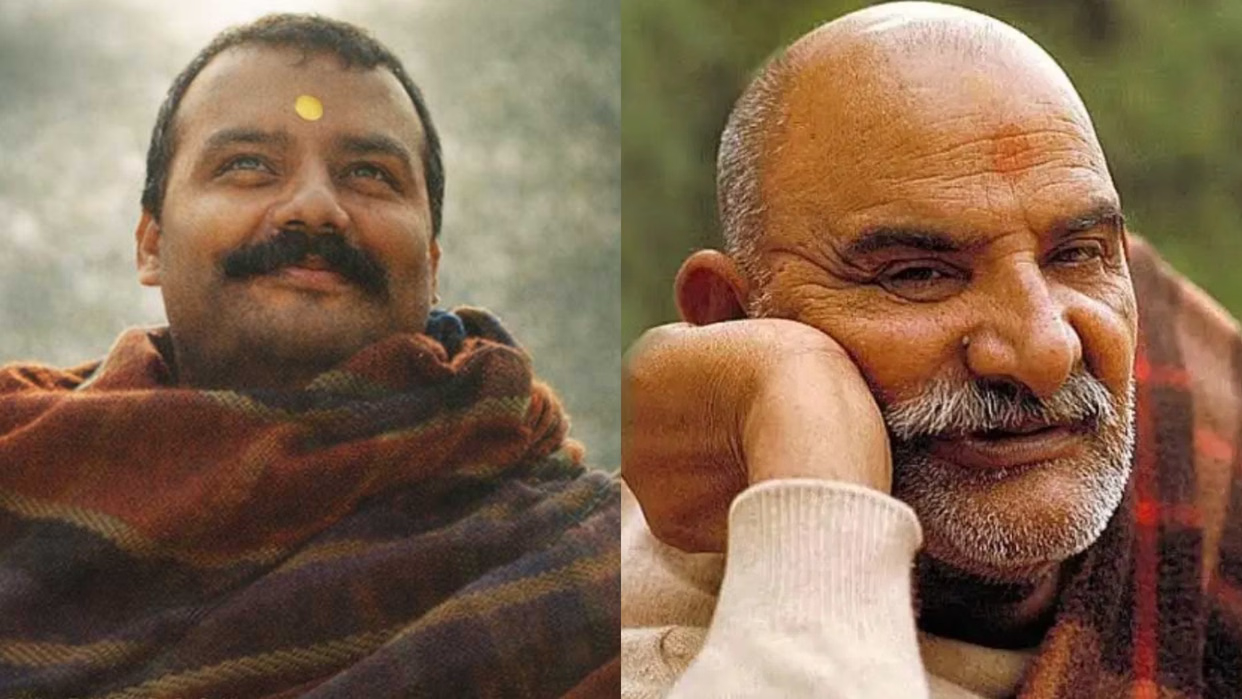
Inspired by the life and spiritual influence of Neem Karoli Baba, the film places devotion and humanity at the centre of its storytelling. Rather than presenting spirituality as something detached from everyday life, it attempts to portray it as a source of meaning, inner strength and connection with others.
What makes the film particularly interesting is the manner in which its journey has unfolded. According to the figures cited in the source material, the film began with a relatively modest release and limited promotional reach. Its opening-day earnings were reported at around ₹10 lakh, while the initial week remained comparatively subdued. However, its fortunes changed as audiences began recommending it to friends and family.
The subsequent growth of the film illustrates the continuing power of word-of-mouth publicity. As more viewers experienced the story, conversations around the film reportedly helped expand its audience and increase the number of screenings. By the third and fourth weeks, its box-office trajectory had become considerably stronger.
Reports cited in the source material indicate that the film, made on a budget of approximately ₹2 crore, eventually moved towards the ₹100-crore mark in earnings. If these figures are accurate, the financial performance represents a remarkable return on investment. But the more interesting question is not simply how much the film earned; it is why audiences connected with it.
Spirituality in a Fast-Changing World
The film arrives at a time when younger audiences are negotiating an increasingly fast-paced world shaped by technology, social media, competition and constant pressure to achieve.
Against this backdrop, a story centred on introspection, faith, compassion and cultural roots can offer a different kind of cinematic experience. “Hanuman Ansh” appears to draw its appeal from precisely this emotional space.
Its success suggests that contemporary audiences are not necessarily turning away from modernity when they engage with spiritual or culturally rooted stories. Instead, there may be a growing desire to balance modern lifestyles with a deeper connection to tradition and identity.
When Story Matters More Than Scale
The film also raises an important question for the Indian film industry: does a large budget guarantee audience engagement?


Big stars, elaborate sets, extensive marketing campaigns and large production budgets can create visibility, but they do not automatically create emotional resonance. “Hanuman Ansh” provides an example of how a comparatively modest production can attract attention when audiences find its themes meaningful.
The reported contrast between the film’s performance and that of some larger-budget releases has further fuelled discussion about the relationship between production scale and audience acceptance. Ultimately, however, box-office comparisons alone cannot determine a film’s artistic value.
A Conversation with Cultural Memory
Perhaps the strongest aspect of “Hanuman Ansh” is its attempt to make spirituality accessible through an emotional narrative. Its engagement with Neem Karoli Baba’s philosophy places values such as service, love, compassion and devotion at the heart of the story.
For viewers familiar with these traditions, the film can function as a cultural reminder. For younger audiences, it may offer an entry point into ideas that are often discussed outside the fast-moving rhythms of contemporary popular culture.
Its appeal, therefore, extends beyond the conventional parameters of entertainment. The film invites viewers to pause, reflect and consider the relationship between personal aspirations and inner fulfilment.
Verdict
“Hanuman Ansh” is best viewed not merely through its reported box-office numbers but through the conversation it has generated around spirituality, cultural identity and the continuing relevance of traditional values.
Its journey demonstrates the potential of cinema to succeed through audience connection rather than promotional scale alone. More importantly, it suggests that stories rooted in India’s spiritual and cultural traditions can find resonance even among contemporary viewers.
The images on a cinema screen disappear when the lights come on, but some stories continue to live in the minds of audiences. “Hanuman Ansh” seeks to be one of those stories — a cinematic invitation to pause, look inward and reconnect with the cultural roots that continue to shape India’s collective consciousness.













 https://www.youtube.com/watch?si=RtToJsBhYBatUrym&v=mOuYNSdhjHA&feature=youtu.be