Oslo/New Delhi — What was projected as a routine diplomatic interaction in Oslo quickly escalated into a global talking point, raising uncomfortable questions about press freedom, diplomatic communication, and the role of social media in shaping international narratives around India.
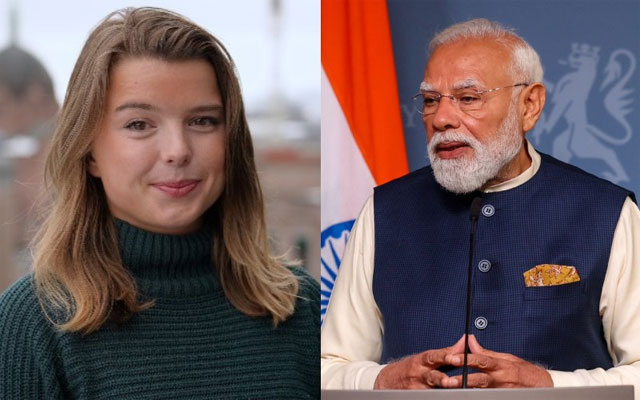
The incident unfolded during a joint press briefing between two heads of government in the Norwegian capital. Such events are typically structured, tightly managed, and designed more for diplomatic optics than open-ended interrogation. However, a question raised by a journalist—later identified as Hel Ling, associated with a relatively lesser-known Norwegian publication—shifted the tone of the interaction.

The journalist reportedly posed sharp questions on press freedom and India’s democratic image, continuing her remarks even as the formal briefing concluded. The situation intensified when she followed officials briefly outside the hall, later amplifying the exchange on social media platforms, where her posts quickly gained traction.
While isolated instances of heated questioning are not unusual in international diplomacy, the response from India’s diplomatic side became the focal point of criticism. Instead of concise rebuttals, Indian officials delivered extensive contextual explanations referencing India’s civilizational history, scientific heritage, and global contributions—from ancient trade routes to modern vaccine diplomacy.
Critics argued that the response, though factually rich, risked appearing more rhetorical than strategic in a high-pressure media environment. In diplomacy, messaging often depends as much on brevity and framing as on content, and the episode highlighted the challenges of balancing both under scrutiny.
The matter escalated further after India’s diplomatic mission in Oslo invited the journalist to a separate briefing later that day. The interaction again turned tense, with questions about trust, governance, and international credibility. Officials reportedly reiterated India’s historical and developmental achievements, while the journalist maintained a confrontational tone.

Back in India, the incident triggered a sharp polarisation on social media. One segment of users questioned the journalist’s intent, digging into her past commentary and online activity, while others defended her right to question state representatives. Within hours, the episode evolved from a diplomatic exchange into a digital flashpoint, amplifying the visibility of the journalist far beyond her initial reach.
Political reactions in India were equally divided. Opposition leaders cited the episode as evidence of shrinking space for press engagement, while government supporters argued that structured diplomatic events are not meant for disruptive questioning. Analysts, however, pointed out that the core issue lay not in a single exchange, but in the absence of regular, open-format press interactions that allow sustained and controlled dialogue between the media and leadership.
The controversy took another turn when a Norwegian newspaper reportedly published a satirical cartoon depicting the Indian leadership in a manner widely criticized in India as reinforcing outdated colonial stereotypes. The depiction sparked debate over media ethics and the boundaries of satire in cross-cultural reporting.
Amid the noise, observers noted a broader irony: while India’s global image has been shaped by its economic rise, technological expansion, and diplomatic outreach, isolated media confrontations—when amplified through digital ecosystems—can quickly overshadow structured policy narratives.
Ultimately, the Oslo episode reflects a larger reality of contemporary geopolitics: perception is no longer shaped solely in conference rooms or bilateral agreements, but in real time across newsrooms, smartphones, and social media feeds. In that space, diplomacy is often judged not only by what is said—but by how quickly it is clipped, shared, and interpreted.




 ---------------------------------------------------------------------------------------------------