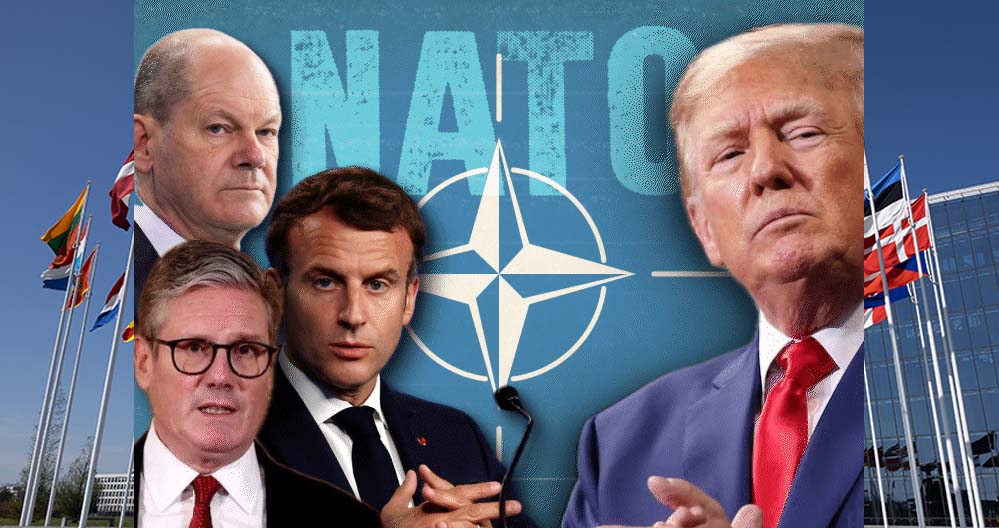
Paris: In a significant geopolitical shift amid escalating tensions in the Middle East, European nations are moving toward a more independent security framework—informally dubbed a “European NATO”—aimed at reducing reliance on the United States and strengthening regional defense coordination.
The initiative, led by United Kingdom and France, comes in response to growing disagreements with Washington over the handling of the ongoing conflict involving Iran and maritime security in the Gulf region.

Strategic Shift Amid Hormuz Crisis
At the heart of the European plan lies the security of the Strait of Hormuz, a vital corridor through which nearly one-fifth of global oil supplies pass. Disruptions caused by conflict and threats to shipping routes have severely impacted energy flows to Europe and beyond.
To address this, European leaders are proposing a coordinated naval mechanism to safeguard maritime trade, ensure energy security, and restore stability in key shipping lanes.
Three Core Objectives
The proposed European-led defense framework outlines three primary goals:
- Ensuring the safe evacuation of vessels trapped in conflict zones
- Conducting large-scale mine-clearing operations in affected waters
- Establishing a long-term surveillance and escort system for commercial shipping
This structure would operate under a European command, marking a clear departure from traditional US-led NATO operations.
Growing Rift with Washington
The plan notably excludes the United States, reflecting widening strategic differences between European capitals and US leadership, particularly under Donald Trump. Disputes have intensified over aggressive military posturing, including naval blockades and broader conflict strategies involving Iran.
Several European countries have declined to support US-led military initiatives, signaling a shift toward what leaders describe as “strategic autonomy” in defense and foreign policy.

Germany Signals Support
Importantly, Germany—historically cautious about independent military alignments—has shown openness to the initiative. Analysts suggest that Germany’s advanced mine-clearing capabilities could significantly strengthen the proposed alliance’s operational effectiveness.
Learning from Past Missions
The concept builds on earlier European-led efforts such as the Red Sea maritime security initiative, where European forces operated independently of US command structures. The new proposal aims to scale up that model into a broader, more permanent framework.
Diplomatic Push: 40-Nation Summit
To advance the initiative, British Prime Minister Keir Starmer and French President Emmanuel Macron are set to convene a high-level summit involving over 40 countries. The meeting will focus on formalizing the structure, mandate, and operational scope of the proposed alliance.
Challenges Ahead
Despite its ambitions, the plan faces significant hurdles. A key question remains whether Iran will permit such a European-led mission in strategically sensitive waters. Additionally, there are concerns about potential friction with US naval forces already active in the region.
Experts warn that without careful coordination, overlapping military presences could heighten tensions rather than ease them.
A Defining Moment for Global Power Balance
If successfully implemented, the “European NATO” could redefine the global security architecture, signaling Europe’s intent to act independently on defense matters. Beyond maritime security, the move carries a broader political message: Europe is increasingly prepared to chart its own course in an era of shifting alliances and geopolitical uncertainty.
As discussions unfold, the world will be closely watching whether this bold European initiative can translate into a cohesive and effective security framework.