Mumbai: The recent controversy surrounding the song “Sarke Chunar Teri Sarke” from the upcoming film KD: The Devil has once again ignited debate over misogyny in Bollywood music and cinema. Featuring actors Nora Fatehi and Sanjay Dutt, the track faced severe backlash soon after its release in March 2026. Critics accused it of promoting vulgar double meanings, sexually suggestive choreography, and the objectification of women. The outrage eventually led to the song being removed from several digital platforms in India, while complaints were submitted to the Central Board of Film Certification and the National Human Rights Commission of India over concerns about its influence on young audiences.
Among the voices condemning the track was singer Armaan Malik, who called the song a “new low” for Bollywood music. However, the controversy is not simply about one song. Instead, it reflects a much deeper and older pattern in Hindi cinema where misogyny, objectification, and gender stereotypes have repeatedly appeared in mainstream songs—often packaged as glamorous entertainment.
A Longstanding Cultural Pattern
Misogyny in Bollywood songs did not emerge overnight. While the portrayal of women as romantic interests has existed since the early decades of Hindi cinema, the explicit sexualization and objectification seen today intensified significantly from the 1990s onward. The rise of the “item number”—a high-energy dance sequence usually featuring a glamorous female performer unrelated to the film’s narrative—became a defining commercial formula.
Item songs were often inserted purely to attract audiences and boost a film’s popularity. They featured catchy beats, provocative choreography, and lyrics packed with innuendos. While marketed as playful entertainment, many critics argue that such songs frequently reduce women to decorative objects meant for male consumption.
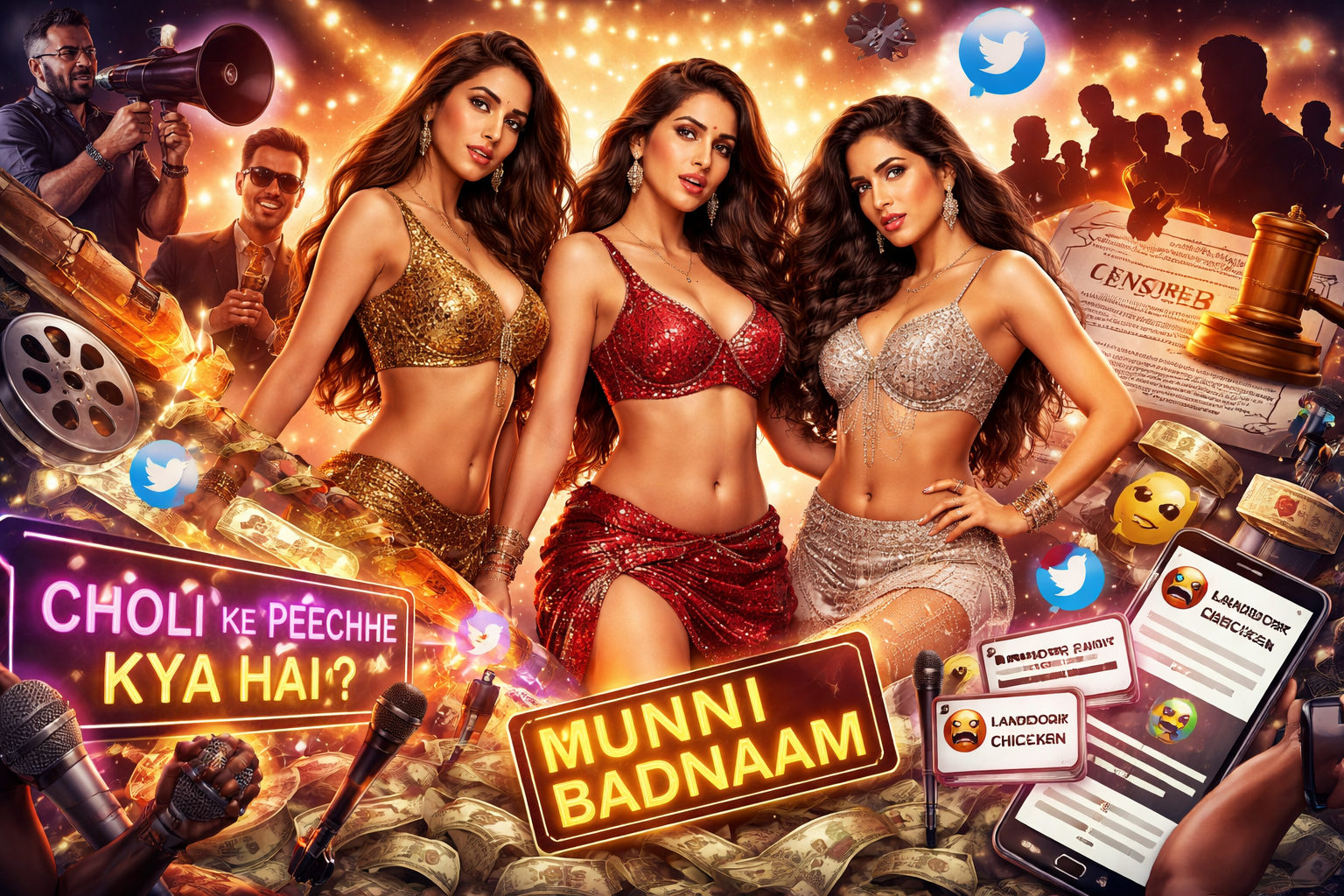
One of the earliest controversies of this kind emerged with the song “Choli Ke Peeche Kya Hai” from the film Khalnayak (1993). Sung by Alka Yagnik and Ila Arun, the song famously asked the teasing question “What lies behind the blouse?”—with the playful answer “My heart.” Though defenders claimed the lyrics were metaphorical and rooted in folk traditions, critics saw them as overtly sexual and objectifying. The debate around the song signaled the beginning of a more openly provocative phase in Bollywood music.
The Rise of the Item Song Era
By the late 2000s and early 2010s, item songs had become a near-essential ingredient of commercial Bollywood films. Producers often marketed them aggressively, sometimes even before the film’s trailer was released. These songs typically featured glamorous actresses performing highly choreographed dance numbers surrounded by cheering male crowds.
One of the most famous examples is “Munni Badnaam Hui” from the blockbuster film Dabangg (2010), performed by Malaika Arora. The lyrics describe a woman declaring herself “defamed” in a flirtatious and sexualized context. The song became a massive commercial success, dominating music charts and dance floors across India. Yet it also drew criticism for reinforcing the idea that a woman’s worth lies in her desirability and ability to entertain men.
The sequel film Dabangg 2 (2012) continued the trend with “Fevicol Se”, featuring Kareena Kapoor Khan. The lyrics famously compared the woman to “tandoori chicken” to be consumed with alcohol—a line widely criticized for reducing women to consumable objects. While the song again proved commercially successful, it intensified discussions about the normalization of sexist imagery in Bollywood.
Similarly, “Sheila Ki Jawani” from Tees Maar Khan (2010), performed by Katrina Kaif, became one of the most iconic item songs of the decade. Supporters argued that the song portrayed a confident woman celebrating her sexuality. Critics, however, pointed out that the camera gaze and lyrics still framed the performer primarily as an object of male desire.
Another widely debated track was “Chikni Chameli” from Agneepath (2012), again featuring Katrina Kaif. The song’s aggressive choreography and heavily sexualized lyrics reinforced the trope of the “wild” female performer entertaining male spectators.
Lyrics, Language and the Culture of Double Meanings
One of the defining features of many controversial Bollywood songs is the use of double entendre. Writers often craft lyrics that appear playful on the surface but carry unmistakable sexual undertones. This strategy allows filmmakers to push boundaries while maintaining plausible deniability.
Songs such as “Gandi Baat” from R… Rajkumar (2013) relied heavily on such suggestive wordplay. Party tracks frequently combine flirtation, alcohol imagery, and provocative dance moves, creating a formula that appeals to mass audiences but also invites criticism.
The popularity of rapper Yo Yo Honey Singh in the early 2010s further intensified debates around misogynistic lyrics. Tracks like “Blue Eyes” and other collaborations were often criticized for portraying women as trophies, conquests, or objects of male dominance. Feminist groups and cultural commentators repeatedly questioned whether such music normalized problematic attitudes toward women.
Romanticizing Possessiveness and Harassment
Beyond item songs, mainstream Bollywood romances have also been criticized for presenting possessiveness and persistence as signs of love. Songs frequently depict male protagonists pursuing women aggressively until they eventually give in.
For instance, “Main Tera Boyfriend” from the film Raabta (2017) casually reinforces the notion that a man can claim ownership over a romantic partner. While often framed humorously, such lyrics contribute to cultural narratives where male entitlement and female compliance are normalized.
Researchers studying Bollywood music from 2011 to 2018 have identified recurring themes: men portrayed as dominant decision-makers, women depicted as objects of desire, and persistent male pursuit framed as romantic rather than intrusive. These narratives, critics argue, blur the line between flirtation and harassment.
Academic Perspectives on the Impact
Several academic studies have attempted to analyze how Bollywood songs influence cultural attitudes. Thematic analyses of popular Hindi songs reveal consistent patterns of gender stereotyping, including the portrayal of women as submissive, seductive, or dependent on male validation.
Some scholars argue that repeated exposure to such imagery can desensitize audiences to sexist attitudes. When objectification becomes normalized through catchy music and glamorous visuals, it risks shaping public perceptions of gender roles—especially among younger audiences who consume film music extensively through social media platforms.
Critics also point to the frequent association between item songs and alcohol-fueled environments in films. Bars, parties, and dance clubs often serve as the backdrop, reinforcing a narrative where women exist primarily to entertain male spectators.

The Commercial Logic Behind the Trend
Despite criticism, item songs remain a powerful commercial tool for Bollywood producers. A catchy dance number can generate millions of views online, dominate streaming charts, and become a marketing centerpiece for a film’s promotion.
Music labels, choreographers, and filmmakers often argue that such songs are simply fantasy entertainment. Performers sometimes defend them as expressions of confidence and glamour rather than exploitation.
For actresses and dancers, appearing in a popular item number can dramatically increase visibility and career opportunities. Performers like Malaika Arora and Nora Fatehi have built major fan followings through dance performances that became viral hits.
However, critics maintain that commercial success should not excuse problematic messaging. They argue that Bollywood—given its massive cultural influence across South Asia and the diaspora—has a responsibility to avoid reinforcing regressive stereotypes.
The Role of Social Media and Changing Attitudes
What distinguishes the recent “Sarke Chunar Teri Sarke” controversy from earlier debates is the speed and scale of public reaction. Social media platforms now allow audiences to voice criticism instantly, forcing filmmakers and music labels to respond quickly.
Public outrage has occasionally resulted in edits, apologies, or the removal of controversial content. Activists and commentators increasingly call for stricter scrutiny by regulatory bodies such as the Central Board of Film Certification and the National Human Rights Commission of India.
The growing awareness around gender equality has also influenced public discourse. Many younger viewers question why mainstream cinema continues to rely on outdated stereotypes when audiences are becoming more socially conscious.
Voices Within the Industry
Interestingly, criticism of misogynistic songs is no longer limited to activists or academics. Several voices within the film industry have begun acknowledging the issue.
Artists such as Armaan Malik have publicly criticized vulgar lyrics, arguing that music should evolve with changing social values. Some filmmakers and lyricists have also attempted to produce songs that celebrate women without objectifying them.
However, progress has been uneven. For every progressive track that gains popularity, multiple new item songs continue to appear with similar tropes.
A Slow Cultural Shift
The backlash against “Sarke Chunar Teri Sarke” reflects a broader cultural shift in India. Audiences are increasingly questioning content that normalizes misogyny or reduces women to visual spectacle.
Yet Bollywood’s relationship with item songs remains complicated. These numbers continue to deliver commercial success, ensuring their survival within mainstream filmmaking.
Ultimately, the debate is less about banning songs and more about rethinking creative choices. Can Bollywood produce energetic dance numbers without relying on sexist imagery? Can lyricists craft catchy lines that celebrate romance without normalizing objectification?
The answers may determine how Hindi cinema evolves in the coming years.
The controversy surrounding the song from KD: The Devil is not an isolated incident but part of a long history of misogynistic representation in Bollywood music. From the provocative lyrics of Khalnayak in the early 1990s to the commercial success of item songs in films like Dabangg and Tees Maar Khan, the industry has repeatedly relied on sexualized portrayals of women to capture audience attention.
While commercial pressures and entertainment value have often been used to justify these choices, growing public awareness suggests that audiences are becoming less tolerant of regressive content. The criticism surrounding performers like Nora Fatehi and Sanjay Dutt in the latest controversy reflects a wider demand for accountability.
Whether Bollywood chooses to adapt or continue with the same formula will shape not only the future of its music but also its cultural influence on millions of viewers.