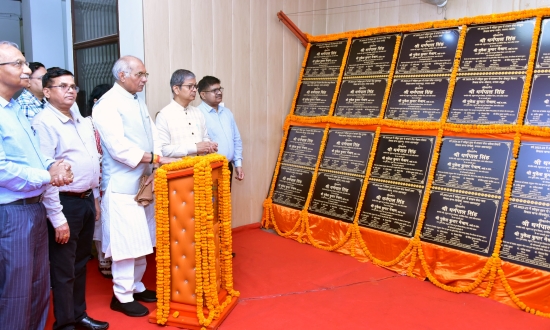
Lucknow: In a major push for cattle welfare and rural sustainability, Uttar Pradesh Livestock and Dairy Development Minister Dharampal Singh virtually inaugurated 30 newly built large-scale cow protection centres across 15 districts, signalling a significant expansion of the state’s animal care infrastructure.
Each facility is designed to house around 400 cattle, providing structured care for stray and abandoned animals with access to proper shelter, nutritious fodder, clean drinking water, and veterinary services. The centres span multiple districts, including Hardoi, Shahjahanpur, Gorakhpur, Aligarh, and Basti.

Focus on Quality and Scale
Addressing officials during the event in Lucknow, the minister stressed that construction quality and operational efficiency must not be compromised. He called for active involvement of local administrations to ensure the centres function effectively and deliver intended outcomes.
The government has approved a total of 630 such facilities, of which 518 have already been completed—reflecting a large-scale public investment aimed at strengthening cattle welfare systems across the state.
Sustainability at the Core
Beyond animal care, the initiative integrates environmentally sustainable practices. The centres are being equipped with modern infrastructure such as fodder banks, green feed production units, and veterinary care systems.

In a bid to make the shelters self-reliant, innovative activities including vermicomposting, cow dung-based product manufacturing, and compressed biogas (CBG) generation are being introduced. These measures are expected to reduce waste, generate revenue, and promote circular rural economies.
Creating Rural Livelihoods
The programme also opens up employment opportunities by encouraging participation from self-help groups, non-governmental organisations, and private sector entities. Local communities are expected to benefit through jobs in operations, maintenance, and allied activities.
A Multi-Dimensional Initiative
By combining cattle welfare with sustainability and livelihood generation, the state government aims to create a long-term, scalable model that addresses multiple challenges—ranging from stray cattle management to rural employment and environmental conservation.
Officials say the initiative marks a shift towards integrated policy planning, where welfare measures are aligned with economic and ecological priorities.


 ---------------------------------------------------------------------------------------------------