Environmental Sustainability through the IKS prism
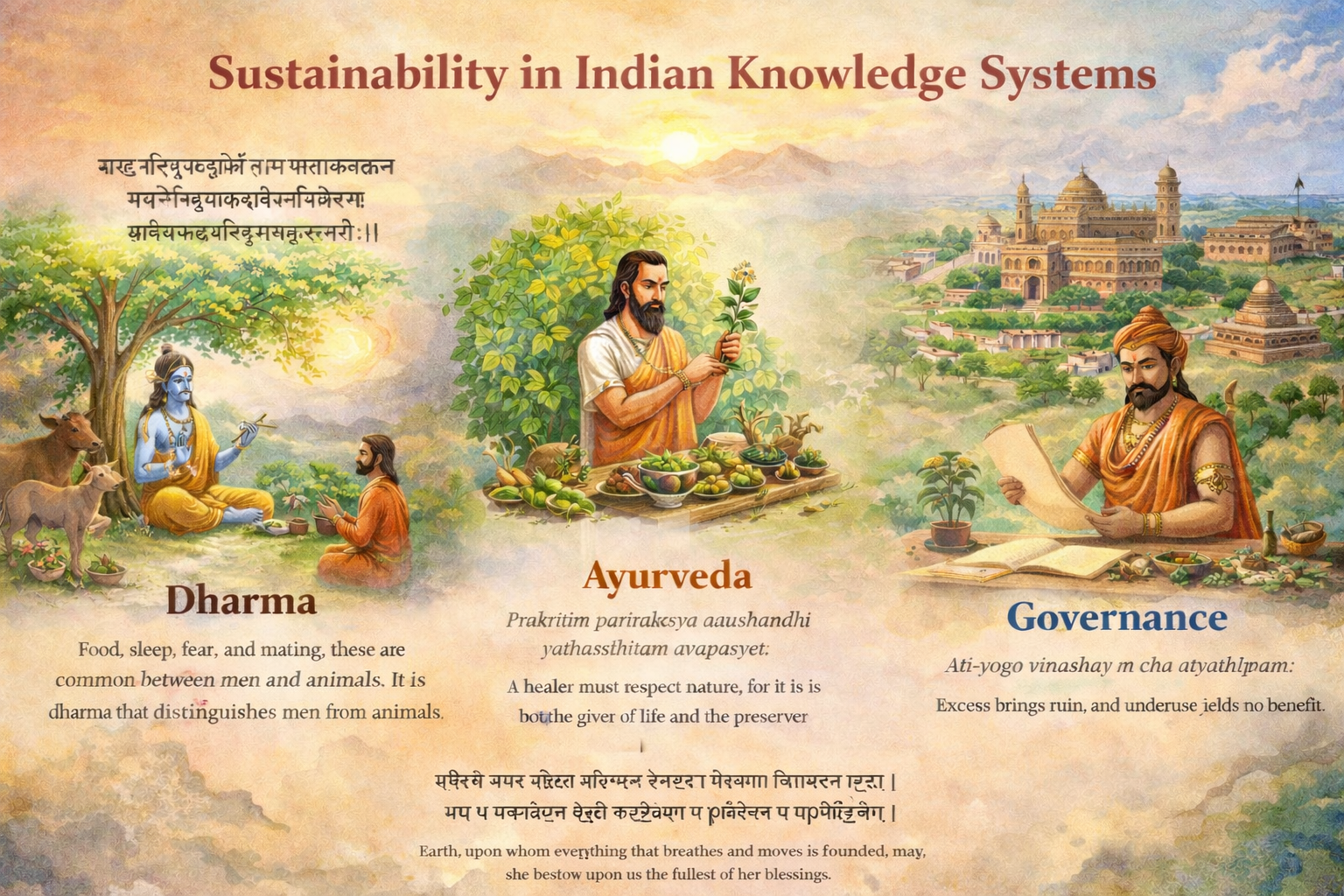
Lucknow: A unique feature of Indian philosophy is the concept of dharma—the ethical and moral law that guides human behaviour. Unlike animals, which are driven by instinct, humans are expected to follow dharma. This distinction between humans and animals is highlighted in the Hitopadeśa: आहारनिद्राभयमैथुनञ्चसामान्यमेतत्पशुभिर्नराणाम् | धर्मोहितेषाम्अधिकोविशेषःधर्मेणहीनापशुभिस्समानाः ||  ‘Food, sleep, fear, and mating, these are common between men and animals. It is dharma, the performance of one’s duties, which specially distinguishes men from animals. Those who are bereft of dharma are no different from animals.’ Thus, philosophical inquiry in India is…

Read More

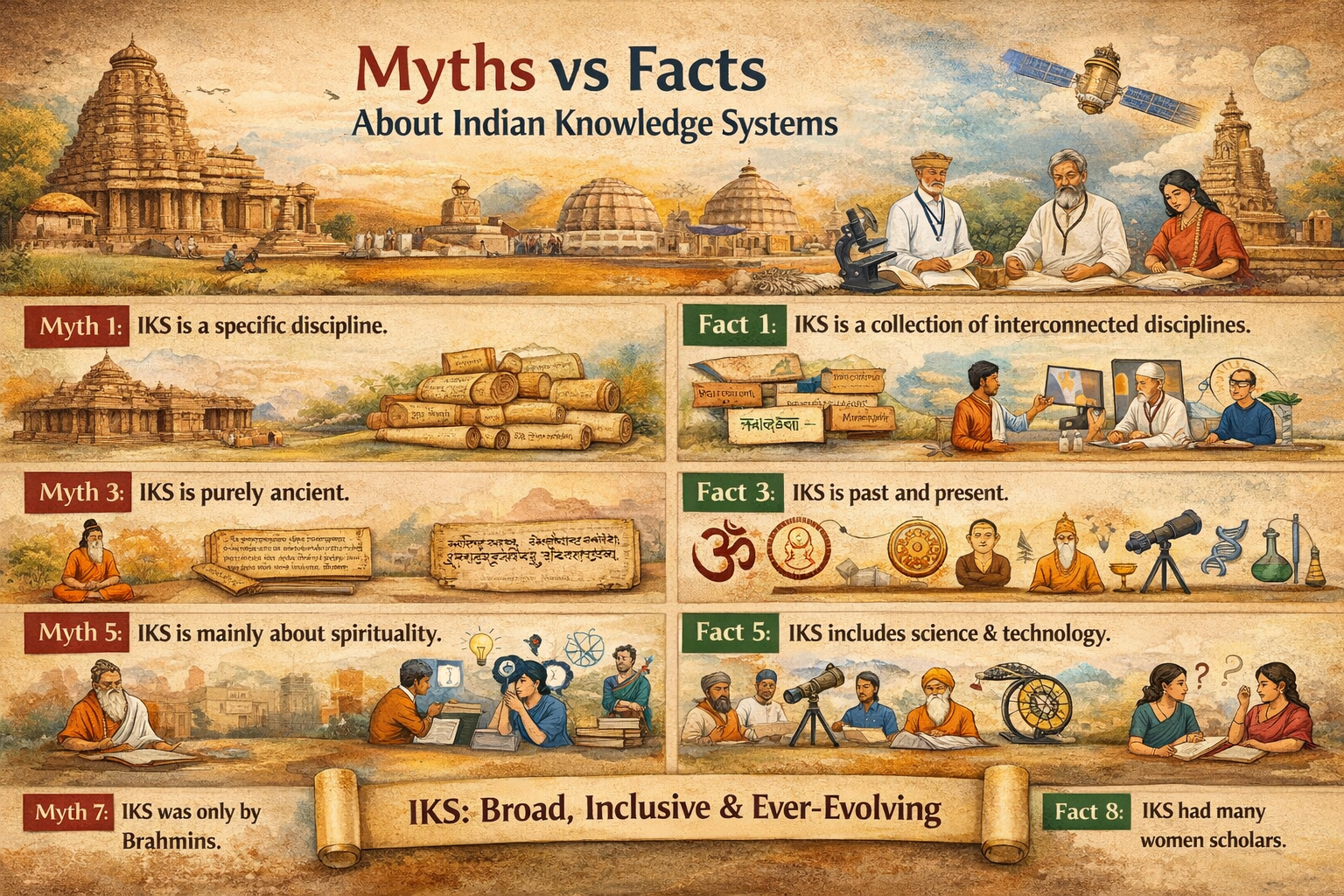
Common Misconceptions about IKS

Indian Knowledge Systems, IKS myths and facts, Indian civilization knowledge, ancient and modern Indian sciences, interdisciplinary knowledge traditions, Indian philosophy and sciences, Ayurveda and Siddha systems, Sanskrit and regional languages, Indian mathematics and astronomy, temple architecture science, cultural heritage of India, empirical sciences in IKS, evolution of knowledge traditions, non-Brahmin scholars in IKS, women scholars in Indian knowledge, governance and economics in IKS, art and linguistics in India, indigenous knowledge systems, Indian intellectual history

Lucknow: Numerous misconceptions about IKS persist, clouding its true nature and scope, which stem from many factors – limited understanding of its vastness, misrepresentation in popular media and the overlay of modern paradigms on ancient knowledge traditions. IKS is a dynamic, evolving, and interdisciplinary repository of knowledge that has developed over millennia in the Indian subcontinent, covering disciplines such as art, architecture, linguistics, health sciences, governance, mathematics, astronomy, etc. These are interconnected and deeply rooted in the lived experiences, cultural practices, and philosophical inquiries of the Indian civilization. Let us…

Read More