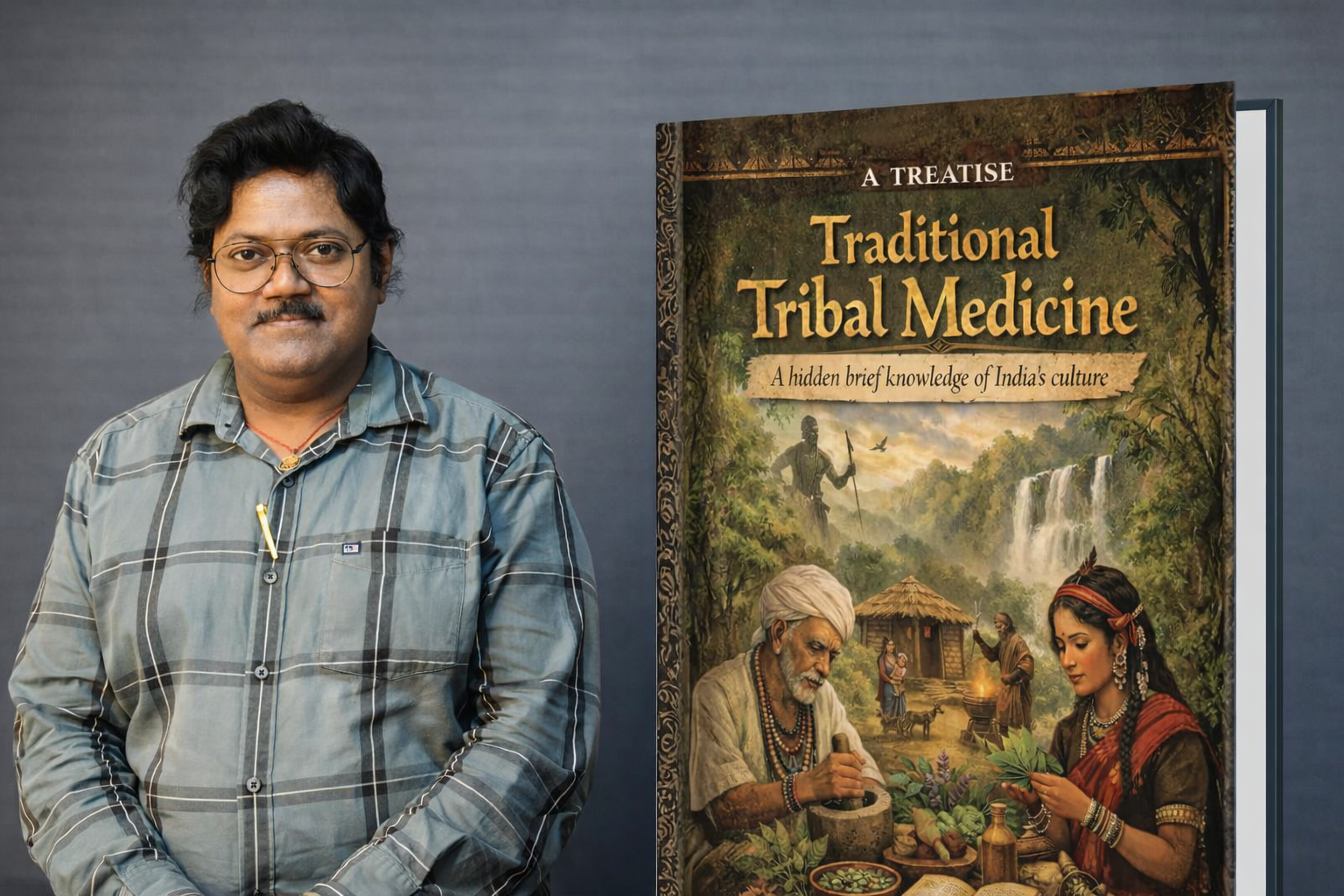
Bareilly: In a significant academic development aimed at preserving India’s rich indigenous knowledge systems, a new book titled Traditional Tribal Medicine: A Hidden Brief Knowledge of India’s Culture has been published under the guidance of the Vice-Chancellor of Mahatma Jyotiba Phule Rohilkhand University.
The book focuses on India’s traditional tribal medical practices, natural healing systems and the cultural knowledge associated with the use of medicinal plants. It highlights the long-standing relationship between tribal communities and nature, and documents how generations have used herbs, plants, natural minerals and local resources for disease treatment and health preservation.
India’s tribal communities have historically developed a wide range of healing techniques based on deep ecological understanding and traditional wisdom. However, with the rapid pace of modernisation and changing lifestyles, much of this knowledge is at risk of fading away. The newly published book attempts to scientifically and ethically document these traditions to ensure their preservation for future generations.
The publication explores various aspects of tribal medicine, including herbal remedies, preparation of traditional medicines, the role of traditional healers and the cultural and spiritual beliefs associated with healing practices. It also examines the connection between health, environment and sustainable use of natural resources within tribal societies.
Another key focus of the book is the scientific relevance of traditional knowledge. It emphasises the importance of ethnopharmacology and the potential of medicinal plants for modern pharmaceutical research, especially at a time when global interest in herbal and natural medicines is rapidly increasing.
The book has been authored by Dr. Amit Kumar Verma, Surabhi Shakya and Anubrat Raina. Dr. Verma, a noted academic associated with the university’s pharmacy department, has conducted extensive research in the fields of medicinal plants, essential oils, ethnopharmacology and herbal medicines, and has published numerous research papers and book chapters.

Co-author Surabhi Shakya is actively engaged in research related to medicinal plants, essential oils and innovative drug delivery systems, while Anubrat Raina works in the field of pharmaceutical chemistry and medicinal research.
The book is expected to be valuable for students, researchers, pharmaceutical scientists, healthcare professionals and scholars of ethnobotany and ethnopharmacology. It aims to serve as a bridge between traditional knowledge systems and modern scientific research, encouraging further academic exploration and practical applications.
The authors expressed their gratitude to the university’s Vice-Chancellor Prof. K. P. Singh for his guidance and encouragement in the publication of the work.
The publication is being viewed as an important step toward documenting and preserving India’s tribal medicinal heritage while bringing global attention to the country’s rich traditional healthcare knowledge.
(Report by Akhilesh Chandra Saxena from Bareilly.)