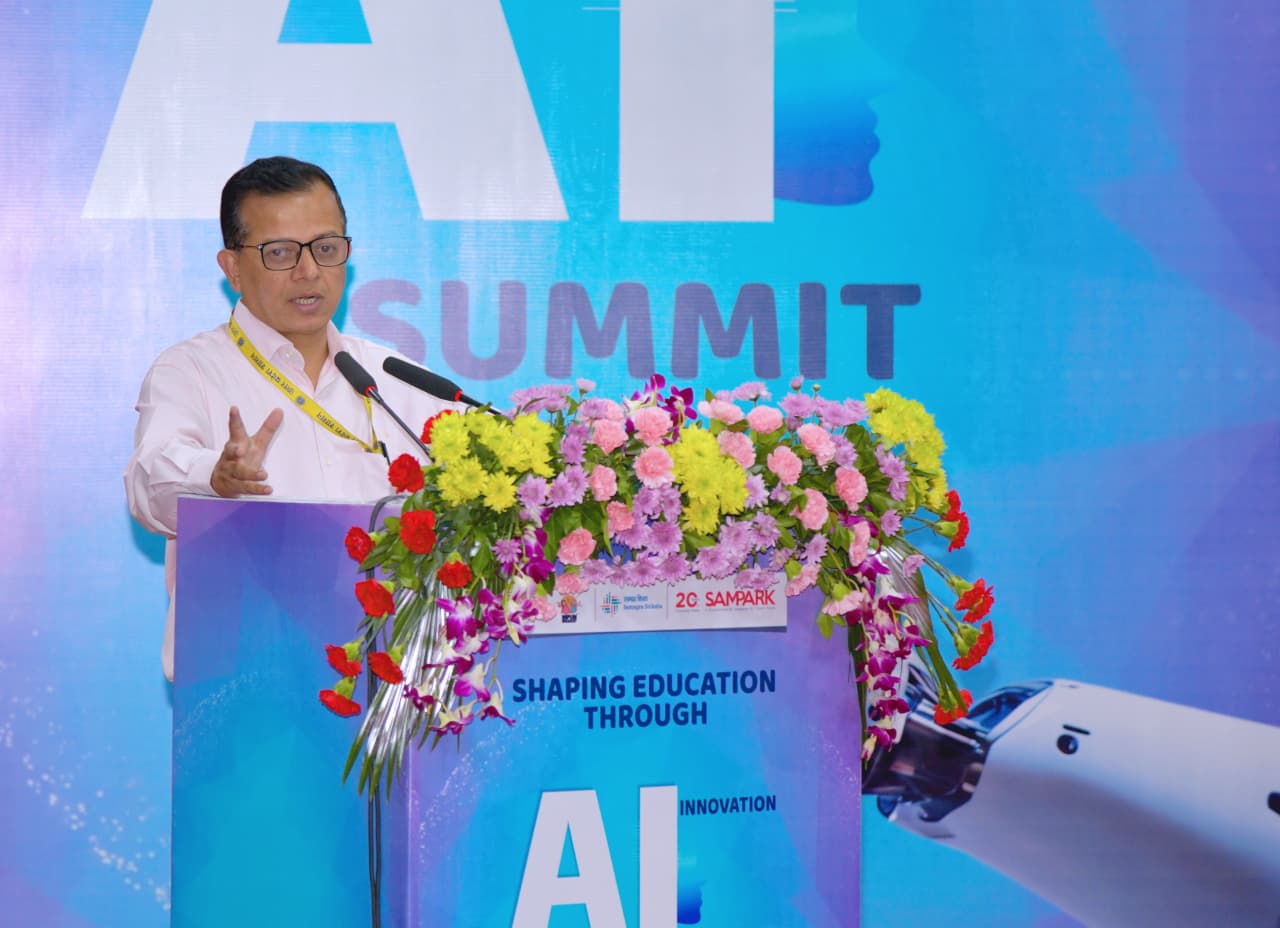
Lucknow: In a major step toward modernizing the state’s education system, the Uttar Pradesh government organized the “AI for Education Impact” State Action Dialogue at the Indira Gandhi Pratishthan in Lucknow. The initiative, guided by Basic Education Minister (Independent Charge) Sandeep Singh, focused on integrating Artificial Intelligence (AI) in council schools to enhance teaching quality and learning outcomes.
Addressing the dialogue, Parth Sarathi Sen Sharma, Additional Chief Secretary of Basic and Secondary Education, emphasized that AI is not a substitute for teachers, but a powerful tool to empower educators. He noted that AI-based models, such as those developed by the Sampark Foundation, are designed to strengthen teachers’ capacities and equip students with skills for a rapidly changing world. “This initiative will lay a strong foundation for future-ready education, ensuring children are connected to the technological shift early on,” he said.
Monica Rani, Director General of School Education, highlighted that education extends beyond textbooks, emphasizing the teacher’s role in shaping students’ futures. She stated that the workshop aimed to familiarize teachers with AI-driven innovations, particularly benefiting students in rural government schools. Rani called for a shift from rote-learning to innovation-based, experiential education, ensuring students engage meaningfully with technology.
Vineet Nayar, Founder-Chairman of Sampark Foundation, underlined the importance of AI in preparing students for future challenges. He shared that the foundation’s AI initiatives have reached over 34 lakh students and trained more than 1 lakh teachers across 19,000 schools in the state. Additionally, 4,700 smart classrooms have been established, with plans to set up 6,000 more.

Panel discussions during the event explored AI’s role in real-time decision-making, data-driven monitoring, and enhancing student learning outcomes. Experts noted that AI solutions can increase classroom engagement, make teaching more effective, and enable proactive identification of underperforming schools for timely interventions.
The dialogue saw active participation from policy makers, administrative officials, teachers, and AI specialists, reflecting a concerted effort to bring technology-driven transformation to council education in Uttar Pradesh.