Lucknow: A unique feature of Indian philosophy is the concept of dharma—the ethical and moral law that guides human behaviour. Unlike animals, which are driven by instinct, humans are expected to follow dharma. This distinction between humans and animals is highlighted in the Hitopadeśa:
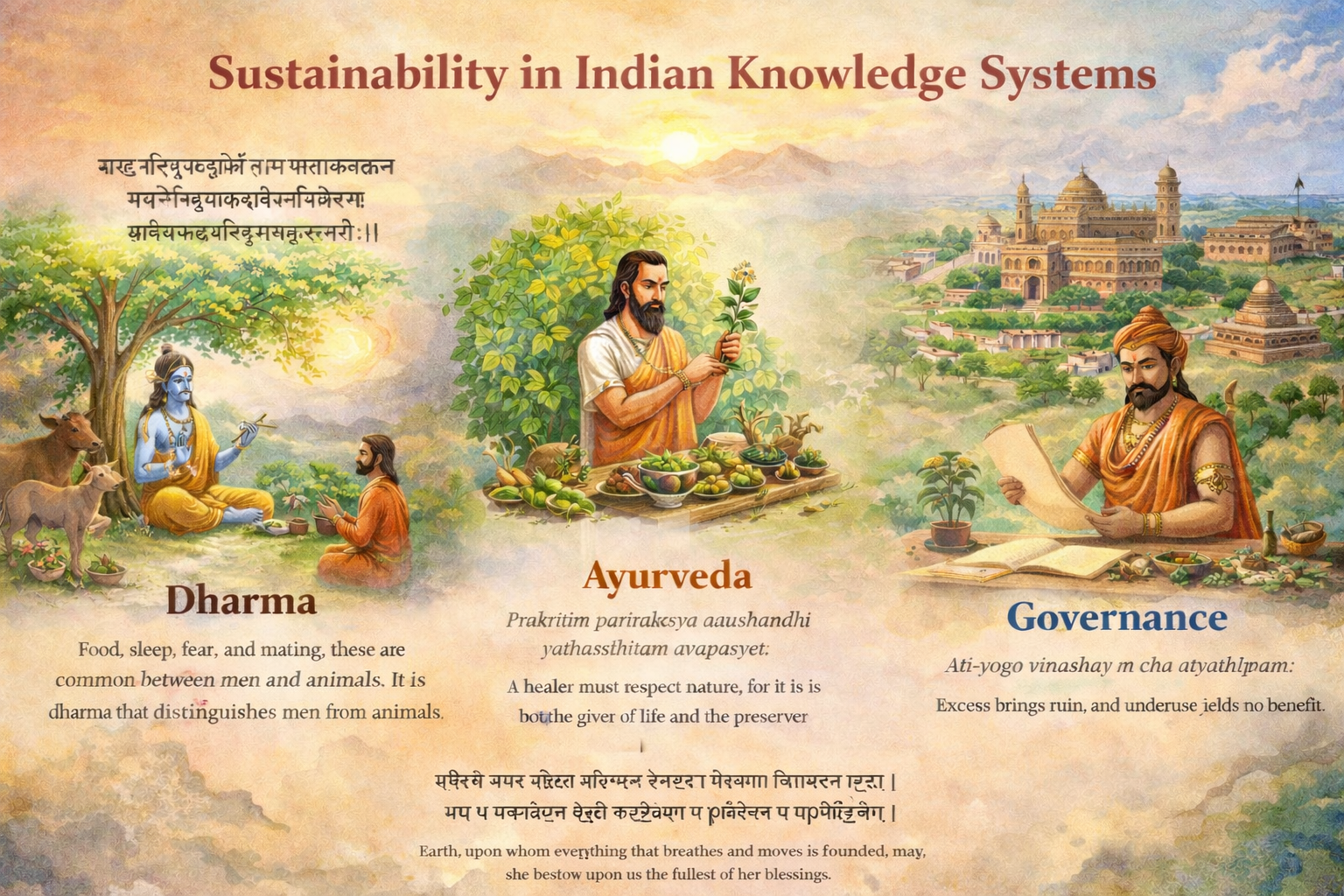
आहारनिद्राभयमैथुनञ्चसामान्यमेतत्पशुभिर्नराणाम् | धर्मोहितेषाम्अधिकोविशेषःधर्मेणहीनापशुभिस्समानाः || ‘Food, sleep, fear, and mating, these are common between men and animals. It is dharma, the performance of one’s duties, which specially distinguishes men from animals. Those who are bereft of dharma are no different from animals.’

Thus, philosophical inquiry in India is not just about understanding reality for its own sake but about guiding human conduct in a way that aligns with the cosmic order. This is why science, philosophy, and ethics are so closely intertwined in IKS, pointing to unity in diversity and the importance of sustainability.
The phrase “VasudhaivaKutumbakam”, meaning “The world is one family,” perfectly captures the spirit of universality in IKS. This philosophy encourages us to see beyond our differences and recognize that we are all connected. This holistic approach transcends the traditional focus on human-centered happiness and extends to animals, plants, and the natural world. Thus living in harmony with oneself includes other living beings and the total environment. The vision of sustainability in IKS indicates a deep reverence for nature in traditional practices in India, from agriculture to architecture. Throughout history, India has been a melting pot of ideas. Knowledge from multiple sources—Vedic, Buddhist, Jain, and even folk traditions—has blended seamlessly.
Let’s explore the principle of sustainability in Indian Knowledge Systems, or IKS.
Atharva Veda on Conservation of ecology: The AtharvaVeda teaches us to treat nature as sacred and reminds us to use resources wisely. Here’s a beautiful hymn that emphasizes living harmoniously with nature and receiving its blessings without exploitation: “पृथिवीत्वयाधृतालोकाःदेवित्वंविष्णुनाधृता। त्वं च धारयमाँदेविपवित्रेणसूपवित्रेण।” (Atharvaveda 12|1|63)
“Earth, upon whom everything that breathes and moves is founded, may she bestow upon us the fullest of her blessings.”
This verse reflects that everything in life is interconnected, and by treating the earth with respect, we ensure our own well-being.
Sustainability in Ayurveda: The Charaka Samhita offers timeless wisdom on sustainable medical practices, ensuring the plants can regenerate and help future generations to benefit.
“औषधीनांसंग्रहंयथोचितंकुर्यात्, न चैताःसर्वाःएकत्रसंग्रहणीयाः। प्रकृतिंपरिरक्ष्यऔषधिम्यथास्थितम्अवपश्येत्।” (चरकसंहिता, सूत्रस्थानम् १.१२६)

“One must harvest herbs in a manner that allows the plant to regenerate. A healer must respect nature, for nature is both the giver of life and the preserver of health.”
Sustainable Governance in Arthashastra: In governance, too, sustainability is emphasized. The Arthashastra by Kautilya guides rulers to use resources wisely and prevent both excessive use and underutilization, which can destabilize prosperity. “भूमेरर्थंयत्नेनधारयेत्, अतियोगोविनाशाय न चातियोगं न चात्यल्पम्।” (Athasastra, II,chapter 1)
“The wealth of the land must be managed prudently, for excessive use brings ruin, and underuse yields no benefit.” This approach reflects sustainable governance by balancing economic activity with environmental preservation.
An important work that conveys this vision of universal happiness is the Bhagavad Gita, wherein Lord Krishna stresses the importance of selfless action, or Nishkama Karma. Rooted in duty (dharma), this is seen as the path to true happiness, both for the individual and for the world. The key to this universal happiness is the realization that all beings are interconnected. Ahimsa teaches us to treat all living beings with compassion and respect, because causing harm to others creates imbalance and suffering not just for that individual, but for the whole system. This universal empathy and care for all life forms can serve as a model for global peace and cooperation, a principle that is sorely needed in today’s world.
Team Siddhanta Knowledge Foundation