Washington: The growing mess with Iran, Israel, and the United States has everyone worried. People are asking if the war is just for political reasons and what it means for the world. The fighting supposedly started around February 28 after the U.S. and Israel attacked Iran together. Things quickly got bad in West Asia and other places, with over twenty countries feeling the heat somehow.
Sources say thousands of regular folks have died since the war started. One of the worst things people talk about is when a school in Minab, Iran, got bombed, supposedly on the first day. Dozens of kids were killed, and the school was wrecked. Other countries in the area, like Kuwait, Iraq, Bahrain, Saudi Arabia, United Arab Emirates, Oman, Qatar, Jordan, Turkey, Azerbaijan, Cyprus, and Yemen, are feeling the shockwaves.
Experts say that if energy stuff gets messed up or if airspace gets shut down, the world economy could take a bigger hit. Some people say the U.S. is to blame because of President Donald Trump’s tough way of dealing with other countries. They think his choices made things worse with Iran and pushed Israel to be even more aggressive under Prime Minister Benjamin Netanyahu.
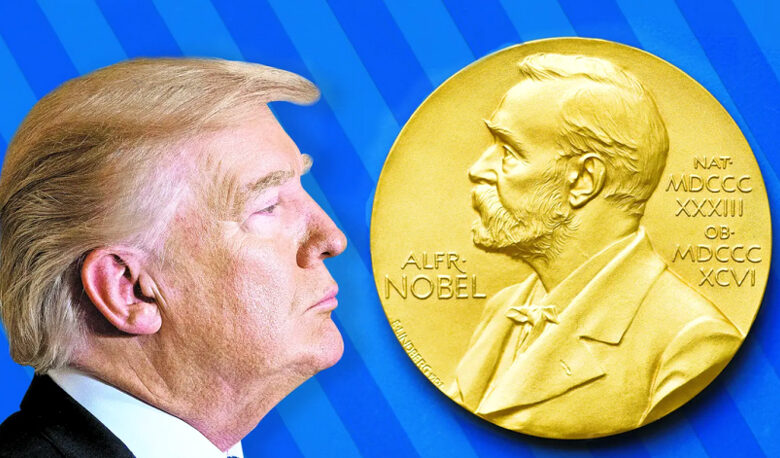
It’s weird because Trump has said over and over that he wants the Nobel Peace Prize, calling himself a big shot in trying to keep the peace. During his first time as president (2017–2021) and now again starting in 2025, he’s said he thinks he deserves the award. He usually talks about how he tried to fix problems between Russia and Ukraine, India and Pakistan, and other fights around the world as proof that he’s helping. Trump also brings up the Gaza ceasefire talks between Israel and Hamas as times he got involved.
But some people don’t buy it. They say some of those fights kept going even with the U.S. trying to help, and others say Washington didn’t really do much to fix things. Plus, groups that watch wars say that U.S. military actions while Trump was in charge led to regular people dying in places like Iraq, Syria, Afghanistan, and Yemen. The tension has also spread past the Middle East.
There are reports of military stuff happening in the Indian Ocean and problems near India and Sri Lanka, which makes people think there could be a bigger fight in the area. People are noticing that energy and oil are still a big part of the problem. Countries like Venezuela and Iran, which have lots of oil, have been on bad terms with Washington for a while.
Some say that fighting over who controls energy is making things worse. At the same time, the war is causing more and more problems for regular people. Experts warn that if the fighting goes on, it could mess up the area even more, impact the world’s energy, and cause a big global crisis. A lot of people think it’s strange that the U.S. is fighting wars but also trying to get recognized as a peacemaker.
That’s the big question right now. As the war drags on, everyone’s wondering if talking can fix things before the whole thing turns into an even bigger disaster.
---------------------------------------------------------------------------------------------------