By Dr Atul Malimkaram, Political Strategist
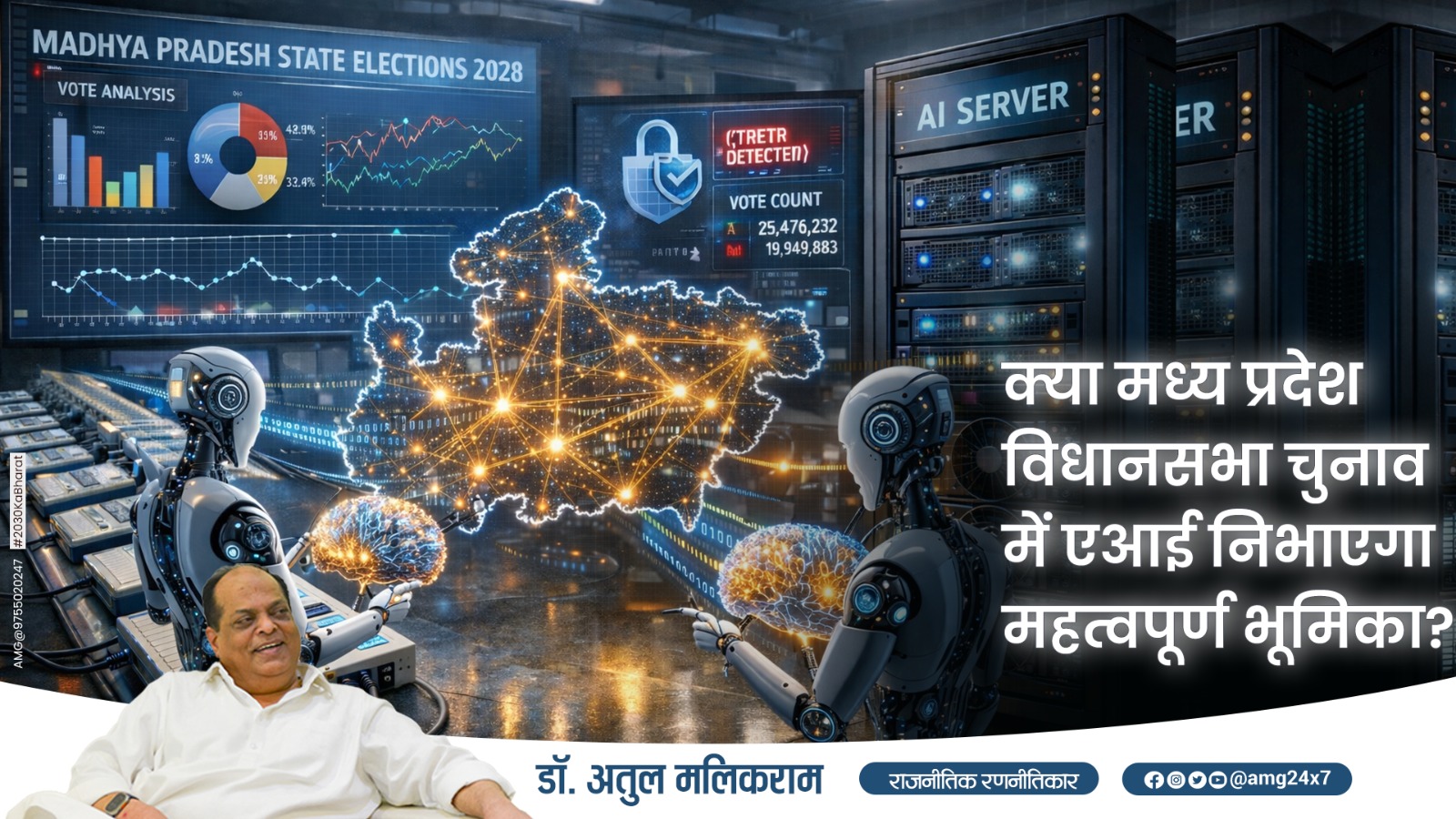
Bhopal | The diversity and depth of Indian democracy are among its greatest strengths, and elections held at regular intervals further enhance this vibrancy. In a vast and socio-economically diverse state like Madhya Pradesh, elections are not merely a process of change in power; they reflect public aspirations, expectations, and the direction in which society wishes to move. From this perspective, the 2028 Madhya Pradesh Assembly elections assume special significance, as they will be conducted in a mature phase of Artificial Intelligence (AI) and advanced digital technologies. These elections will not only test the strategic capabilities of political parties but will also shape how technology influences the future of democracy.
Madhya Pradesh’s electoral landscape is marked by sharp geographical, social, and cultural diversity. Tribal-dominated regions, rural agrarian belts, emerging urban centres, and industrial zones all have distinct concerns and priorities. In such a scenario, a uniform election strategy is no longer effective. AI-driven technologies have the potential to transform this challenge into an opportunity. Through data analytics, social media insights, and analysis of digital behaviour, political parties can now engage voters in a more precise, relevant, and interactive manner.
In the 2028 Assembly elections, AI-enabled hyper-personalised campaigning could play a decisive role. Messages tailored for farmers focusing on agriculture, irrigation, minimum support prices, and rural infrastructure; for youth on employment, education, and skill development; for women on safety, health, and self-reliance; and for tribal communities on forest rights, education, and local development can be delivered far more effectively than ever before. This approach is especially likely to influence undecided voters or those whose preferences may shift during the campaign.
The expansion of digital and virtual platforms will also be a defining feature of the upcoming elections. Virtual rallies, digital town halls, and even limited use of metaverse-like platforms could introduce new forms of political engagement. These tools can significantly reduce campaign costs and security challenges, while enabling direct outreach to remote tribal and rural areas. They may also enhance participation among elderly and differently-abled voters, making the democratic process more inclusive.

However, these opportunities come with serious challenges. The risks posed by deepfakes, fake audio-visual content, misinformation, and emotionally provocative narratives are likely to intensify in the 2028 elections. If not effectively regulated, such content could severely damage voter trust, social harmony, and electoral fairness. Cybersecurity and data privacy will emerge as major concerns, particularly as election strategies become increasingly dependent on digital platforms.
Another critical issue is electoral inequality. Larger, resource-rich political parties may be able to invest heavily in AI and advanced technologies, while smaller and regional parties risk being left behind. This could disturb the balance of democratic competition. Therefore, it is essential for the Election Commission and policymakers to develop frameworks that ensure a level playing field for all political stakeholders.
In this context, my clear view is that ethical AI must form the foundation of election strategies for the Madhya Pradesh Assembly elections in 2028. Transparent labelling of AI-generated content, deployment of deepfake detection tools, strict legal provisions, and robust monitoring mechanisms are urgently needed. Equally important is enhancing voters’ digital literacy and awareness, enabling them to distinguish between credible information and misinformation.
Political parties, the Election Commission, the media, technology experts, and civil society must collectively shoulder this responsibility. Technology should serve to strengthen democracy, not push it towards confusion and distrust. If transparency, accountability, and ethical standards are prioritised, AI can emerge as a powerful ally in deepening and enriching electoral democracy in Madhya Pradesh.