By Special Correspondent
Tehran/ Tel Aviv: The ongoing conflict across West Asia—commonly referred to as the Middle East—has evolved into one of the most complex and technologically intense wars of the 21st century. What began as a regional escalation following the 2023 Israel-Hamas war has now transformed into a sprawling, multi-front confrontation involving Israel, Iran, and the United States, alongside a network of powerful non-state actors including Hezbollah in Lebanon, the Houthis in Yemen, and remnants of Hamas in Gaza.
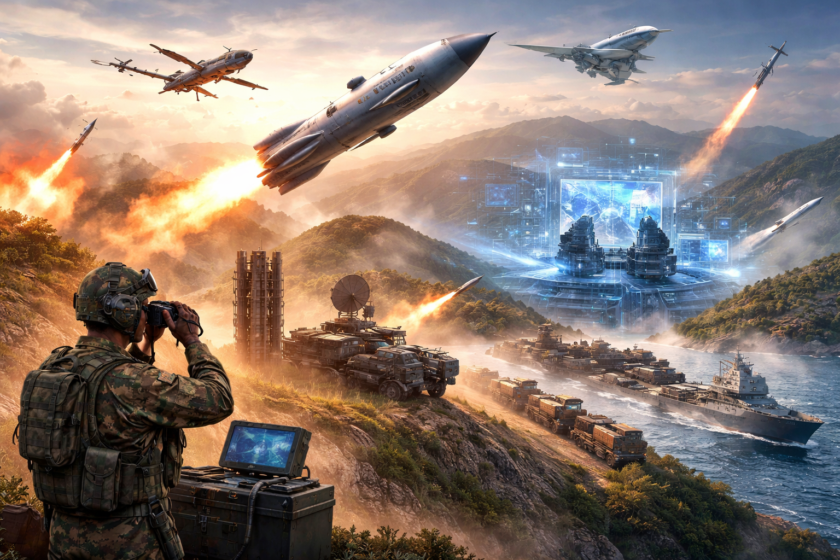
This conflict is no longer defined by conventional battle lines. Instead, it represents a new model of warfare—one driven by precision, asymmetry, and the increasing role of advanced technologies such as artificial intelligence, drone swarms, and electronic warfare.
A War Without Borders
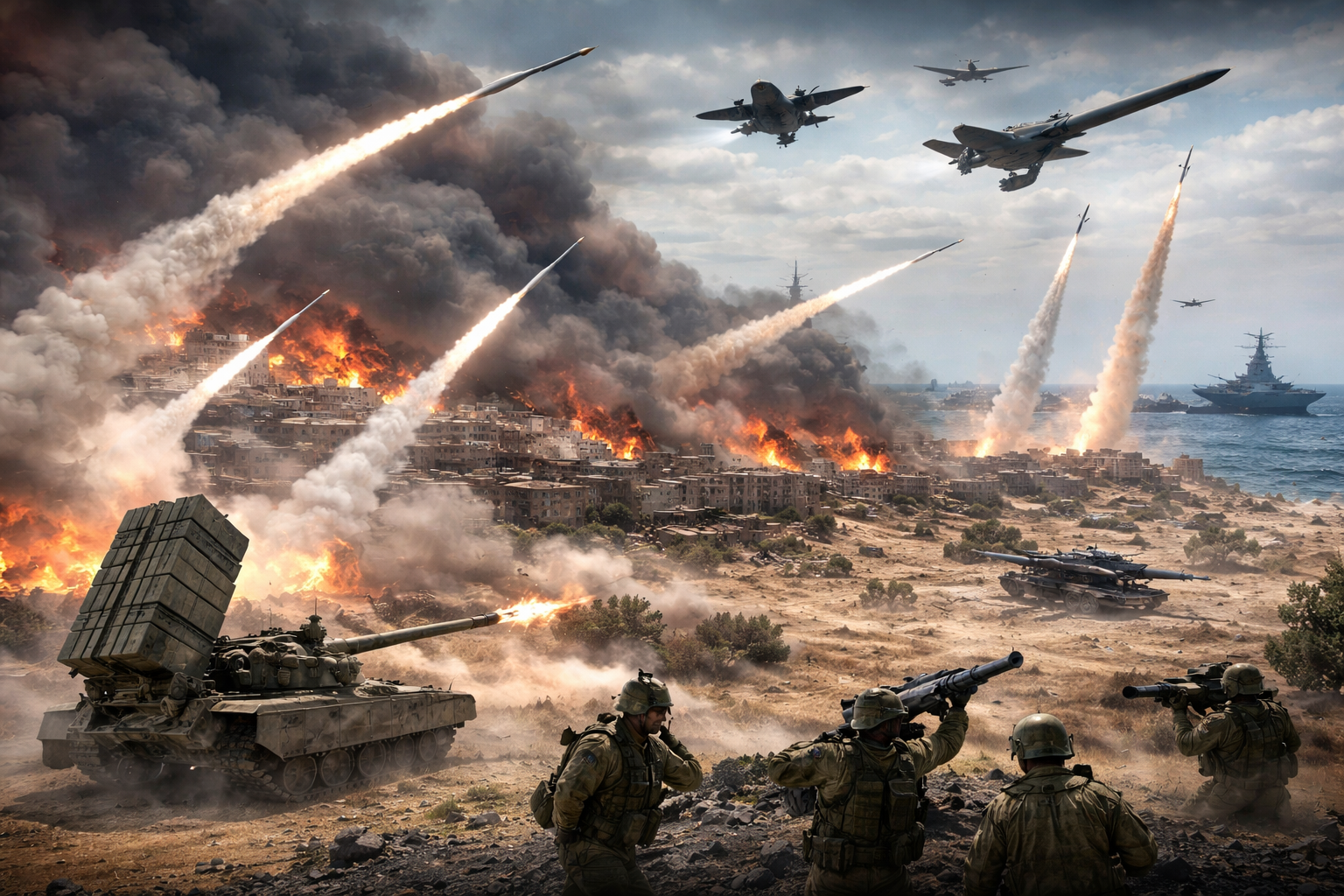
Unlike traditional wars confined to specific territories, the current conflict spans multiple geographies—from the skies over Israel and Iran to the waters of the Red Sea and the urban battlegrounds of southern Lebanon and Gaza. Missile barrages, drone swarms, cyber disruptions, and targeted airstrikes have become daily occurrences, blurring the lines between frontline and rear areas.
At the heart of this escalation lies a strategic contest between state and non-state actors, where Iran’s influence extends through its proxy groups, enabling it to engage adversaries indirectly while maintaining plausible deniability.
The Rise of Asymmetric Warfare
One of the defining characteristics of this war is the heavy reliance on asymmetric tactics. Lower-cost weapons—such as rockets and one-way attack drones—are being used to challenge and overwhelm sophisticated, high-cost defence systems.
Iran and its allies have deployed large numbers of loitering munitions like the Shahed-series drones, which are inexpensive yet effective. These drones, often launched in coordinated swarms, force defenders to expend costly interceptor missiles, creating a strategic imbalance. A drone costing tens of thousands of dollars can compel the use of interceptors worth millions, raising serious questions about sustainability.
This “cost imbalance” has become a central feature of the conflict, pushing military planners worldwide to rethink defence economics as much as battlefield tactics.
Israel’s Multi-Layered Defence Shield
To counter the relentless wave of incoming threats, Israel Defense Forces has deployed one of the world’s most advanced air and missile defence networks.
At the frontline is the Iron Dome, designed to intercept short-range rockets and artillery shells. It has proven highly effective in protecting civilian areas, though sustained barrages have tested its limits.
Supporting it is David’s Sling, which targets medium-range threats such as tactical ballistic missiles and cruise missiles. At higher altitudes, the Arrow missile system—including Arrow 2 and Arrow 3—intercepts long-range ballistic missiles, even outside the Earth’s atmosphere.
In addition, U.S.-supplied systems like THAAD have enhanced Israel’s defensive umbrella against advanced missile threats.
A notable technological advancement is the Iron Beam, a directed-energy weapon designed to neutralise drones and rockets at a fraction of the cost of traditional interceptors. Early operational use suggests it could become a game-changer in countering mass drone attacks.
Precision Offence and Air Superiority
While defence remains critical, Israel has also demonstrated formidable offensive capabilities. Its air force, equipped with advanced fighter jets like F-35s and F-15s, conducts precision strikes deep into enemy territory.
These operations often target missile launch sites, weapons depots, underground facilities, and command centres. Long-range strike systems and guided munitions enable the Israel Defense Forces to degrade enemy capabilities while minimising collateral damage.
On the ground, Israeli forces have engaged Hezbollah fighters in southern Lebanon, facing anti-tank guided missile (ATGM) ambushes and fortified tunnel networks. Despite limited ground incursions, these encounters remain intense and strategically significant.
Iran’s Expanding Missile Arsenal
Iran’s military strategy is anchored in its vast and diverse missile arsenal. Systems like the Fateh-110, Emad, and Kheibar Shekan provide varying ranges and payload capacities, allowing Tehran to strike targets across the region.
Of particular concern are Iran’s claims of hypersonic missiles such as the Fattah series, which are designed to evade conventional defence systems through high speeds and unpredictable flight paths.
Complementing these are cruise missiles capable of low-altitude, terrain-hugging flight, making early detection difficult. Many of these weapons are launched from mobile platforms or underground silos, enhancing survivability.
Iran’s strategy is not just about capability—but volume. By launching large numbers of missiles and drones simultaneously, it seeks to saturate and overwhelm even the most advanced defence systems.

Proxy Warfare: Expanding the Battlefield
Iran’s influence is magnified through its network of proxy groups.
Hezbollah in Lebanon possesses tens of thousands of rockets and advanced ATGMs, posing a constant threat to northern Israel. Its evolving drone capabilities have added a new dimension to the conflict, enabling coordinated attacks that combine rockets and unmanned systems.
In Yemen, Houthi rebels have demonstrated the ability to strike targets over 1,000 kilometres away using ballistic and cruise missiles. Their attacks on Red Sea shipping lanes have disrupted global trade, highlighting the strategic importance of maritime chokepoints.
Meanwhile, remnants of Hamas continue to engage in sporadic rocket fire and asymmetric operations from Gaza, though their capabilities have been significantly reduced.
The United States: A Strategic Force Multiplier
The United States has played a critical role in the conflict, providing intelligence, logistics, and direct military support.
American forces have deployed advanced systems such as Tomahawk cruise missiles and stealth air-launched weapons for deep strikes. Long-range bombers and naval assets have further strengthened the coalition’s operational reach.
A notable development is the introduction of low-cost attack drones like LUCAS, designed to counter the economic imbalance created by adversaries’ cheap drone swarms. By matching cost with cost, the U.S. aims to sustain prolonged engagements without excessive financial strain.
Technology Reshaping the Battlefield
Modern technology lies at the core of this conflict. Artificial intelligence is being used for target identification, drone coordination, and rapid decision-making. Electronic warfare—through GPS jamming and radar spoofing—has become a critical tool in disrupting enemy operations.
Decoys and deception tactics further complicate the battlefield, forcing defenders to expend resources on false targets.
Cyber warfare, though less visible, is believed to be targeting communication networks and weapons systems, adding another layer to the conflict.
Stand-Off Warfare and Limited Ground Engagements
The war is largely being fought through stand-off weapons—missiles and drones—reducing the need for large-scale ground operations. However, where ground combat does occur, such as in southern Lebanon, it is fierce and costly.
Both sides are increasingly relying on long-range precision strikes to achieve strategic objectives while minimising direct troop exposure.
Human and Economic Costs
The humanitarian impact of the conflict is severe. Thousands have been killed or injured, and millions have been displaced across the region. Infrastructure damage, disrupted trade routes, and soaring military expenditures are placing immense strain on economies.
Global markets have also felt the impact, particularly due to disruptions in energy supply chains and shipping routes.
A Glimpse Into the Future of Warfare
The West Asia conflict of 2026 is more than a regional crisis—it is a preview of how future wars may be fought.
It demonstrates the growing importance of affordability, scalability, and technological innovation. The ability to sustain operations—both financially and logistically—may prove just as decisive as battlefield success.
As nations around the world closely observe these developments, one thing is clear: modern warfare is no longer just about firepower. It is about precision, adaptability, and the strategic balance between cost and capability.
As tensions continue to simmer, the trajectory of the conflict remains uncertain. Whether it escalates further or moves toward diplomatic resolution will depend on a complex interplay of military, political, and economic factors.
What is certain, however, is that this war has already reshaped global military thinking—ushering in a new era where drones, missiles, and digital warfare define the frontlines of conflict.