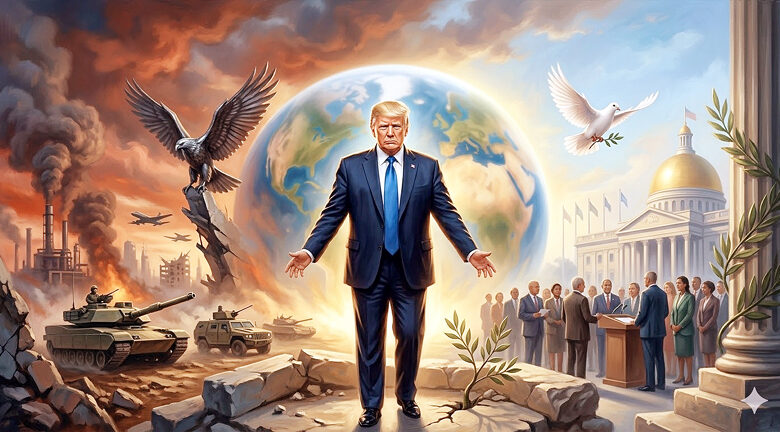
Washington: The world is witnessing growing concern after the United States, under the leadership of President Donald Trump, launched a large-scale military campaign against Iran. On February 28, 2026, American and Israeli forces reportedly initiated “Operation Epic Fury,” a coordinated air offensive targeting key Iranian military and strategic installations. The operation has already caused significant destruction, civilian casualties, and global economic uncertainty.
Critics argue that the war appears to lack a clear and legally justified cause. According to several independent analysts, the conflict seems driven more by geopolitical power projection and political strategy than by immediate security threats. As a result, concerns are rising that the escalation could destabilize not only the Middle East but also the broader global order.
Escalation and Military Strikes
The campaign reportedly involved U.S. missiles, drones, and Israeli fighter jets striking strategic locations in cities such as Tehran, Isfahan, and Qom. Reports also claimed that Iran’s Supreme Leader, Ali Khamenei, was killed during the strikes, though official confirmations remain disputed.
The U.S. administration has stated that the objective of the operation is to weaken Iran’s military capabilities, prevent the country from acquiring nuclear weapons, and potentially push for regime change. President Trump has publicly demanded Iran’s “unconditional surrender,” signaling that the campaign could extend beyond a limited military strike.
However, critics note that the justification for the war has shifted over time—from an alleged “imminent threat,” to concerns over Iran’s nuclear program, and later to ballistic missile development. Intelligence assessments cited by analysts have not provided definitive evidence of an immediate threat.
Observers have drawn comparisons with the 2003 Iraq War, which was launched on disputed claims of weapons of mass destruction and later criticized for destabilizing the region.
Humanitarian Impact
The humanitarian cost of the conflict is rapidly rising. Reports suggest that more than a thousand civilians may have been killed within the first week of the strikes. One particularly shocking incident involved a reported attack on a primary school in the southern Iranian city of Minab, where dozens of children were feared dead.
Human rights organizations warn that casualties could reach into the tens of thousands if the conflict continues. Millions of civilians are reportedly displaced, hospitals and public infrastructure have suffered damage, and regional tensions are escalating.
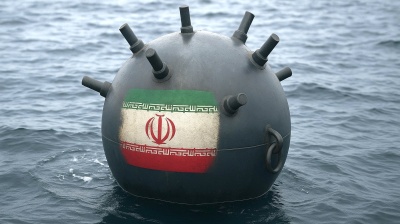
Iran has responded with missile and drone attacks across the region, further intensifying the crisis. A major consequence of the conflict has been disruptions in the Strait of Hormuz, one of the world’s most critical energy routes. The closure or disruption of this shipping lane has triggered a sharp surge in global oil prices, affecting energy and food costs worldwide—particularly in import-dependent countries.
Debate Over Nuclear Weapons
A key argument for the military action has been Iran’s alleged nuclear ambitions. However, the International Atomic Energy Agency (IAEA) has repeatedly stated that it has not confirmed that Iran was actively developing nuclear weapons.
Iran had long maintained that its nuclear program was intended for peaceful purposes such as energy generation. The late Supreme Leader Ali Khamenei had also issued religious rulings declaring nuclear weapons forbidden under Islamic law.
Some analysts argue that the absence of nuclear weapons may have weakened Iran’s deterrence capability. They point out that countries possessing nuclear arms—such as North Korea and Pakistan—face significantly lower risks of direct military attacks due to nuclear deterrence.

Legal and Constitutional Questions
The legality of the military action has become a major international debate. Under the United Nations Charter, military force against a sovereign nation is considered lawful only in self-defense or with approval from the United Nations Security Council.
Critics argue that neither condition appears to have been fulfilled in this case. Several European leaders and international law experts have called the operation a potential violation of international law.
Within the United States itself, constitutional questions have also emerged. Under the U.S. Constitution, the authority to declare war lies with Congress. The War Powers Resolution of 1973 requires the president to obtain congressional approval within a limited time frame for sustained military action. Critics claim that these procedures may have been bypassed.
Growing Opposition in the U.S.
Domestic opposition to the war is also increasing. Protests have been reported in cities including Washington, D.C., New York City, and Los Angeles. Several civil society groups have called for an investigation by the International Criminal Court into possible war crimes.
Even within Trump’s political support base, divisions are emerging. Some supporters argue that the conflict contradicts the “America First” policy that prioritized domestic priorities over foreign military engagements.
Global Reactions
The international response has been mixed but cautious. Many European allies have expressed concern and declined direct involvement. Russia has reportedly considered providing intelligence assistance to Iran, while China is closely monitoring developments.
Countries across Asia, Africa, and Latin America have voiced concerns about the implications for global stability. For major energy-importing countries like India, the conflict could trigger serious economic and strategic challenges due to rising oil prices and supply disruptions.
A Test for Global Diplomacy
Observers say the crisis represents a critical test for international diplomacy and global institutions. Many experts believe that the United Nations and other international bodies must play a more active role in facilitating dialogue and preventing further escalation.
For countries seeking stability and economic security, diplomatic pressure and negotiation may be the only viable path forward. Analysts warn that if the global community remains silent, the precedent of wars without clear justification could become more common in the future.
Ultimately, the unfolding crisis serves as a stark reminder that true security cannot be achieved through displays of military power alone. Lasting peace, experts say, depends on restraint, diplomacy, and dialogue—rather than bombs and missiles that disproportionately harm civilians.