Washington / Tel Aviv: Global crude oil prices have surged sharply as the war involving Iran, Israel, and the United States continues to escalate across West Asia. The conflict, which began after joint U.S.–Israeli strikes on Iran on February 28, has triggered a wave of retaliatory attacks and disrupted energy supplies across the region.
The crisis has forced several Middle Eastern producers to halt or reduce oil production amid fears of further attacks. As a result, global crude prices have risen dramatically. Brent Crude Oil crossed the $100-per-barrel mark earlier this week, registering a rise of more than 40 percent since the conflict began.
On March 10, Brent crude briefly surged to around $119.50 per barrel, while West Texas Intermediate Crude Oil touched nearly $119.48 per barrel during early trading before easing slightly. Analysts say the volatility reflects growing fears of supply disruptions from the Gulf region.
Impact on India
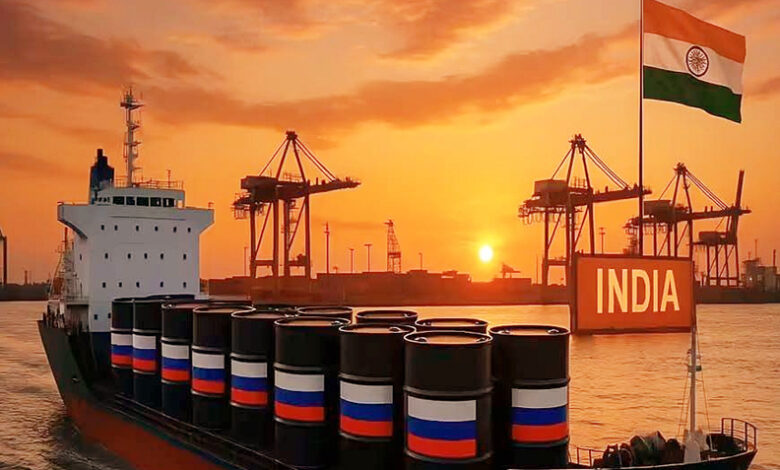
For India, the spike in oil prices poses a serious economic challenge. The country imports nearly 90 percent of its crude oil requirement, making it highly vulnerable to global price fluctuations.
Higher crude prices could push up inflation, widen the trade deficit, and strain household budgets—particularly through increases in cooking gas and fuel costs. India is the world’s third-largest consumer of Liquefied Petroleum Gas (LPG), with more than 90 percent of its supply coming from the Middle East.
The disruption of the Strait of Hormuz—one of the world’s most crucial oil transit routes—has further intensified concerns. In 2025, nearly 87 percent of crude oil and 86 percent of LNG passing through the strait was destined for Asian markets.
Officials say India currently has adequate strategic reserves, but prolonged instability could affect both growth and inflation. According to estimates by the Reserve Bank of India, a 10 percent rise in crude oil prices could increase inflation by about 30 basis points and reduce economic growth by roughly 15 basis points.
Government Measures
The Indian government has previously taken steps to cushion the impact of oil shocks. In 2022, during the Russia–Ukraine War, when crude prices rose above $116 per barrel, New Delhi reduced excise duties on petrol and diesel to stabilize domestic fuel prices.

Similar measures were adopted in 2008 when crude touched a record $147 per barrel, with cuts in import and excise duties to contain inflation. Officials indicate that the government may again consider such interventions if the current crisis persists.
Strategic and Military Dimensions
The conflict has entered its second week and remains unpredictable. Benjamin Netanyahu, Prime Minister of Israel, has vowed to continue military operations, while U.S. President Donald Trump has reiterated his commitment to counter what Washington calls the Iranian threat.
Iran, meanwhile, has demonstrated its growing missile capabilities. Analysts estimate that the country possesses more than 3,000 missiles, including medium- and long-range systems capable of targeting military bases and energy infrastructure across the region.
The situation has raised fears of wider regional escalation involving Gulf states such as Saudi Arabia and other strategic players. Energy markets are already reacting to the possibility of prolonged disruption.
When Will the War End?
Experts say predicting the end of the conflict is difficult. Wars in the Middle East often involve multiple regional actors and complex geopolitical rivalries.
Diplomatic calls for restraint have increased, but the intensity of the fighting and the strategic stakes for the parties involved suggest that a quick resolution remains unlikely.
For now, global markets—and energy-dependent economies like India—remain on edge as the conflict continues to unfold.