Bareilly (Uttar Pradesh): At a time when the world is grappling with a severe energy crisis marked by shortages of petrol, diesel, and natural gas, the Vice-Chancellor of Mahatma Jyotiba Phule Rohilkhand University, Prof. K.P. Singh, has taken an exemplary step in the service of humanity.
Addressing the situation, Prof. Singh clarified that India currently does not face any shortage of petrol, diesel, or gas and remains self-sufficient in meeting its energy needs. However, he emphasized that in view of the global crisis driven by wars and geopolitical tensions, it is the moral responsibility of every individual to contribute, even in small ways, towards conserving resources for the larger good.
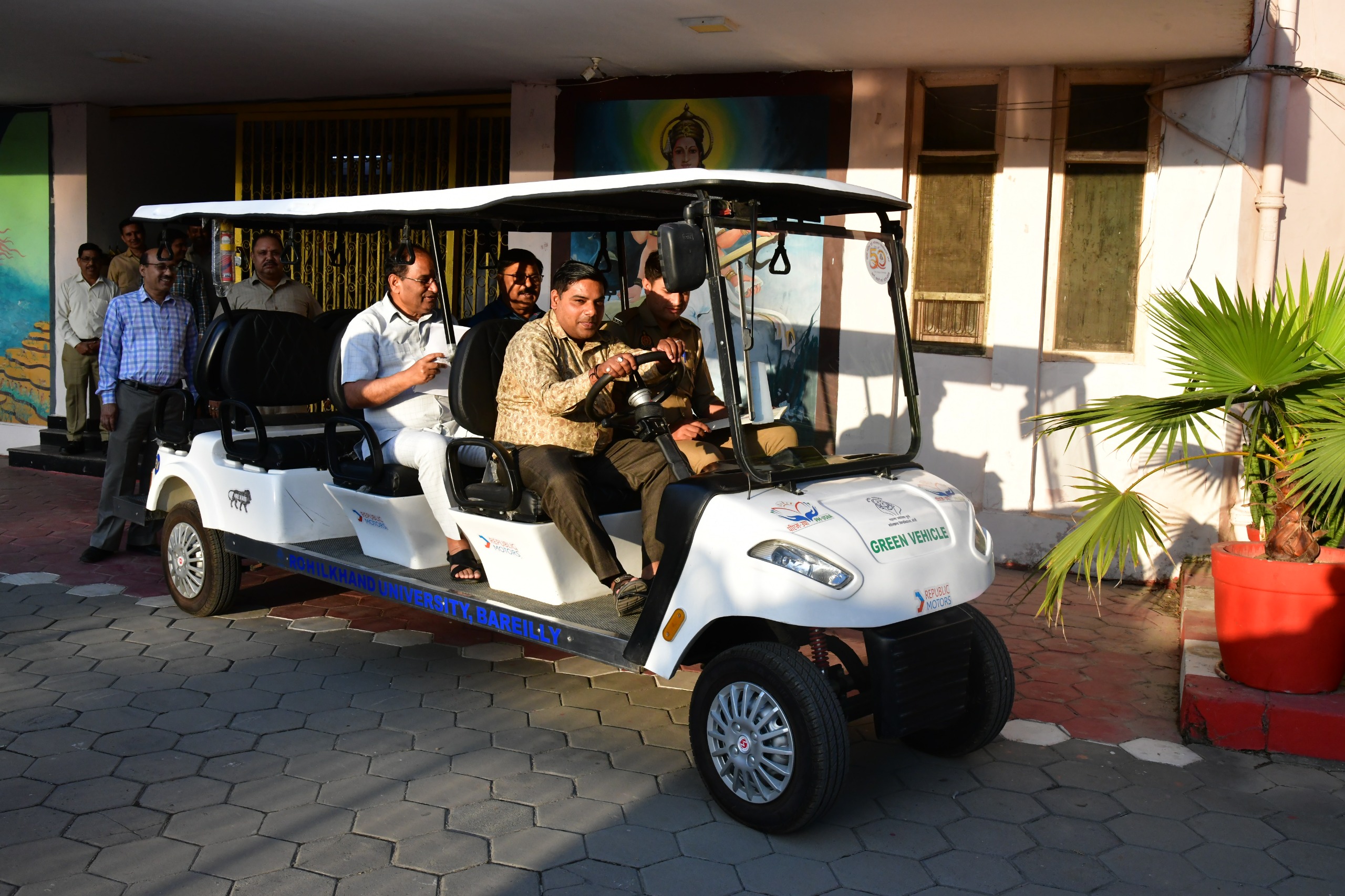
Leading by example, the Vice-Chancellor has voluntarily stopped using petrol and diesel-powered vehicles. Instead, he now commutes to his office using a battery-operated e-cart. This move not only promotes energy conservation but also reinforces the importance of environmentally sustainable practices.
Taking the initiative further, the Vice-Chancellor’s residence has adopted electric cooking as the primary mode for preparing meals. In situations where electricity is unavailable or demand is high, traditional wood-based cooking is used as an alternative. This conscious shift prioritizes electricity over gas, and wood as a secondary option, reflecting a thoughtful approach to resource utilization.
Prof. Singh noted that such efforts, though small, help individuals empathize with millions of families worldwide who are struggling with fuel shortages. His initiative aims to foster a sense of global responsibility and awareness at the local level.

Inspired by his leadership, other senior officials of the university have also joined the campaign. Registrar Harish Chandra and Finance Officer Vinod Kumar have limited the use of petrol and diesel vehicles and now prefer walking to the office—an approach that promotes both fitness and energy conservation.
Appealing to the public, Prof. Singh said that even though India is not facing a fuel crisis, citizens should act responsibly during this challenging global phase. He urged people to minimize the use of petrol and diesel, adopt electric cooking wherever possible, and explore alternative energy sources.
University officials stated that the Vice-Chancellor’s initiative has become a source of inspiration across the campus and surrounding areas. It highlights how collective responsibility and small individual efforts can contribute significantly during global challenges, reflecting India’s enduring values of compassion, sustainability, and shared humanity.
Report by Akhilesh Chandra Saxena, Bareilly.