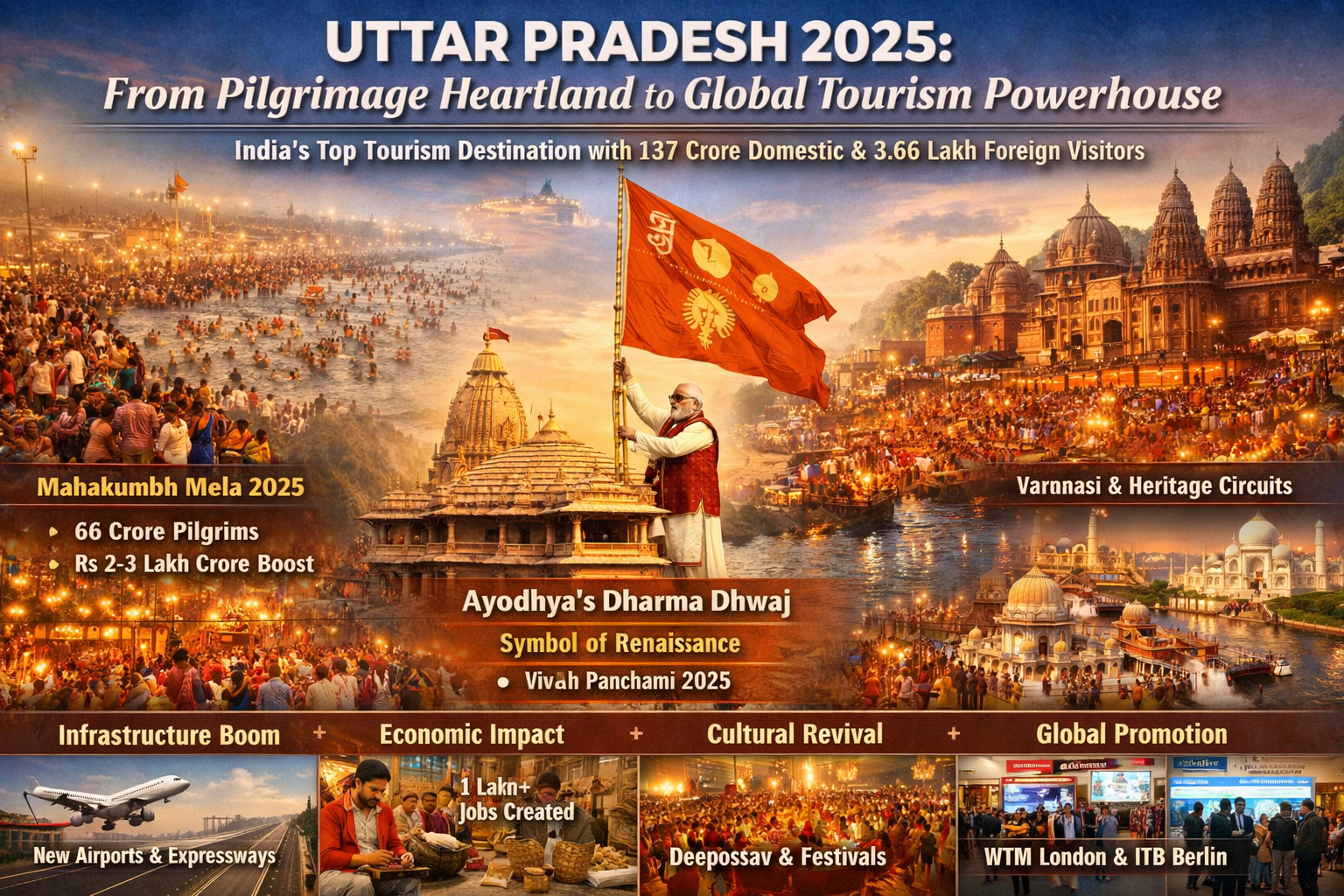
Lucknow: In 2025, Uttar Pradesh redefined its place on the world map, transforming from a historically rich but underexplored state into India’s unrivaled tourism epicenter. Drawing over 137 crore domestic tourists—the highest nationwide—and 3.66 lakh international visitors, the state rose to fourth place globally in international arrivals, marking a historic leap. Spirituality, heritage, and culture became the cornerstones of this meteoric rise, propelled by visionary governance, strategic infrastructure, and an unwavering focus on visitor experience.
The Mahakumbh Mela 2025: A Global Spectacle
At the heart of Uttar Pradesh’s tourism triumph was the Mahakumbh Mela in Prayagraj, held from January 13 to February 26, a spectacle of faith on a scale unmatched anywhere in the world. Occurring once every 144 years, the Maha Kumbh attracted over 66 crore devotees, transforming the city into a sprawling 4,000-hectare smart city. Cutting-edge facilities such as AI-powered crowd management, real-time sanitation monitoring, and Ayush OPDs redefined event management for mega spiritual gatherings.
Economically, the Mahakumbh injected an estimated Rs 2-3 lakh crore into the local economy, fueling hospitality, transportation, trade fairs, and artisan markets. Hotels reported 100% occupancy, while temporary accommodations and homestays catered to the unprecedented influx. Cultural and spiritual spectacles—shahi snans, discourses, wellness programs—extended pilgrim stays to Varanasi, Ayodhya, and surrounding heritage hubs, blending devotion with exploration. Global media hailed the organisation as exemplary, cementing Uttar Pradesh as a secure, world-class spiritual destination.
Ayodhya and the Dharma Dhwaj: Symbol of Renaissance
Ayodhya’s tourism ascended to new heights with the Ram Mandir’s developments, culminating in the historic Dhwajarohan Utsav on November 25, 2025. Prime Minister Narendra Modi hoisted the 22-foot Dharma Dhwaj, adorned with sacred symbols—Om, the Sun, and the Kovidara tree—signifying the triumph of dharma and a cultural renaissance. The flag embodies centuries of devotion: Om, the universal sound of Sanatan Dharma; Sun, eternal truth and knowledge; Kovidara tree, associated with prosperity and Lord Ram’s ideals of justice and harmony.
The ceremony, attended by lakhs of devotees, fused ancient ritual with contemporary grandeur, drawing pilgrims and tourists alike. Festivals such as Deepotsav, which set Guinness records for diya lightings, complemented the Dhwaj’s symbolism, creating a holistic and immersive spiritual experience.
Revitalising Pilgrimage and Heritage Circuits
The state’s tourism revival extended across Varanasi, Mathura-Vrindavan, Kushinagar, Sarnath, Agra, and other heritage nodes. Varanasi’s ghats and corridors shone during Dev Deepawali, illuminating the Ganges with millions of lamps. Mathura-Vrindavan thrummed with Krishna-centric festivities like Janmashtami and Holi, drawing international devotees. The Buddhist circuit, including Kushinagar and Sarnath, welcomed over 61 lakh visitors in the first nine months, reinforced by global collaborations. Agra’s Taj Mahal and Fatehpur Sikri offered a historical counterpoint, creating a balanced tourism portfolio blending spirituality, heritage, and leisure.
Infrastructure and Connectivity: Building a Seamless Experience
Strategic investments—over Rs 1,283 crore in ghats, circuits, and heritage sites—underpinned the state’s tourism growth. Airports in Ayodhya and Jewar became international gateways, expressways and metro links expanded accessibility, and rail enhancements included dedicated pilgrim trains. Roads and beautification projects worth Rs 4,560 crore connected remote destinations, while 1,750+ registered tourism units—from homestays to luxury resorts—ensured seamless accommodation.
Digital booking platforms, AI-enabled crowd management, and smart amenities meant the state could handle mega-events like the Mahakumbh while nurturing year-round visitation, transforming first-time pilgrims into repeat tourists.

Policy, Promotion, and Private Collaboration
The Uttar Pradesh Tourism Policy 2022 laid the foundation for sustainable growth, incentivising Rs 37,688 crore in private investments. Initiatives like ODOP linked local handicrafts—Ayodhya’s wooden toys, Varanasi’s silks—to tourism revenue, creating socio-economic synergies.
Promotion was multi-pronged: global campaigns at WTM London and ITB Berlin, domestic storytelling of hidden gems like Chitrakoot waterfalls and Vindhyachal temples, social media amplification, influencer partnerships, and thematic travel packages in collaboration with airlines. Enhanced security and reduced crime rates bolstered confidence, attracting families, solo travelers, and international pilgrims alike.
Economic and Social Ripple Effects
Tourism in 2025 became a pillar of economic growth, generating over a lakh direct jobs in hospitality, guiding, and crafts. Indirect benefits reached rural artisans and farmers, while revenues from accommodations, entry fees, and events funded ongoing infrastructure improvements.
Socially, festivals and workshops preserved intangible heritage, women-led homestays promoted gender empowerment, and interfaith participation fostered communal harmony. Eco-tourism initiatives in wildlife reserves ensured sustainability, making Uttar Pradesh a model for responsible tourism.
Challenges and Forward Vision
Managing the Mahakumbh’s massive crowds tested administrative capacities, but AI monitoring and rapid response teams mitigated risks efficiently. Looking forward, Uttar Pradesh plans to expand pilgrimage and heritage circuits, integrate tech-enabled experiences, and forge international partnerships, ensuring the state remains a global tourism destination year-round.
A Symphony of Tradition and Modernity
In 2025, Uttar Pradesh’s tourism story was more than numbers—it was a symphony of spiritual grandeur, cultural revival, and economic dynamism. From the Maha Kumbh’s unparalleled scale to Ayodhya’s Dharma Dhwaj, the state married ancient heritage with modern infrastructure, captivating millions worldwide. By blending tradition with innovation, Uttar Pradesh not only shattered visitor records but also laid a foundation for sustainable prosperity, embodying the vision of a Viksit Bharat.