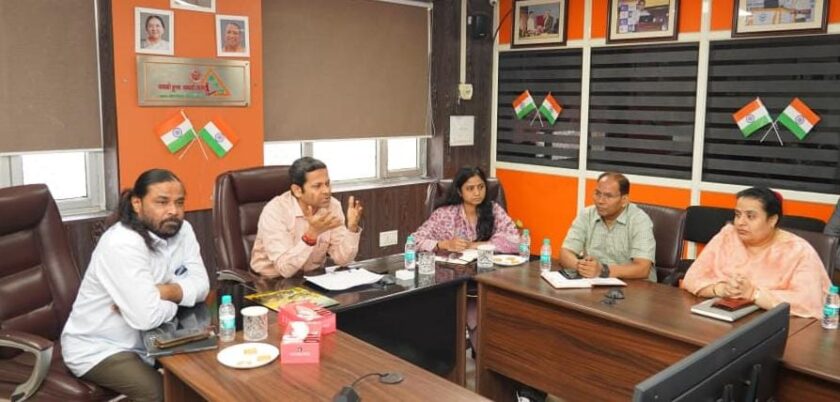
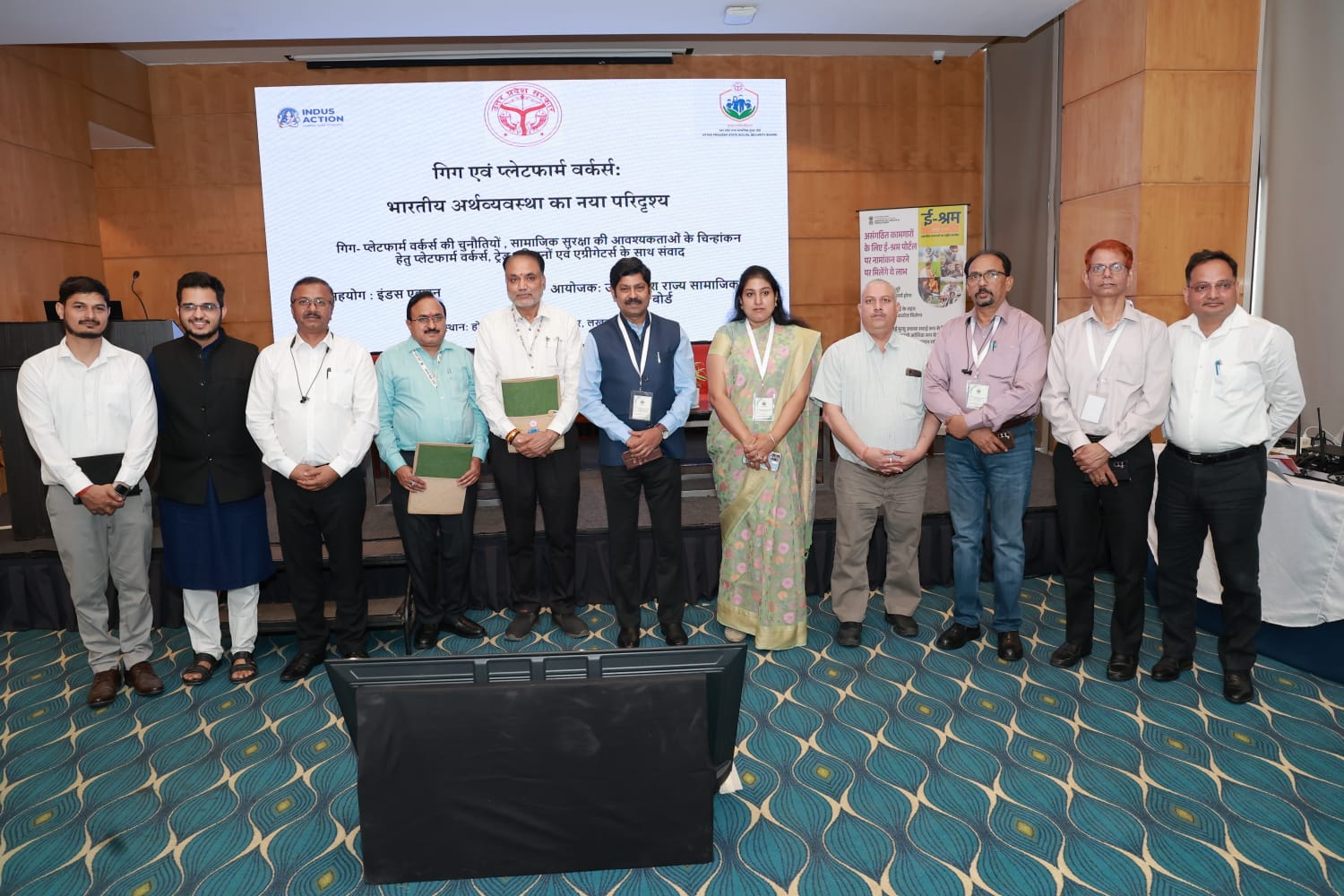
Lucknow: In a significant step toward extending social security to gig and platform workers, the Labour Department organized a high-level workshop in Gomti Nagar, bringing together workers, aggregators, trade unions, and policy stakeholders for detailed deliberations.
The workshop, held at Lucknow Marriott Hotel under the aegis of the Uttar Pradesh State Social Security Board, was chaired by Principal Secretary (Labour and Employment) Dr. Shanmuga Sundaram.
Focus on Worker Welfare and Social Security
The first session featured separate interactions with worker representatives and aggregators to identify key challenges faced by gig and platform workers. Discussions revolved around working conditions, safety concerns, and access to social security benefits. Officials also briefed participants on provisions under labour codes applicable to gig workers.
Director (Employment) Neha Prakash explained the definition of gig and platform workers and highlighted 28 services available on the Sevamitra portal, encouraging workers to register and avail benefits.
Key Demands and Suggestions
Participants raised several critical issues, including:
- Customer KYC norms
- Access to medical claims and accident insurance
- Fair hearing before blocking worker IDs
- Improved registration processes
Representatives of aggregators also shared operational challenges and called for simplification in registration procedures.

Growing Gig Economy in UP
Addressing the gathering, Dr. Shanmuga Sundaram noted that labour codes have, for the first time, formally recognized gig and platform workers, making such initiatives crucial. He highlighted that the global gig economy is valued at nearly $1 trillion.
He urged workers to register and enroll in schemes like the Pradhan Mantri Shram Yogi Maandhan Yojana to secure their future.
Need for Wider Registration
The Principal Secretary pointed out that while Uttar Pradesh has an estimated 14–15 lakh gig workers, only about 1.34 lakh have been registered so far. He stressed the need to accelerate registration efforts and suggested organizing tripartite meetings among workers, aggregators, and the government to resolve issues through dialogue.
Policy Inputs and Future Steps
In the second session, detailed discussions were held with aggregators on implementation of labour codes, Sevamitra services, and welfare measures such as health and accident insurance, scholarships for children, subsidized loans, and rest points for workers.
Concluding the workshop, the Additional Labour Commissioner assured that the suggestions received would be incorporated into future policies and welfare schemes, marking a progressive step toward strengthening social security for gig and platform workers in the state.