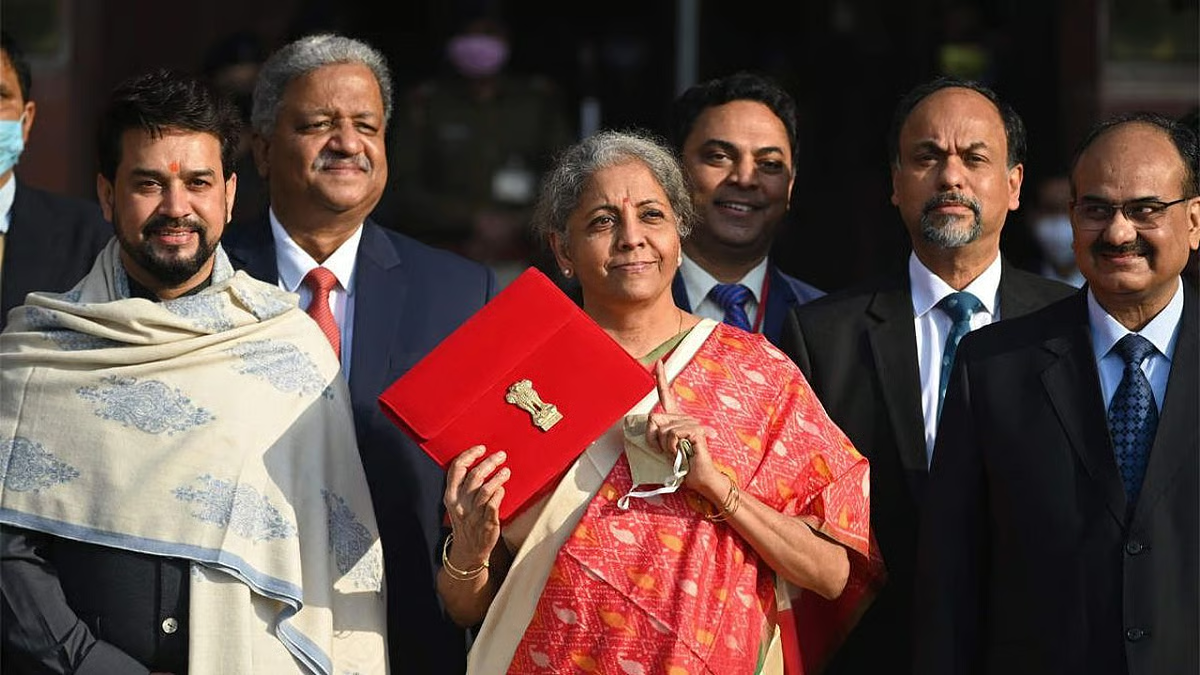
New Delhi: Union Finance and Corporate Affairs Minister Smt. Nirmala Sitharaman on Saturday announced a major push to strengthen India’s Micro, Small and Medium Enterprises (MSMEs) with the introduction of a dedicated ₹10,000 crore SME Growth Fund, aimed at nurturing future enterprise champions. Presenting the Union Budget 2026–27 in Parliament, the Finance Minister said the initiative will incentivise high-potential SMEs based on select performance and growth criteria.
Emphasising the government’s development philosophy, Sitharaman said the administration led by Prime Minister Narendra Modi has consistently chosen “action over ambivalence, reform over rhetoric, and people over populism.” She noted that the Budget is guided by three kartavya (duties), the first of which is to accelerate and sustain economic growth by enhancing productivity and competitiveness, while building resilience against volatile global dynamics.
Three-Pronged Strategy for MSMEs
Recognising MSMEs as a vital engine of economic growth, employment generation, and innovation, the Finance Minister outlined a three-pronged strategy to help them grow into global and domestic champions—covering equity support, liquidity support, and professional support.
Equity Support
As part of equity support, the Finance Minister introduced the ₹10,000 crore SME Growth Fund to provide risk capital to scalable and growth-oriented enterprises. The fund is designed to help promising MSMEs expand operations, adopt new technologies, and integrate into global value chains.
In addition, Sitharaman proposed a ₹2,000 crore top-up to the Self-Reliant India Fund, which was established in 2021. The additional allocation will ensure continued support to micro enterprises and help maintain their access to risk capital, particularly at early and vulnerable stages of growth.
Liquidity Support Through TReDS
Highlighting the success of the Trade Receivables Discounting System (TReDS), the Finance Minister said that more than ₹7 lakh crore has already been made available to MSMEs through the platform. To unlock its full potential, the Union Budget proposes four key measures to strengthen liquidity support:
-
Mandatory use of TReDS as the transaction settlement platform for all purchases from MSMEs by Central Public Sector Enterprises (CPSEs), setting a benchmark for private corporates.

-
Credit guarantee support through CGTMSE for invoice discounting on the TReDS platform, reducing risk for financiers and improving access to credit.
-
Linking the Government e-Marketplace (GeM) with TReDS to share data with financiers on government purchases from MSMEs, enabling cheaper and faster financing.
-
Introduction of TReDS receivables as asset-backed securities, helping develop a secondary market and improving liquidity and settlement efficiency.
Professional Support for Compliance and Growth
Under the third pillar of professional support, Sitharaman announced that the government will facilitate leading professional institutions such as ICAI, ICSI and ICMAI to design short-term, modular courses and practical tools. These initiatives will create a cadre of ‘Corporate Mitras’, particularly in Tier-II and Tier-III towns.
These accredited para-professionals will assist MSMEs in meeting compliance and regulatory requirements at affordable costs, reducing administrative burdens and allowing entrepreneurs to focus on growth and innovation.
Strengthening the MSME Backbone
The measures announced in Union Budget 2026–27 underscore the government’s intent to build a robust, well-capitalised, and professionally supported MSME ecosystem. By combining targeted equity funding, enhanced liquidity mechanisms, and accessible professional assistance, the Budget aims to transform MSMEs into resilient growth drivers and future champions of the Indian economy.