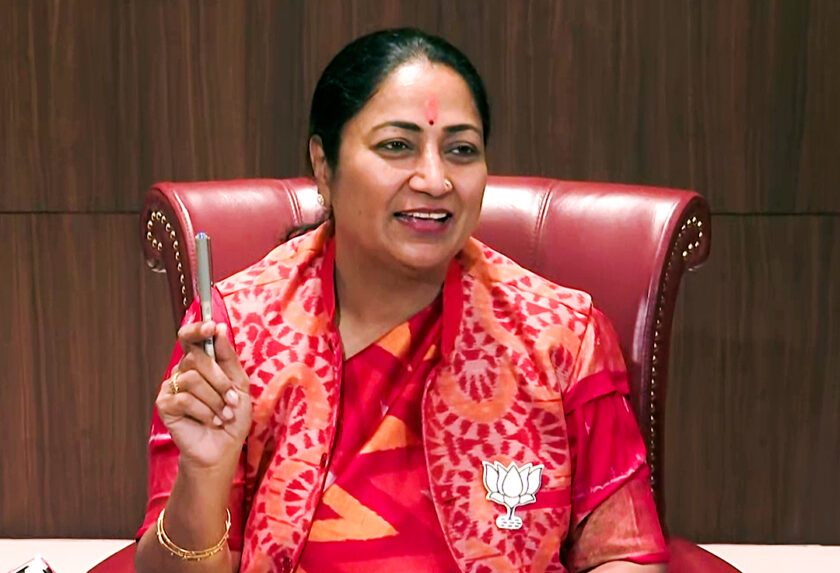
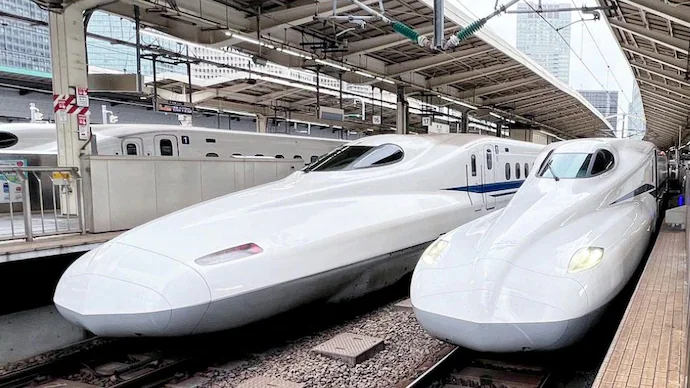
New Delhi: India is set to significantly expand its high-speed rail network with the development of seven new high-speed rail corridors, Union Finance Minister Nirmala Sitharaman announced while presenting the Union Budget 2026–27 in Parliament on Sunday.
Describing the proposed corridors as “growth connectors”, the Finance Minister said they will play a crucial role in promoting environmentally sustainable passenger transport, improving regional connectivity and supporting economic expansion across major urban and emerging growth centres.
According to the Budget announcement, the seven high-speed rail corridors will connect the following city pairs:
-
Mumbai–Pune
-
Hyderabad–Pune
-
Hyderabad–Bengaluru
-
Hyderabad–Chennai
-
Chennai–Bengaluru
-
Delhi–Varanasi
-
Varanasi–Siliguri

These corridors are expected to substantially reduce travel time, enhance business mobility and integrate key economic zones across western, southern, northern and eastern India.
Building on the Bullet Train Experience
At present, India’s only high-speed rail project—the Mumbai–Ahmedabad High-Speed Rail Corridor—is under construction. Spanning 508 km, the project is designed for bullet trains operating at speeds of up to 320 kmph and will connect Gujarat, Maharashtra and the Union Territory of Dadra and Nagar Haveli. Once operational, the corridor is expected to cut travel time between Mumbai and Ahmedabad to just over two hours.
The experience gained from this flagship project will inform the rollout of the newly announced corridors, officials indicated.
Freight, Waterways and Multimodal Push
In addition to passenger rail, the Budget announced a new dedicated east–west freight corridor connecting Dankuni in West Bengal with Surat in Gujarat, aimed at strengthening freight movement across the country.
The Finance Minister also proposed the operationalisation of 22 new national waterways over the next five years to promote multimodal transport and reduce logistics costs. These measures are expected to support sustainable cargo transportation and improve supply chain efficiency.
Infrastructure Focus Beyond Metros
Reiterating the government’s infrastructure-led growth strategy, Smt. Sitharaman said the Centre will continue to prioritise development in Tier-II and Tier-III cities with populations exceeding five lakh, which have increasingly emerged as important growth centres.
For FY 2026–27, the Budget proposes public capital expenditure of ₹12.2 lakh crore, underlining infrastructure as a key engine of economic growth.
Budget Guided by Three Kartavyas
The Finance Minister said the Union Budget 2026–27 is guided by three core kartavyas—to accelerate and sustain economic growth through competitiveness, to fulfil the aspirations of citizens, and to ensure equitable access to resources and opportunities for all regions and communities.
Summing up the reform agenda, she remarked that the “Reform Express is on its way,” signalling continued momentum in infrastructure development and long-term economic transformation as India moves towards the goal of Viksit Bharat.