Udaipur: Udaipur—often hailed as the Venice of the East and the City of Lakes—remains one of India’s most romantic and visually intoxicating destinations. Nestled in southern Rajasthan amid the emerald folds of the Aravalli Hills, this white city whispers tales of valor, devotion, and royal grandeur that have enchanted travelers for centuries.
I returned to Udaipur in early 2026, during winter—its most benevolent season. The air was crisp, the lakes brimful, and the palaces shimmered under a mellow golden sun. What unfolded was not just a journey through places, but a deeply immersive experience through time, serenity, and living history. Udaipur doesn’t merely show you its past—it draws you into it.
The Eternal Spell of Lake Pichola
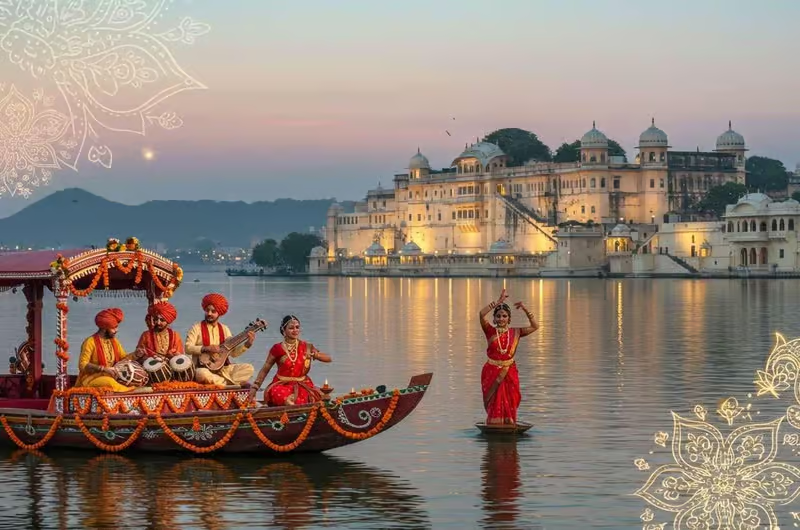
Everything in Udaipur flows back to Lake Pichola, the city’s shimmering heart. Created in 1362, the artificial lake anchors the city’s rhythm and romance. At dusk, its waters turn molten gold, reflecting the imposing City Palace on one side and the ethereal Taj Lake Palace on the other.
My first evening was spent at Gangaur Ghat. As the sun slipped behind the hills, the sky unfurled in hues of saffron, rose, and violet. Boats glided silently, their ripples gently blurring reflections of marble and sky. Time seemed to pause.
A boat ride on Lake Pichola—especially at sunset—is essential. Drifting past ancient ghats and under old bridges, the city reveals itself slowly, intimately, as if sharing secrets meant only for those who linger.
Taj Lake Palace: A Floating Poem in Marble
No description fully prepares you for the Taj Lake Palace, formerly Jag Niwas. Built between 1743 and 1746 entirely of white marble, it appears to float weightlessly upon the lake. Originally a royal summer retreat, it is now a heritage hotel—one of the most iconic in the world.
Even for non-residents, arriving by boat for high tea or dinner is an unforgettable experience. During golden hour, the palace glows softly, its delicate jharokhas and domes catching the light like fine lace. From the water, it feels suspended between heaven and earth—a timeless symbol of Rajput romance and refinement.
The City Palace: A Living Chronicle of Grandeur
Dominating the eastern shore is the City Palace, an architectural colossus begun in 1559 and expanded over four centuries. A majestic blend of Rajasthani, Mughal, and European influences, it unfolds as a labyrinth of courtyards, balconies, towers, and terraces, each offering spellbinding views of the lake.
Inside, the palace museum houses priceless artifacts—crystal galleries, vintage automobiles, ornate weapons, and royal portraits. Mor Chowk, the Peacock Courtyard, with its shimmering glass mosaic peacocks, is a visual masterpiece. Walking through the palace feels like stepping into a living epic, where every corridor echoes with stories of courage, diplomacy, and opulence.

Sajjangarh: The Monsoon Palace in the Sky
For panoramic drama, Sajjangarh Palace—popularly known as the Monsoon Palace—offers unmatched vistas. Perched atop Bansdara Peak at 944 meters, this 19th-century structure was intended as an astronomical observatory before becoming a monsoon retreat for the royals.
As sunset approaches, the palace glows amber against the sky while the city below sparkles to life. The winding drive passes through forested roads, where peacocks and langurs still roam freely—nature quietly sharing space with royalty.
Saheliyon Ki Bari: A Garden of Grace
Amid Udaipur’s regal scale, Saheliyon Ki Bari provides a softer, more intimate beauty. Built in the early 18th century for the queen and her companions, the garden is a harmonious composition of lotus pools, marble fountains, kiosks, and sculpted elephants.
The gentle sound of flowing water and rustling leaves creates a sanctuary of calm—perfect for reflection, or simply slowing down in a city that understands the art of leisure.
Jag Mandir and Nights by the Lake
A short boat ride leads to Jag Mandir, another island palace steeped in history. Once a refuge for Prince Khurram (later Shah Jahan), it now offers lush gardens and romantic dining experiences. As dusk settles, candlelit tables, soft classical music, and water all around create an atmosphere of quiet enchantment.
By night, Udaipur transforms yet again. Rooftop restaurants along the lake serve traditional Rajasthani thalis while offering front-row views of the illuminated City Palace and the glowing Taj Lake Palace reflected on still waters. Cultural evenings at Bagore Ki Haveli bring folk dances like Ghoomar and Kalbelia alive, their rhythms echoing through the old city.
Final Reflections
Udaipur is not merely a destination—it is an emotion. The interplay of water, marble, and mountains creates a serenity that feels increasingly rare in today’s hurried world. Whether drifting on Lake Pichola at twilight, wandering palace corridors steeped in legend, or sipping chai as the sun sets behind the Aravallis, the city envelops you in a gentle, regal embrace.
Udaipur invites you to slow down, to linger, to feel. Here, history is not confined to museums—it breathes, glows, and flows with the water. You may leave the City of Lakes, but a part of you will always remain there, floating quietly on Pichola, suspended between memory and magic.