
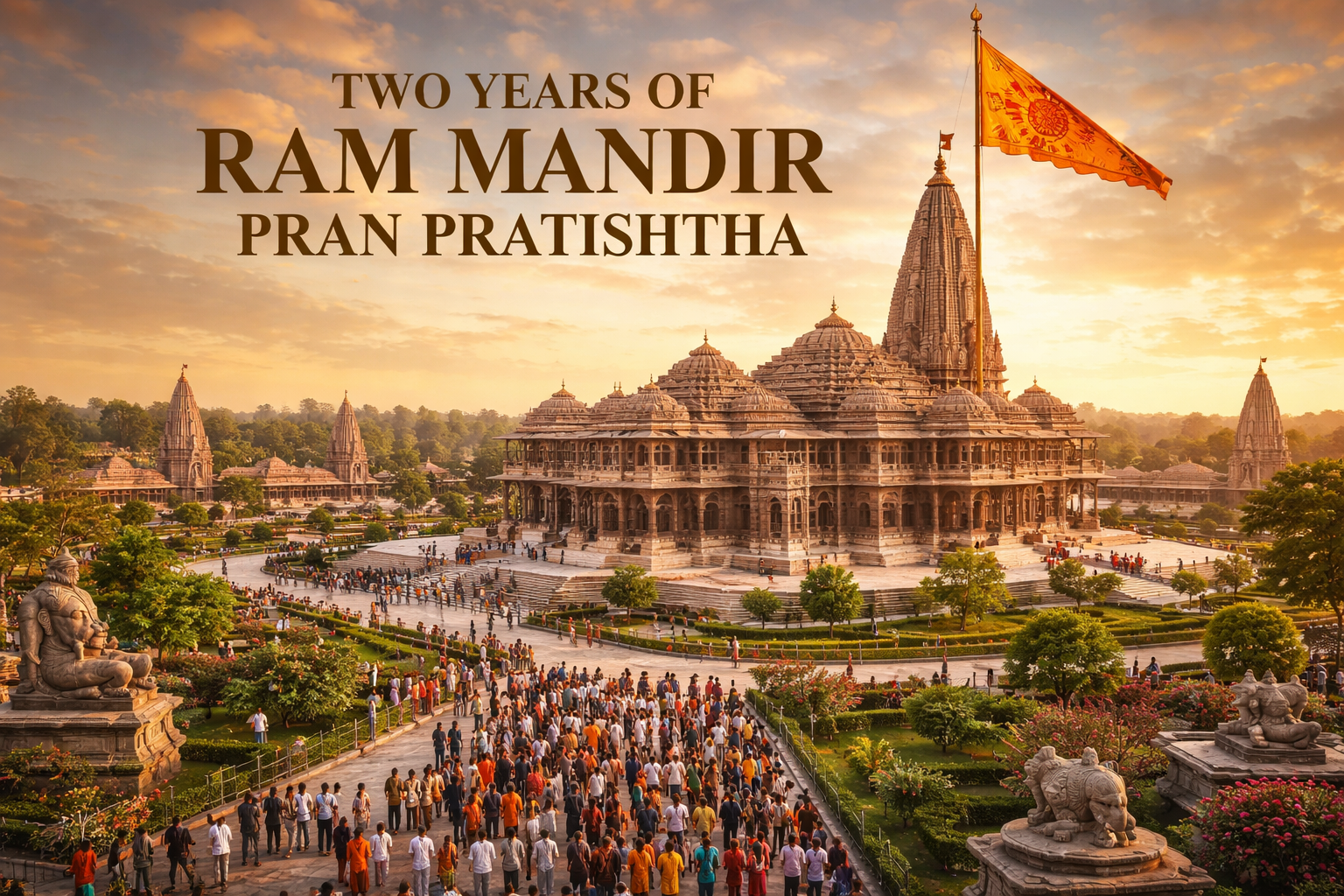
Ayodhya: Two years have passed since the Pran Pratishtha ceremony at the Shri Ram Janmabhoomi Temple in Ayodhya, marking a transformative phase in the spiritual and cultural landscape of the city. Over the last two years, continuous construction and development have reshaped the temple complex, which has now emerged as a major centre of faith attracting thousands of devotees daily from India and abroad.
The main structure of the Ram Temple is now nearly complete. The idol of Bal Swaroop Ram Lalla has been installed in the sanctum sanctorum, where regular worship is being performed. Construction of the ground floor has been completed, while work on the first and second floors, including intricate artistic detailing, is in its final stages. Built in the traditional Nagara architectural style, the temple’s shikhara, mandaps and pillars feature fine stone carvings depicting episodes from the Ramayana, giving the temple a distinct cultural and historical identity.
Significant development has also taken place across the temple premises. A wide parikrama path has been constructed to ensure smooth movement of devotees and effective crowd management. Facilities such as pathways, seating arrangements, drinking water points, toilets and primary medical services have been expanded. Security arrangements have been strengthened with the use of modern technology to ensure a safe and seamless darshan experience.
Dharma Dhwaja Hoisted on Ram Temple
In November 2025, the Dharma Dhwaja was ceremonially hoisted atop the Ram Temple. The saffron flag, symbolising sacrifice, devotion, valour and renunciation in Sanatan tradition, measures 22 feet in length and 11 feet in width, mounted on a 42-foot flagpole and hoisted at a height of 161 feet on the temple shikhara. The flag bears three sacred symbols—the Sun, ‘Om’, and the Kovidar tree—each carrying deep spiritual and scriptural significance.
Key Construction Achievements
-
Main Ram Temple: Construction including the sanctum sanctorum and Rang Mandap has been completed.
-
Parikrama Corridor: An approximately 800-metre-long parikota surrounds the main temple, housing several smaller shrines.
-
Sapta Mandap: Temples dedicated to Maharishi Valmiki, Vashishtha, Vishwamitra, Agastya, Nishadraj, Shabari and Ahalya are complete.

-
Other Shrines: Temples of Lord Shiva, Lord Ganesha, Lord Hanuman, Surya Dev, Goddess Durga and Goddess Annapurna have also been completed.
-
Statues and Flags: Idols of Jatayu, the squirrel (Gilhari) and Sant Tulsidas have been installed, while kalash and dharma dhwajas adorn all temple shikharas.
-
Lakshman Temple: The temple dedicated to Sheshavatar Lakshmanji, located outside the parikota, has also been completed.
Museum and Exhibition Spaces
To narrate the life and ideals of Lord Ram, a museum and exhibition complex is being developed within the temple premises. Through sculptures, paintings and modern digital media, devotees—especially children and youth—will be able to understand the Ram Katha, exile, the Ram-Ravan war and the concept of Ram Rajya in an engaging and accessible manner.
Construction of the Ram Temple began on January 15, 2021, following the Bhoomi Pujan performed by Prime Minister Narendra Modi on August 5, 2020. While some work is still underway, the Ram Temple today stands in grandeur and dignity, not only as the spiritual heart of Ayodhya but also as a powerful symbol of India’s cultural consciousness and collective faith.