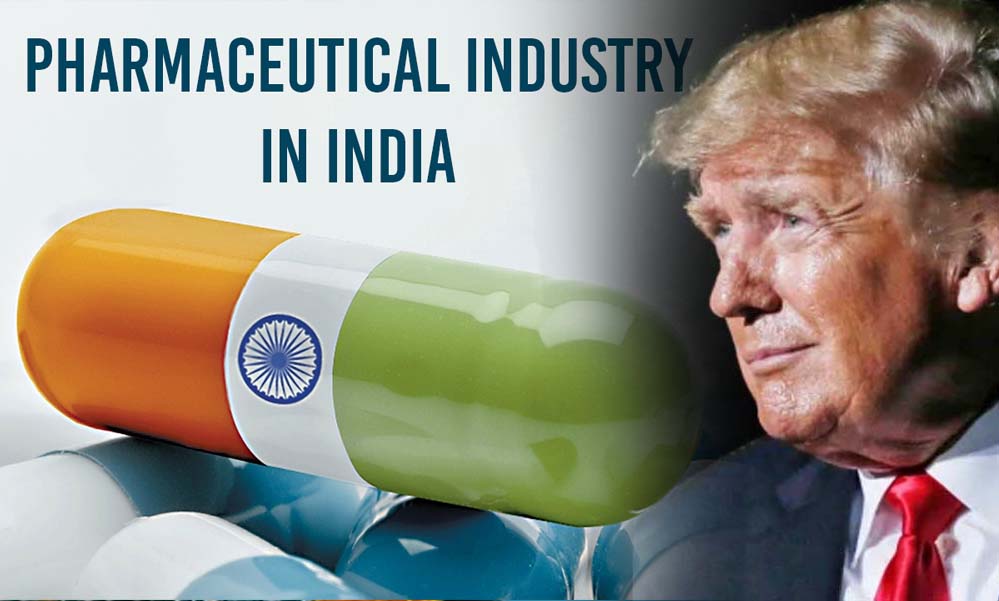
New Delhi: A proposed tariff move by U.S. President Donald Trump has stirred concerns across global pharmaceutical markets, with potential ripple effects on India’s drug exports.
Amid ongoing geopolitical tensions, the Trump administration is considering imposing tariffs of up to 100% on certain imported medicines—particularly branded and patented drugs. The move is reportedly aimed at pushing foreign pharmaceutical companies to manufacture within the United States and offer lower prices to American consumers.
According to reports, companies that fail to meet pricing or local production expectations could face steep duties under provisions being examined by U.S. authorities. The policy is part of a broader push to strengthen domestic manufacturing and promote a “Made in America” approach.
The announcement has already unsettled Indian stock markets, especially pharmaceutical stocks. Major companies such as Sun Pharmaceutical Industries saw notable declines, with shares dropping sharply toward yearly lows. Other key players including Dr. Reddy’s Laboratories, Cipla, Biocon, and Lupin also witnessed losses, reflecting investor anxiety.
Despite the market reaction, experts suggest the long-term impact on India may be limited. A significant portion—over 90%—of India’s pharmaceutical exports to the U.S. consists of low-cost generic medicines, which are not the primary target of the proposed tariffs.

However, companies with exposure to specialty or branded drugs in the U.S. market could face greater pressure. Additionally, firms involved in exporting active pharmaceutical ingredients (APIs) may experience some indirect effects.
There is also a silver lining. Several Indian drugmakers have already expanded their manufacturing footprint in the United States, which could help cushion the impact of any tariff changes.
Industry analysts believe the current market dip is largely sentiment-driven and may stabilize as more clarity emerges on the policy. The focus now shifts to how the proposed tariffs are implemented and how companies adapt their strategies in response.
While the development has created short-term uncertainty, India’s pharmaceutical sector is widely seen as fundamentally strong, with the ability to adjust to evolving global trade dynamics.