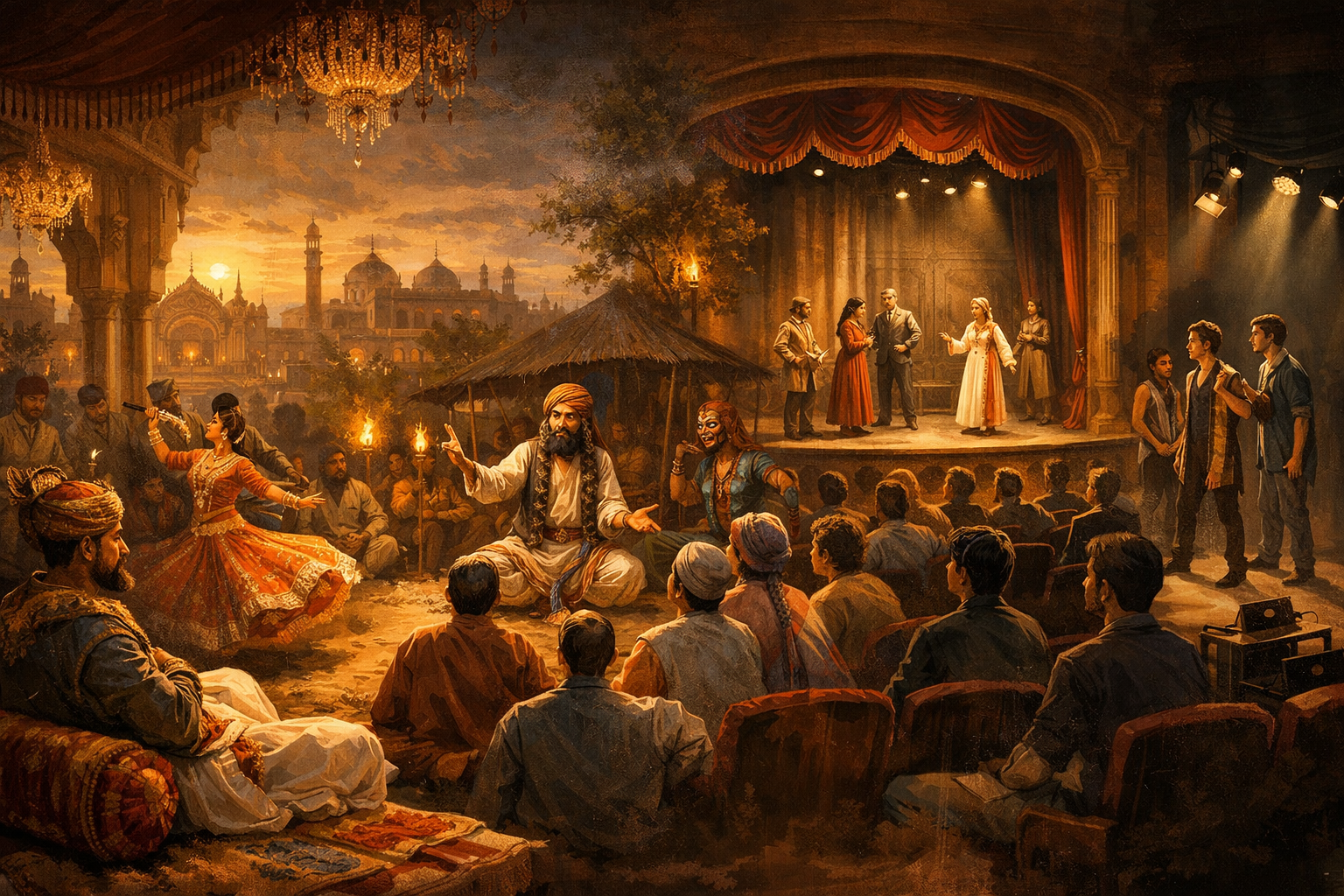
Lucknow: Lucknow, the City of Nawabs, has always lived theatrically. Long before proscenium stages, ticket counters, or spotlight rigs arrived, performance here unfolded in royal courtyards, candle-lit mehfils, and crowded village squares. Acting in Lucknow was never merely an art form—it was a way of expression embedded in poetry, music, etiquette, and storytelling. Over nearly three centuries, this tradition has evolved from courtly dramas and folk narratives to institutional theatre and, most recently, to experimental festivals driven by young voices. Yet, through every transformation, Lucknow’s theatre has retained its defining quality: emotional depth tempered by cultural grace.
Nawabi Foundations: Performance as Courtly Culture
The roots of Lucknow’s theatrical tradition lie in the 18th-century Awadhi court, particularly under Nawabs like Asaf-ud-Daula and Wajid Ali Shah. Performance then was fluid and immersive. Mushairas, dastangoi sessions, and majlis gatherings blurred the lines between poetry, acting, and music. Storytellers didn’t “perform” characters in the modern sense—they embodied them through voice modulation, gesture, and improvisation.
Folk theatre flourished alongside courtly art. Nautanki emerged as the most powerful popular form, combining song, dance, exaggerated expression, and moral storytelling. Performed in Awadhi dialect and accompanied by live percussion, nautanki actors relied on physicality and vocal strength rather than scripted realism. Acting was collective and communal, accessible to rural and urban audiences alike.
Wajid Ali Shah’s patronage further fused Kathak with dramatic expression. The dance’s abhinaya—its nuanced facial and gestural storytelling—quietly shaped acting styles in Lucknow, privileging emotional suggestion over overt dramatics.
Colonial Influence: Scripts, Stages, and Social Reform
The arrival of British rule in the 19th century transformed theatre across India, and Lucknow was no exception. Western-style proscenium stages, written scripts, and indoor auditoriums introduced new aesthetics. Acting began shifting from improvisation to character-driven performance.
This period saw the rise of Urdu and Parsi theatre, which blended Indian music and emotion with Western narrative structure. Touring companies staged melodramas inspired by Persian romances and Shakespeare, complete with elaborate sets and heightened dialogue. For the first time, women appeared on stage, altering performance dynamics and social perceptions.
Crucially, theatre became a vehicle for resistance and reform. Bharatendu Harishchandra’s plays, staged in and around Lucknow, used satire and realism to critique colonial exploitation and social decay. Acting now demanded psychological engagement—characters were no longer symbolic archetypes but reflections of lived reality.
Post-Independence: Institutions and Professional Theatre
After 1947, theatre in Lucknow entered a phase of institutional consolidation. The founding of the Theatre Arts Workshop (1966) and later the Bharatendu Natya Academy (1975) professionalized acting education in North India. Under the guidance of visionaries like Raj Bisaria, Lucknow theatre absorbed global techniques—particularly Stanislavski’s realism—while remaining rooted in Indian rasa theory.
Actors were trained in voice, movement, and character immersion. Workshops replaced hereditary learning, and rehearsal rooms became laboratories for experimentation. Theatre groups like Darpan evolved from folk-inspired productions to sophisticated, text-driven plays. Many actors who would later gain national recognition—on stage, television, and film—sharpened their craft here.

The presence of national bodies such as the Sangeet Natak Akademi further positioned Lucknow as a hub for serious theatre discourse, hosting festivals, residencies, and experimental performances.
The New Age: Festivals, Hybridity, and Youth Energy
In the 21st century, Lucknow’s theatre has entered its most dynamic phase yet. Faced with competition from television, OTT platforms, and digital entertainment, theatre has reinvented itself through festivals, pop-up performances, and community-driven initiatives.
New-age festivals like Repertwahr, Indradhanush, and the revived theatre segment of Lucknow Mahotsav have democratized performance. Acting today embraces hybridity—spoken-word poetry merges with dastangoi, multimedia projections accompany monologues, and themes range from gender identity and climate anxiety to reinterpretations of classical texts.
Young actors, many trained through short workshops rather than long-term diplomas, bring urgency and informality to the stage. Performances happen not only in auditoriums but also in cafés, parks, and heritage spaces. Social media has amplified reach, creating new audiences and encouraging inclusivity, particularly for women-led and experimental troupes.
A Living Tradition
Lucknow’s theatre journey mirrors the city itself—adaptive yet anchored, refined yet expressive. From Nawabi courts where performance was an extension of etiquette, to contemporary festivals where theatre questions, provokes, and reinvents, acting here has never stood still.
In a city known for measured speech and poetic pauses, theatre remains a space where emotions are allowed to rise, conflict is explored openly, and tradition converses with change. Lucknow may no longer be the sole cultural capital of North India, but its stages—old and new—continue to nurture performers who understand that true acting, like true tehzeeb, lies in depth rather than display.
The curtain, in Lucknow, never truly falls—it simply evolves.