New Delhi: The air in the PM MITRA Park in Dhar, Madhya Pradesh, hums with a sound that hasn’t been heard in decades. It is not the clatter of aging machinery, but the rhythmic, high-tech pulse of automated looms and digital sensors. Here, the “Farm to Foreign Markets” vision is no longer a slogan—it is a living, breathing ecosystem.
As the sun sets on 2025, India’s textile sector is no longer just “recovering.” It has undergone a structural metamorphosis, stitching together ancient craftsmanship with the cold precision of 21st-century technology.
The Silicon Valley of Stitches
For years, the Indian textile story was one of fragmentation—cotton grown in one state, spun in another, and stitched in a third. In 2025, the PM MITRA Parks have solved this logistics puzzle.
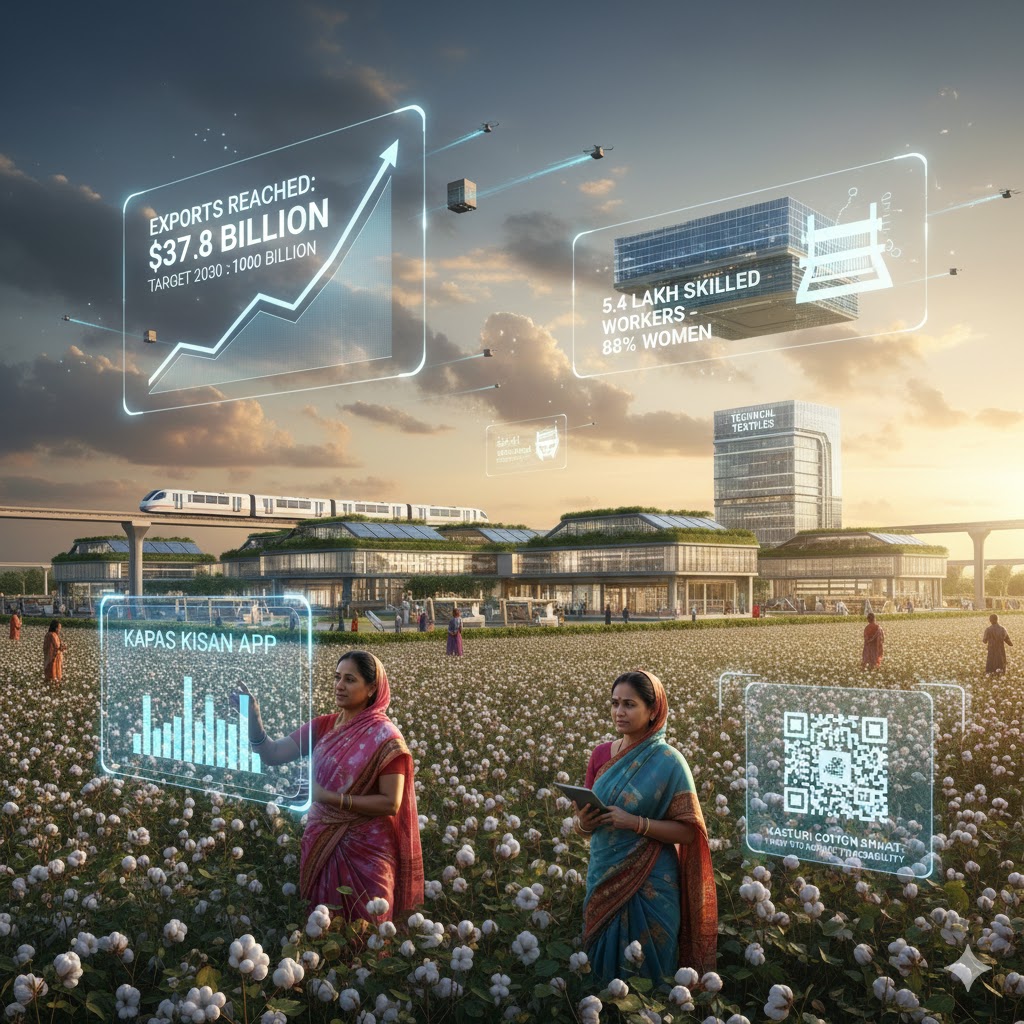
Walking through these 1,000-acre “Mega Parks” is like stepping into a textile city of the future. Integrated supply chains mean that raw cotton enters one gate and finished, branded garments leave the other. This efficiency has driven USD 37.8 billion in exports this year, but more importantly, it has slashed the carbon footprint of every t-shirt and sari produced.
The Digital DNA: From Soil to Shelf
On a small farm in Vidarbha, a farmer taps his smartphone. Through the Kapas Kisan app, he is part of a global revolution: Kasturi Cotton Bharat.
Every bale he produces is now “born digital.” Using blockchain traceability, a buyer in London or Tokyo can scan a QR code on a garment and see exactly where the cotton was grown, ensuring it is ethical, sustainable, and 100% Indian. This isn’t just a commodity anymore; it’s a premium global brand.
Beyond the Fabric: The Rise of Technical Textiles
While fashion grabs the headlines, the real “quiet giant” of 2025 is Technical Textiles. In labs supported by the National Technical Textiles Mission, India is now weaving:
-
Geotextiles that reinforce the very foundations of the Himalayas’ new highways.

-
Meditech fibers that are used in life-saving implants.
-
Protective gear that keeps Indian soldiers safe in extreme climates.
With the PLI Scheme channelling over ₹28,700 crore in investment, India has pivoted. We are no longer just dressing the world; we are protecting, building, and healing it.
A Revolution Led by Women
The most profound change, however, is human. Inside the training centers of the SAMARTH scheme, the faces tell the story. 88% of the 5.4 lakh newly trained workers are women.
For many, like the “Shilpi Didis” of rural India, the digital marketplace IndiaHandmade.com has turned their homes into global storefronts. They are the new entrepreneurs of Bharat, blending GI-tagged heritage with modern e-commerce savvy.
The Verdict: A Sector Reborn
As Bharat Tex 2025 closed its doors in New Delhi, the message to the world was clear: India is no longer waiting for the future of textiles—it is manufacturing it.
With a target of USD 100 billion in exports by 2030, the loom of the Indian economy is moving faster than ever. The threads are stronger, the colors are brighter, and the pattern is unmistakable: India is the world’s textile powerhouse.