“Never step onto the threshold where your presence isn’t awaited.”
Lucknow: This poetic reflection captures the sentiment that ancient Indian tradition has long held for the “dehleej” or threshold — a symbolic space steeped in emotion, reverence, and deep cultural significance.
In Sanskrit, the threshold is referred to as “dehree,” “dyodhi,” or “chaukhat.” Traditionally, it is the raised stone or wooden slab at the base of the main door — a marker of the boundary between the inner sanctum of the home and the world outside. Over time, however, modernization has diminished the physical and spiritual importance of the threshold. Glass, iron, and aluminum frames have replaced the humble dehleej, eroding a powerful element of Indian domestic architecture.
But in the Sanatan (eternal) tradition, the threshold remains a vital symbol — a sacred point of entry believed to be the doorway for Goddess Lakshmi, the harbinger of wealth and prosperity. Families that continue to uphold traditional values still worship the threshold, especially during auspicious occasions, seeking blessings for peace and positive energy in the household.
Rituals around the threshold are simple yet powerful. It is cleansed with Gangajal, adorned with swastika symbols, rice, betel nut, sweets, ghee, jaggery, and flowers. Just as temples sanctify their thresholds, households too treat them as spaces that guard the family’s spiritual and material well-being. It is believed that Rahu, a malefic planetary influence, resides at the threshold, and worshipping it helps in mitigating its effects.
Welcoming a newlywed bride with a threshold puja is an age-old custom, where she performs rituals with turmeric, vermillion, and offerings, signifying her first step into a new life. Even urban-dwelling families, now settled away from ancestral homes, often return to their native villages to ensure these traditional rites are performed before their new daughters-in-law cross the family dehleej.

Evening rituals in villages, where elders light lamps at the main entrance during godhuli bela (dusk), exemplify the belief that lighting the threshold invites Goddess Lakshmi and dispels negative energies. In earlier times, men would sit beside the threshold to chant prayers or engage in evening meditation, reaffirming the threshold as a sacred pause between two worlds.
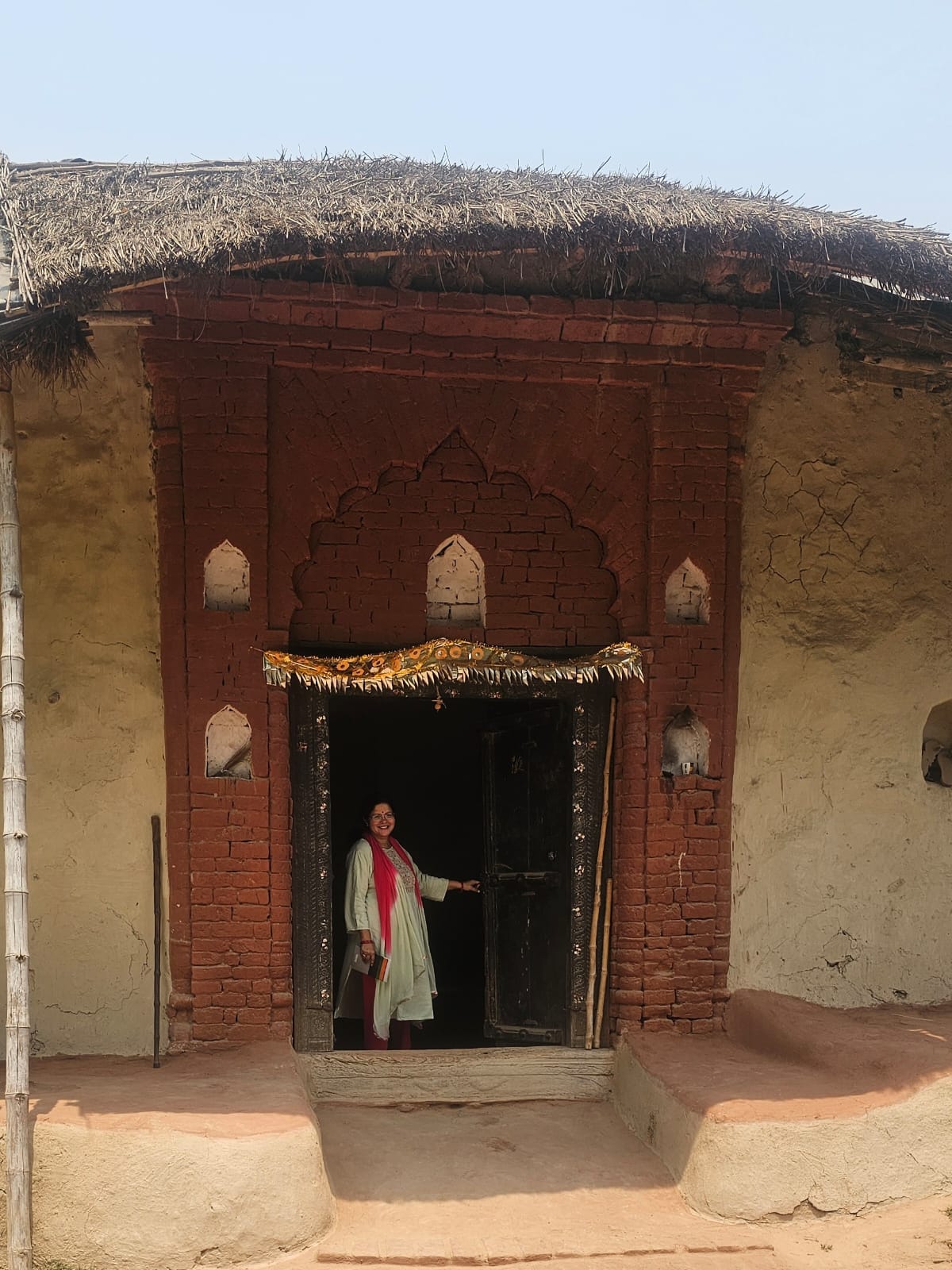
During a recent visit to a village near Bhaunkapur in Sarojini Nagar, Lucknow, one such home stood as a living relic of this legacy. The house, with its wooden doors, iron latches, and decorated threshold of clay and cow dung, offered a nostalgic glimpse into a bygone era. A 95-year-old elder of the household welcomed guests with buttermilk, jaggery, and salt — a symbol of their unwavering hospitality. The joint family, with its indigenous cows and traditional ways, stood as a testament to the enduring value of cultural roots.
This village, impeccably clean and rooted in tradition, presented a harmonious blend of discipline and devotion. Residents take personal responsibility for cleanliness, and women continue the practice of decorating the front of their homes with cow dung, even when the structures are built with cement and concrete. A nearly 200-year-old Ram-Janaki Temple also stands tall in the village, a spiritual anchor to the community.
The wooden dehleej of that home — polished with care, honored with rituals, and guarded with values — is more than just a structural element. It is a memory keeper, a silent witness to generations of joy and sorrow, and a marker of an ancient civilization’s way of life.
As we stand at the threshold of a fast-changing world, perhaps it is time to pause and bow our heads to the sacred doorsteps of our heritage.