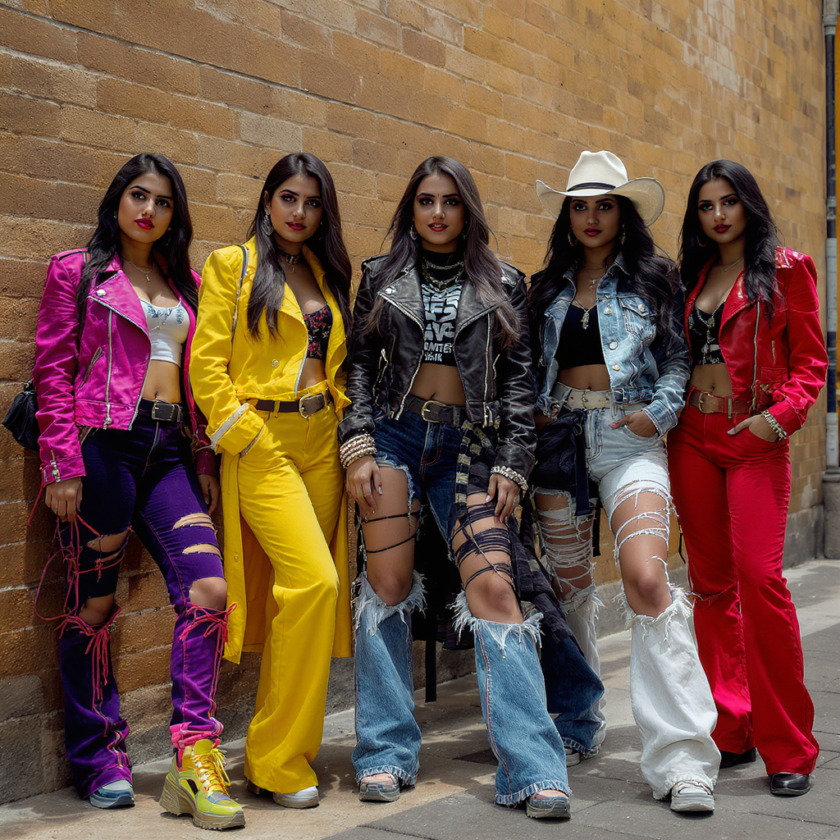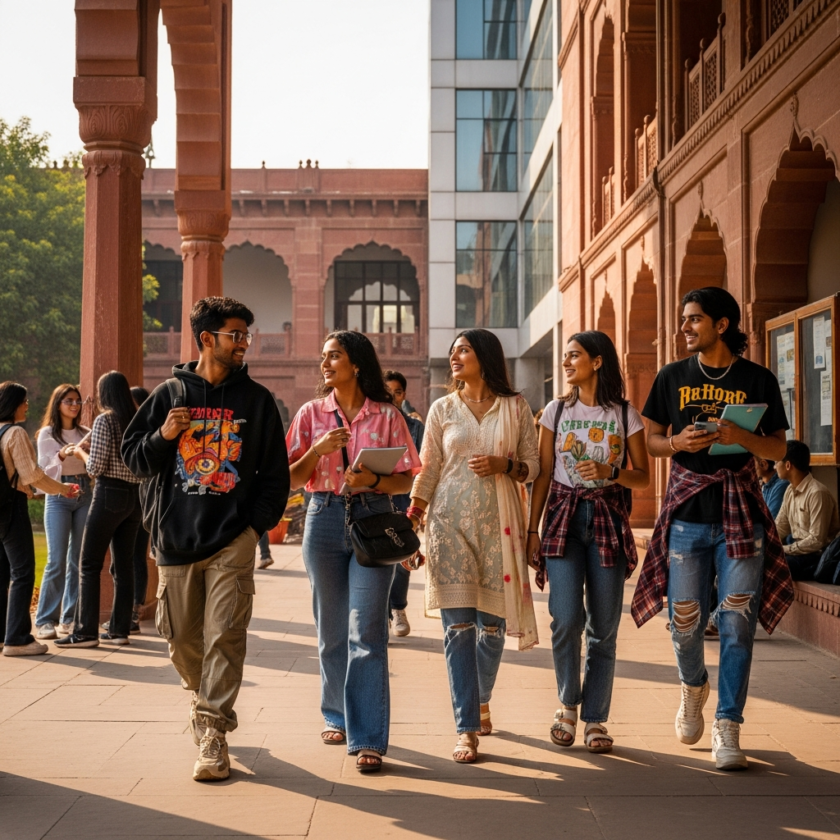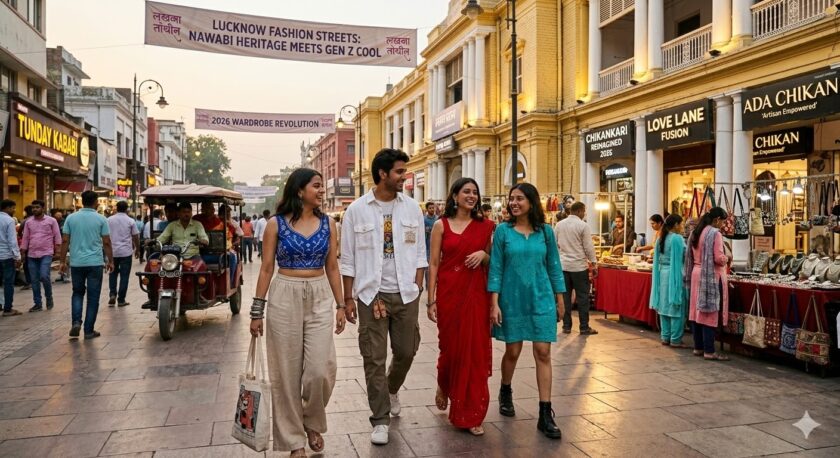
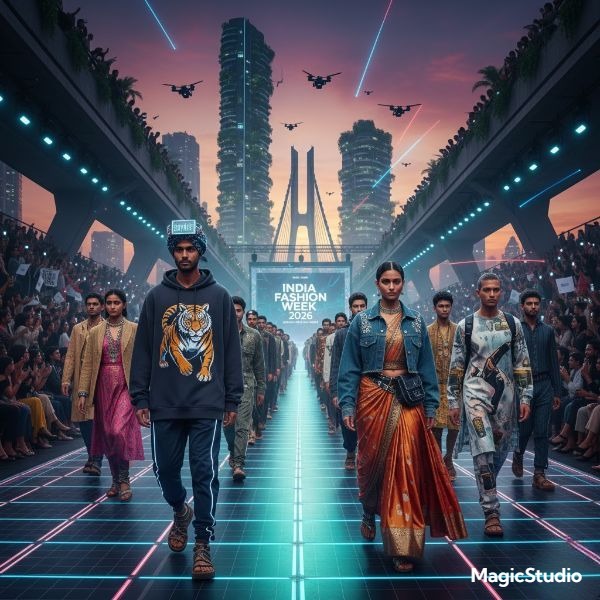
Mumbai/ New Delhi: The streets of Mumbai, Delhi, and Bengaluru look vastly different than they did even five years ago. A walk through Bharat Mandapam or the high-street districts of Indiranagar reveals a visual language that is neither purely Eastern nor entirely Western. It is a “Confident Hybrid”—a sophisticated blending of centuries-old craftsmanship with the fast-paced, digital-first pulse of global trends.
India’s fashion industry is no longer a silent partner in the global supply chain; it is a loud, vibrant protagonist. Valued at over $222 billion in 2024 and hurtling toward a staggering $647 billion by 2033, the Indian apparel market is currently one of the most explosive economic engines on the planet. This transformation isn’t just about rising disposable income or the burgeoning middle class—though those are the fuel—it is about a profound cultural exchange. Globalization has moved past simple imitation; we have entered the era of co-creation.
1. The Rise of the “Indo-Western” Aesthetic
The most immediate impact of global fashion on India is the death of the “wardrobe binary.” For decades, Indians chose between “formal Western” for work and “traditional ethnic” for festivals. Today, those lines have blurred into a singular, fluid style.
Driven by the minimalist aesthetics of Scandinavian design and the bold silhouettes of New York streetwear, traditional Indian garments have undergone a structural revolution.
- The Pre-Draped Revolution: The saree, once a complex six-yard undertaking, has been “globalized” into pre-stitched, jersey-fabric gowns that can be put on in thirty seconds.
- Athleisure-Ethnic Fusion: We now see “Jogger-Sarees” and oversized hoodies paired with intricate hand-blocked ajrakh prints.
- The Gen Z Influence: Digital platforms like TikTok and Instagram have collapsed the distance between a runway in Milan and a college student in Jaipur. Brands like Zudio and Reliance Trends have mastered the art of “trendifying” budget fashion, taking “quiet luxury” or “balletcore” motifs and injecting them into affordable kurtas and tunics.
This democratization of style means that fashion is no longer the province of the elite. High-street fashion has effectively “imported” the fast-fashion cycles of Europe, making high-end aesthetics accessible to Tier-2 and Tier-3 cities across the subcontinent.
2. Sustainability: Ancient Wisdom Meets Global Mandates
Global fashion discourse in 2026 is dominated by one word: Circularity. As the world grapples with the environmental cost of the “take-make-waste” model, India has found itself in a unique position. Our heritage is inherently sustainable—from the use of natural dyes like indigo and madder to the longevity of hand-spun Khadi.
The global Fashion Revolution movement has resonated deeply with Indian consumers. The sustainable fashion market in India, valued at roughly $273 million in 2024, is projected to grow at a 21% CAGR, reaching $1.6 billion by 2033.
The Policy Shift: PM MITRA and Beyond
The Indian government has recognized that sustainability is a competitive advantage. The PM MITRA textile parks are designed to triple the sector’s value to $350 billion by 2030 while aggressively cutting carbon emissions.
“India is not just weaving fabric; we are weaving a greener future. By aligning our artisanal heritage with global ESG (Environmental, Social, and Governance) standards, we are moving from being the world’s back-office to its green conscience.”
Young urbanites are now prioritizing transparency. They want to know the “who, where, and how” behind their clothes. This has pushed mainstream brands to move away from polyester-heavy mixes toward organic cotton and upcycled fabrics, proving that global pressure can lead to a domestic renaissance of craft.
3. The Celebrity Conduit: From Red Carpets to Retail
The influence of global fashion is often filtered through the lens of celebrity. In 2026, the “Global Indian Ambassador” is a powerful force. When Alia Bhatt represents Gucci, or Janhvi Kapoor fronts a New Balance campaign, they aren’t just selling products; they are normalizing a specific lifestyle.
These stars act as a bridge. Seeing an Indian actress wear a structured Chanel blazer over a traditional lehenga at the Met Gala gives domestic consumers the “permission” to experiment.

- Gender-Fluidity: Global trends toward gender-neutral clothing have taken root in India, with male celebrities embracing sheer fabrics, floral embroidery, and jewelry—elements historically present in Indian royalty but suppressed during the colonial era.
- Tech-Infused Fashion: The influx of “Smart Wear” and 3D-printed accessories from global tech hubs is finding a home in the experimental wardrobes of Bollywood’s elite, eventually trickling down to high-street tech-wear collections.
4. The Luxury Lockdown: International Houses Come to India
Perhaps the most significant shift is how global luxury houses now view India. We have moved from being a source of cheap labor to a source of inspiration and high-value consumption.
- Dior’s Mumbai Gateway: Following the historic 2023 show at the Gateway of India, luxury houses like Prada and Louis Vuitton have continued to collaborate with Indian artisans.
- Cultural Integration: We are seeing “reverse influence.” International collections are now integrating Indian motifs—not as costumes, but as core design elements. The use of Zardosi embroidery on Parisian evening gowns or the influence of Indian board games like Snakes and Ladders in Louis Vuitton’s creative direction signals a deep respect for Indian intellectual property.
This presence has forced domestic luxury designers to innovate. They are no longer competing only with each other but with the global giants. The result? Better quality, more innovative silhouettes, and a focus on “Omnichannel Retail”—ensuring the shopping experience in a Delhi mall is identical to one on the Champs-Élysées.
5. Streetwear: The New Cultural Currency
Streetwear and athleisure represent the “Great Equalizer.” The global hype around oversized hoodies and “sneakerhead” culture has birthed a massive homegrown movement.
Interestingly, Indian streetwear is seeing a reverse influence phenomenon. Nearly 40% of buyers for some Indian streetwear labels are located outside of India—primarily in the UK, USA, and Canada. These labels use “Indian-ness” as a cool factor, incorporating Hindi typography or South Asian graphics into designs that appeal to a global Gen Z audience. This bidirectional flow ensures that while India adopts the form of global streetwear, it retains the substance of its own narrative.
6. Navigating the Challenges
Despite the optimism, the interplay between global and local fashion faces hurdles:
- The Fast Fashion Paradox: While global trends democratize style, the rapid turnover of “ultra-fast fashion” threatens India’s sustainability goals. Balancing the demand for $10 trendy tops with ethical production remains a tightrope walk.
- Trade Volatility: Fluctuating tariffs and shifting trade dynamics (particularly with the US and EU) can impact the export of Indian textiles, making the market sensitive to geopolitical tremors.
- The Digital Divide: While urban India is “globalized,” the transition is slower in rural areas, leading to a fragmented market where different “Indias” exist simultaneously.
7. 2026: The “Modern Indian with a Global Heart”
Today, the Indian fashion scene reflects a confident, hybrid identity. It is an era where:
- Traditional opulence is tempered with minimalist touches.
- Bold, festive colors are executed in sustainable, recycled fabrics.
- Ethnic wear is designed for everyday utility.
Events like India Fashion Week now mirror the prestige of New York or Paris, but with a distinct flavor. Designers like Rahul Mishra and Gaurav Gupta are no longer “Indian designers on the world stage”—they are simply world-class designers whose work happens to be rooted in Indian craft. Mishra’s intricate nature-inspired embroidery and Gupta’s “shrouding” silhouettes have redefined global luxury.
A Future Woven Together
Global fashion has not overshadowed India’s heritage; it has provided a megaphone for it. By embracing international trends, India hasn’t lost its soul—it has found a new way to express it.
The exchange is no longer a one-way street of Western influence flowing East. Instead, it is a vibrant, inclusive ecosystem where a chai scent might inspire a London perfumer, and a Brooklyn-born streetwear trend might redefine a Mumbai tailor’s cut. As we move further into 2026, the Indian fashion scene stands as a testament to the power of globalization when paired with cultural pride.
India is no longer just “following” the trend; it is setting the pace. The future of fashion is agentic, it is sustainable, and it is unapologetically Indian.