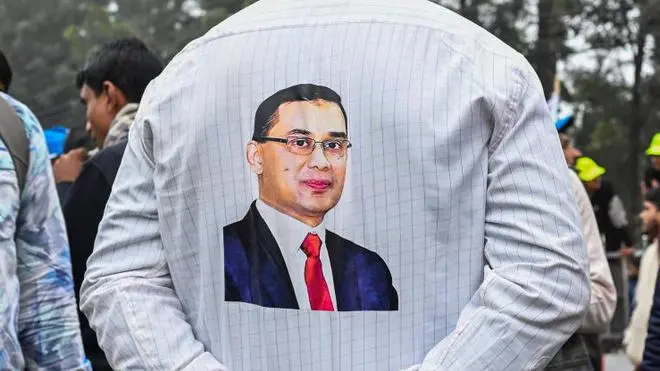
Dhaka: A major political transition is underway in Bangladesh as Tarique Rahman and his party, the Bangladesh Nationalist Party (BNP), secured a sweeping mandate in the February 12 parliamentary elections. Winning more than 200 of the 299 seats in the Jatiya Sangsad, the BNP is set to form the next government, positioning Rahman—son of former Prime Minister Khaleda Zia—as the country’s new Prime Minister.
Rahman’s victory over the alliance that included Jamaat-e-Islami and the National Citizen Party marks a decisive political shift. Analysts believe the change in leadership could significantly impact not only domestic politics but also regional geopolitics, especially ties with India.
India–Bangladesh Relations: A Reset in the Making?
Even before the official announcement of results, India extended congratulations to the incoming leadership, signaling its intent to rebuild and strengthen bilateral ties. Relations had experienced visible strain after former Prime Minister Sheikh Hasina stepped down and reportedly took refuge in India.
New Delhi has traditionally viewed the BNP as a comparatively democratic force vis-à-vis hardline Islamist elements. With nearly 4,000 kilometers of shared border, deep trade linkages, power supply cooperation, and connectivity projects, both nations remain strategically interdependent.
Prime Minister Narendra Modi was among the first global leaders to congratulate Rahman, expressing hope for enhanced cooperation. In recent years, India also reached out diplomatically during Khaleda Zia’s illness, with External Affairs Minister S. Jaishankar visiting Dhaka amid political turbulence and delivering a personal message from Modi to Rahman.
‘Bangladesh First’ Policy and Strategic Balancing
Rahman has emphasized a “Bangladesh First” doctrine, seen as echoing former U.S. President Donald Trump’s “America First” policy. The approach suggests Dhaka may pursue balanced relations with India, China, and Pakistan, prioritizing national interests above alignment with any single power.

Observers note that during the interim administration led by Muhammad Yunus, Bangladesh appeared to deepen engagement with China and Pakistan. Rahman’s balancing strategy could offer India cautious optimism, provided mutual trust is restored.
Implications for Bangladesh’s Hindu Community
The political transition also raises questions about the safety and status of Bangladesh’s Hindu minority, which constitutes roughly 8% of the population. In recent years, sporadic incidents of violence and intimidation have triggered concerns domestically and internationally.
Rahman has publicly stated that religion is a personal matter and that the state belongs equally to all citizens. If implemented effectively, this commitment could strengthen security and confidence among minority communities, including Hindus. However, much will depend on governance, law enforcement, and the administration’s willingness to curb extremist elements.
As Bangladesh enters a new political chapter, regional stakeholders will closely watch how Rahman translates electoral promises into policy—balancing nationalism with inclusivity, and diplomacy with domestic stability.