Washington: In one of history’s enduring ironies, the loudest drums of propaganda often begin to beat just as the guns on the battlefield fall silent. The unfolding situation in the Persian Gulf today carries all the intensity of a geopolitical thriller—but its ending appears far removed from the script once envisioned in Washington.
At the center of the storm lies the strategic Strait of Hormuz, where tensions have escalated dramatically. While military might is often measured in missiles and firepower, seasoned observers argue that the true indicator of victory is far simpler: who seeks peace first. As April 2026 begins, global attention is fixed on a striking reversal—an Iran long subjected to sanctions stands firm, while the United States appears to be searching for an exit strategy.
To understand this evolving dynamic, analysts are drawing parallels with earlier conflicts, including India’s decisive 2025 cross-border military operation, often referred to as “Operation Sindoor.” That episode underscored a key lesson in modern warfare: precision and strategy outweigh rhetoric. Pakistan’s defensive vulnerabilities, exposed during that period, eventually forced calls for de-escalation despite official claims of strength.
A similar pattern, critics argue, is now visible in the Middle East. Following a reported strike on Iran’s top leadership on February 28, expectations in Washington were of swift destabilization in Tehran. Instead, Iran responded with calculated force, exposing weaknesses in American regional defenses and raising concerns among its allies.
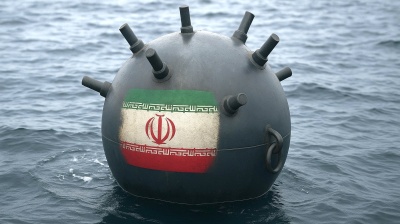
The closure of the Strait of Hormuz has further intensified the crisis, disrupting global oil supply routes and amplifying economic uncertainty. Energy markets, heavily dependent on this narrow passage, now face significant volatility as geopolitical tensions dictate the flow of resources.
Meanwhile, U.S. President Donald Trump has adopted a defiant public stance, projecting confidence and framing developments as strategic success. However, critics suggest a disconnect between rhetoric and ground realities, pointing to increasing diplomatic outreach efforts and backchannel communications aimed at de-escalation.
Iran, on the other hand, appears to be negotiating from a position of strength. Its reported conditions—including control over Hormuz, withdrawal of U.S. forces, and compensation for damages—signal confidence rather than concession. These are not typically the demands of a weakened state, analysts note, but of one that believes it holds the upper hand.

Beyond the battlefield, the implications are broader. The crisis has exposed not just military vulnerabilities but also shifting geopolitical alignments. Traditional U.S. allies in the Middle East are reassessing their strategic dependencies, with some exploring new defense partnerships and regional equations.
Pakistan, meanwhile, has attempted to position itself as a mediator, seeking diplomatic relevance amid the crisis. However, Tehran has shown little interest in third-party involvement, preferring direct engagement on its own terms.
The situation echoes a famous observation by Karl Marx—that history repeats itself, first as tragedy, then as farce. For some observers, earlier conflicts represented the tragedy; today’s developments risk becoming the farce on a global stage.
As tensions persist, one conclusion is becoming increasingly difficult to ignore: in this high-stakes contest, endurance and strategic patience may prove more decisive than sheer military power. For now, the balance appears to tilt toward Tehran, while Washington grapples with the challenge of preserving credibility in an increasingly multipolar world.
Whether this marks a temporary setback or a deeper shift in global power dynamics remains to be seen—but the waves of Hormuz are already reshaping the narrative of modern geopolitics.