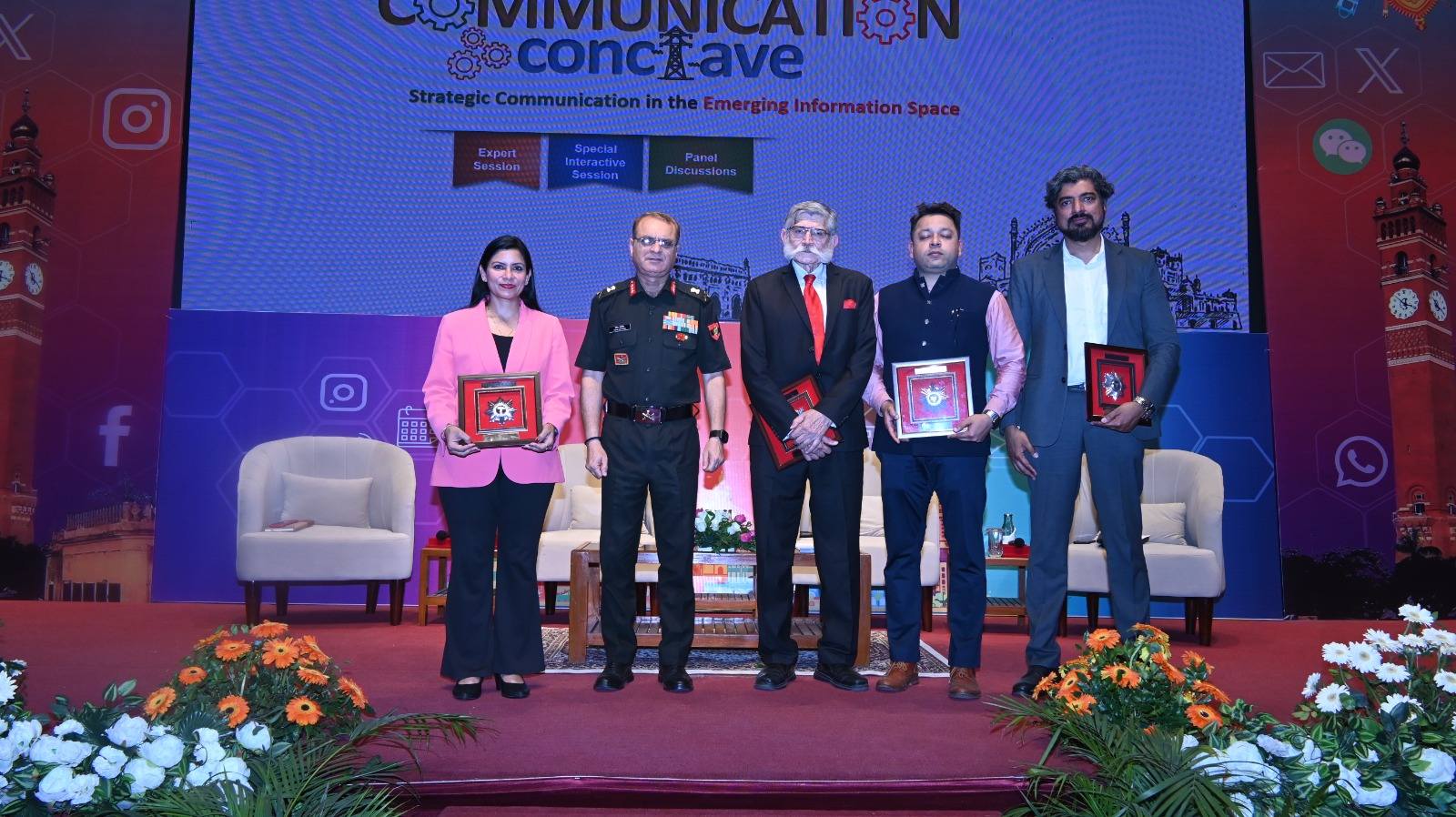
Lucknow: The Indian Army’s Central Command hosted its first Strategic Communication Conclave in Lucknow on March 7, 2026, bringing together nearly 500 participants to deliberate on the evolving role of strategic communication in national security.
The conclave was held at the Surya Auditorium in the Lucknow Cantonment and featured a series of expert sessions and panel discussions focusing on the challenges and opportunities in the emerging information domain.
Participants included senior military officers from the Central Command, communication professionals from government and private sectors, senior diplomats, strategic affairs experts, and members of the media specializing in defence and foreign policy.
Information Domain Now Part of Modern Warfare
In his inaugural address, Lieutenant General Anindya Sengupta, General Officer Commanding-in-Chief of Central Command, highlighted the fundamental transformation in the nature of conflicts. He said that modern warfare now extends beyond traditional battlefields to include the information and cognitive domains.
Emphasising the growing importance of perception management, he remarked that “perception shapes legitimacy, legitimacy shapes influence, and influence shapes outcomes.” The Army Commander also pointed to the increasing use of narratives as strategic tools and warned about threats emerging from conflicts below the threshold of conventional warfare.
He stressed that strategic communication must move beyond being reactive or personality-driven and should instead be institutionalised, doctrine-backed, and capability-driven.
Keynote Address
Renowned defence and strategic affairs expert Nitin Gokhale delivered the keynote address, setting the tone for discussions around the conclave’s central theme: “Strategic Communication in the Emerging Information Domain.”
Expert Policy Session
The first expert session focused on “Institutionalising Strategic Communication as a Capability to Prepare for the Future in the Emerging Information Domain.”
The session was moderated by Nitin Gokhale and featured distinguished speakers including Ruchira Kamboj, former Indian Foreign Service officer and India’s first woman Permanent Representative to the United Nations; Yashvardhan Sinha, former IFS officer; and Raj Shukla, retired Lieutenant General.
Special Dialogue on Multi-Domain Operations
A special dialogue session on “Strategic Communication in Emerging Multi-Domain Operations: Strategies, Structures, Processes and Preparedness” was moderated by Lt Gen (Retd) Raj Shukla.

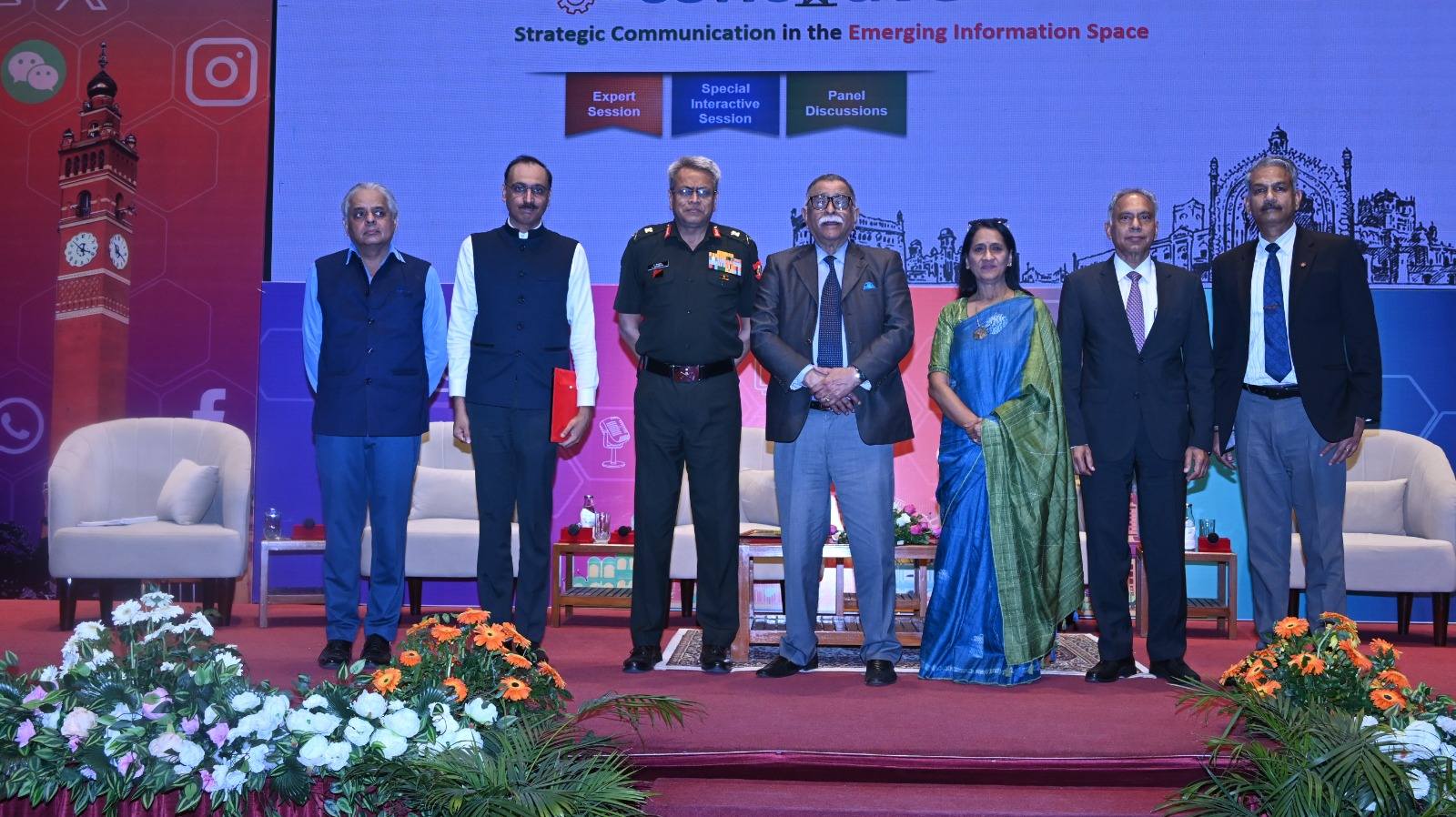
The discussion featured insights from Dilip Sinha, former IFS officer; Shantanu Mukherjee, retired IPS officer; Veena Jain, former Indian Information Service officer; Sharat Chander, retired IIS officer; and D. P. Pandey, retired Lieutenant General.
Media Panel Discussions
Two thematic panel discussions with media professionals were also organised during the conclave.
The first discussion, titled “Shaping the Mind Space,” featured defence and security journalists Sandeep Unnithan, Shivani Sharma, and Snehesh Alex Philip, who discussed the role of media narratives and perception management in modern conflicts.
The second panel discussion on “Information Power and Strategic Communication” was moderated by Pankaj Jaiswal, Bureau Chief of Hindustan Times. The session featured speakers Manish Prasad and Ashok Srivastava, who examined the growing influence of information power in shaping strategic outcomes.
Concluding Session
The day-long conclave concluded with Lieutenant General Naveen Sachdeva, Chief of Staff at Central Command Headquarters, presenting a summary of the deliberations and delivering the vote of thanks.
The conclave aimed to review strategic communication as an institutional capability within India’s national security framework and generate actionable insights on doctrine, structures, processes, and preparedness in the rapidly evolving information environment.