Srinagar: Srinagar, the Summer Capital of Jammu & Kashmir, has long been described as paradise on earth—a phrase that feels almost inadequate once you arrive. Cradled by the snow-kissed Himalayas, threaded by rivers and lakes, and adorned with Mughal gardens and centuries-old wooden architecture, Srinagar is a place where nature and culture exist in rare harmony.
Travellers love to venture to this serene land when winter’s chill softens and the valley wakes up in color. Almond blossoms are in bloom, saffron scent fills the air, and the city carries a quiet optimism that feels deeply reassuring. From the first glide across Dal Lake to unhurried walks through historic gardens, every moment in Srinagar feels like stepping into a living, breathing painting—one that soothes, inspires, and stays with you long after you leave.
Dal Lake: The Soul of Srinagar
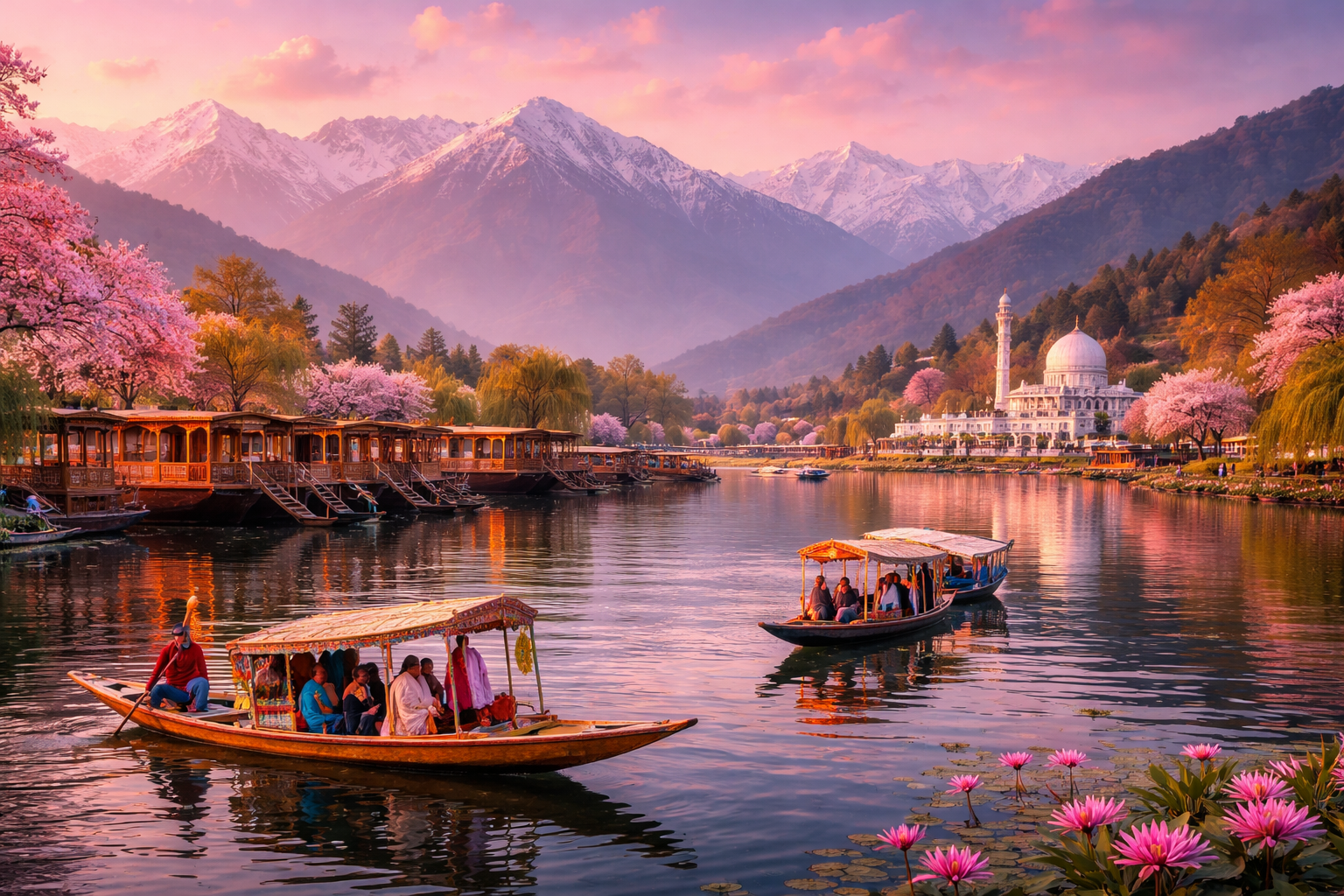
Everything in Srinagar begins and ends with Dal Lake. More than just a waterbody, it is the city’s heartbeat. Spread across shimmering expanses, the lake is alive with movement—shikaras gliding gracefully, houseboats gently rocking, lotus gardens blooming, and floating markets humming softly at dawn.
A shikara ride during early morning is an experience unlike any other. As the paddle slices through mirror-like water, the surrounding mountains glow faintly pink, reflected perfectly on the lake’s surface. Vegetable sellers drift past with boats piled high with tomatoes, spinach, and flowers, conducting business quietly over the water as they have for generations.
As the day fades, Dal Lake transforms again. Sunset paints the sky in fiery oranges and purples, with silhouetted houseboats creating a dreamlike scene. The air grows still, the water turns molten gold, and an almost meditative calm settles in. It is in these moments that Srinagar reveals its deepest magic—gentle, unforced, unforgettable.
Houseboats: Floating Heritage
Staying on a traditional Kashmiri houseboat is an essential part of the Srinagar experience. Crafted from intricately carved walnut wood, these floating homes are a testament to local craftsmanship and colonial-era history. Each room is adorned with handwoven carpets, embroidered curtains, and vintage furniture that whispers stories of a bygone era.
Evenings on a houseboat are especially enchanting. Lamps glow softly, reflections shimmer on the water, and the silence is broken only by distant calls and the occasional splash of an oar. Breakfasts often arrive on small boats—fresh bread, kahwa tea, and local delicacies—served with smiles that reflect the warmth of Kashmiri hospitality.
Mughal Gardens: Terraces of Timeless Beauty
The Mughal emperors, enamored by Kashmir’s beauty, left behind some of the finest examples of Persian-inspired garden design. Srinagar’s Mughal gardens are not merely landscaped spaces; they are poetic expressions of paradise.
Nishat Bagh, the Garden of Pleasure, rises in twelve terraced levels overlooking Dal Lake. Water channels flow symmetrically through manicured lawns, framed by towering chinar trees and beds of seasonal flowers. Shalimar Bagh, the Abode of Love, once a royal retreat, exudes a sense of regal intimacy, with pavilions, fountains, and shaded walkways designed for reflection and romance.
Walking through these gardens, listening to water murmur gently over stone channels, feels like stepping into history. The gardens invite unhurried strolls, quiet conversations, and moments of pause—exactly as they were intended centuries ago.
Hazratbal Shrine: Faith by the Water
On the western shore of Dal Lake stands the serene Hazratbal Shrine, one of Srinagar’s most sacred sites. Built of pristine white marble, the mosque houses a revered relic believed to be a hair of Prophet Muhammad. Its elegant dome and minarets reflect beautifully in the lake, creating one of the city’s most iconic vistas.
The atmosphere here is profoundly peaceful. Visitors move quietly, shoes left behind, voices softened by reverence. Regardless of faith, the sense of devotion and calm is deeply moving. The shrine is not just a place of worship—it is a reminder of the spiritual depth that runs through Kashmir’s cultural fabric.
Day Trips into the Valley: Pahalgam and Gulmarg
Srinagar’s central location makes it an ideal base for exploring the wider Kashmir Valley. A day trip to Pahalgam feels like entering another chapter of the same beautiful story. The drive winds through pine forests and along the Lidder River, its crystal-clear waters rushing over smooth stones. Snow-capped peaks rise dramatically above lush meadows, dotted with grazing horses and shepherds.

Gulmarg, the famed Meadow of Flowers, offers a different kind of wonder. Home to one of the world’s highest gondola rides, Gulmarg lifts you effortlessly above forests and snowy slopes to panoramic viewpoints that stretch across the Himalayas. Even in spring, the upper reaches remain cloaked in snow, creating a striking contrast against blue skies and dark green pines.
Both destinations showcase Kashmir’s diversity—gentle valleys, dramatic heights, and landscapes that shift mood with every turn.
Shankaracharya Temple: A View from Above
Rising above the city on a hilltop is the ancient Shankaracharya Temple, dedicated to Lord Shiva. Reached by climbing a long flight of stone steps, the temple rewards visitors with sweeping views of Srinagar, Dal Lake, and the surrounding mountains.
Sunset from this vantage point is particularly memorable. As the city slowly lights up below and the sky deepens into shades of amber and violet, the panorama feels almost surreal. It is a moment of quiet awe—where faith, nature, and perspective come together.
Old City Charm and the Jhelum’s Glow
Beyond the gardens and lakes lies Srinagar’s old city, where life unfolds at a slower, more traditional pace. Along the banks of the Jhelum River, wooden houses stand on stilts, their intricately carved balconies and lattice windows reflecting centuries-old architectural traditions.
The bazaars here are vibrant and authentic. Shops display pashmina shawls, saffron strands, papier-mâché crafts, and gleaming copperware. The aroma of spices and freshly baked bread fills the air, while shopkeepers greet visitors with warmth and gentle curiosity.
Evenings by the Jhelum are quietly magical. As lights flicker on and reflections dance on the water, the city takes on a soft, golden glow that feels deeply comforting.
Wazwan and Warmth: Evenings in Srinagar
As night falls, Srinagar turns inward, embracing warmth and hospitality. Houseboats and restaurants serve traditional wazwan, the elaborate Kashmiri multi-course feast. Rich dishes like rogan josh, gushtaba, yakhni, and rista are slow-cooked with precision, reflecting the region’s culinary heritage.
Meals often end with steaming cups of kahwa—green tea infused with saffron, almonds, and spices—sipped slowly as conversations linger. Dining in Srinagar is not rushed; it is an extension of the city’s philosophy of mindful living.
More Than a Place, an Emotion
Srinagar is not just a destination—it is an emotion that unfolds gently. It is the stillness of Dal Lake at dawn, the symmetry of Mughal gardens, the devotion at Hazratbal, and the laughter shared over tea in a houseboat living room. It is the majesty of mountains and the softness of human connection.
In a world that often feels hurried and loud, Srinagar offers something rare: space to breathe, to reflect, and to reconnect with beauty in its purest form. Whether you are drifting on a shikara, inhaling the scent of spring blossoms, or gazing at snow-capped peaks under a clear sky, the valley heals and inspires in equal measure.
If your heart longs for peace wrapped in unparalleled beauty, let Srinagar welcome you. Paradise is not a distant dream—it is here, alive, and waiting.