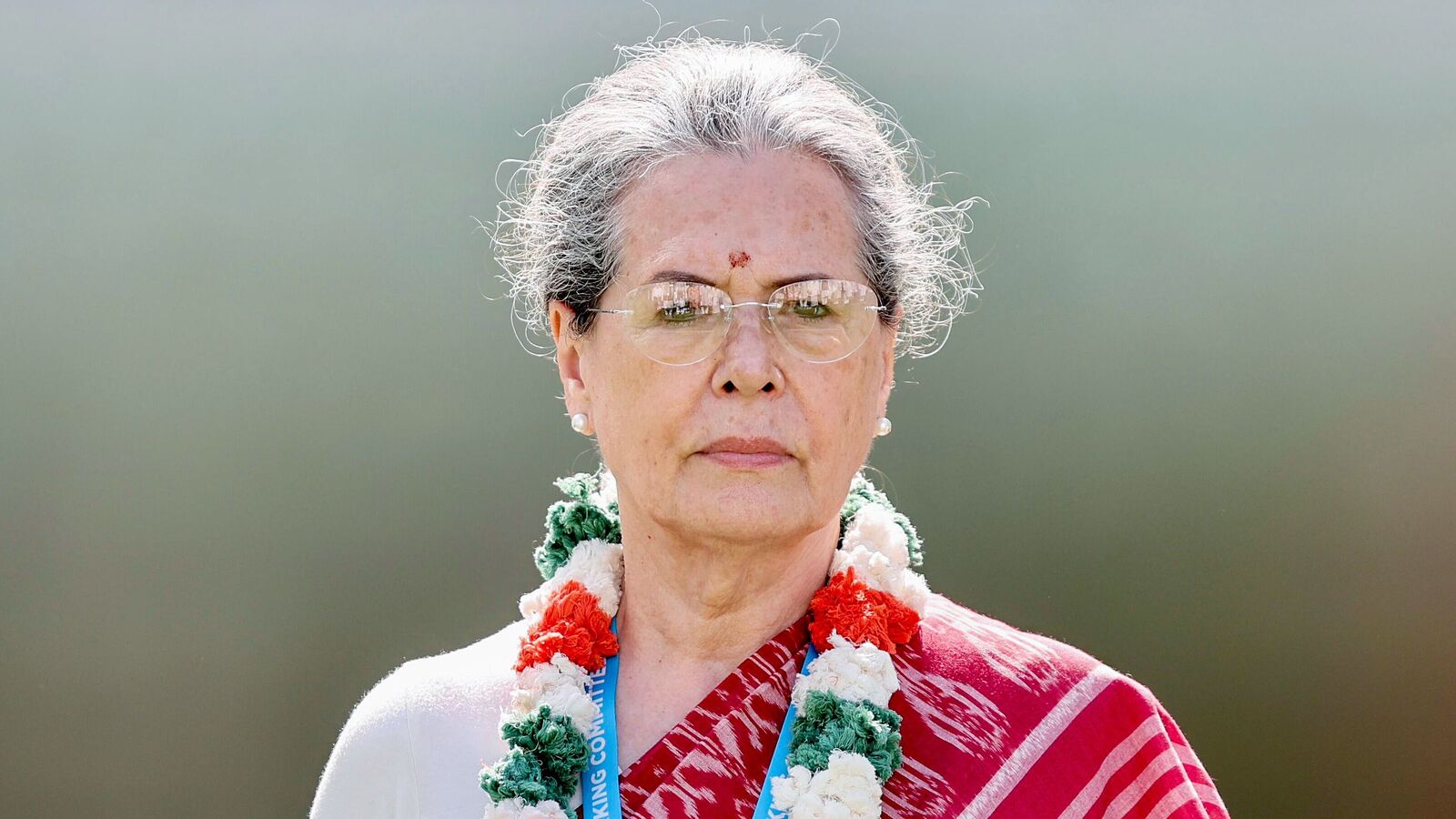
New Delhi: Sonia Gandhi, born Edvige Antonia Albina Maino on December 9, 1946, in the quaint town of Lusiana near Vicenza, Italy, stands as one of contemporary India’s most enigmatic and influential political figures. Her early life in a modest Roman Catholic household amid post-World War II Europe could hardly have presaged her eventual centrality to Indian politics. Yet, her marriage in 1968 to Rajiv Gandhi, the scion of India’s iconic Nehru-Gandhi dynasty, would dramatically alter her trajectory.
After acquiring Indian citizenship in 1983, Sonia remained largely in the private sphere, devoted to her family during periods of extraordinary tragedy—the 1984 assassination of her mother-in-law, Prime Minister Indira Gandhi, and the 1991 assassination of her husband Rajiv Gandhi. These events, rather than pushing her toward the public stage, initially reinforced her cautious stance. It was only in 1997, under intense pressure from senior Congress leaders desperate to rekindle the party’s fortunes, that Sonia finally entered politics.
Today, at 79, Sonia Gandhi remains a defining force in Indian politics. She serves as Chairperson of the Congress Parliamentary Party and is a Rajya Sabha member from Rajasthan. Her tenure as the longest-serving president of the Indian National Congress (INC)—nearly 22 years across two stints (1998–2017 and 2019–2022)—is marked by resilience, strategic acumen, and a careful blend of dynastic legacy with policy innovation.
She revived a flagging Congress in the early 2000s, led it to two consecutive national victories, and championed transformative welfare legislation. Yet, her career has also faced controversies surrounding her foreign origins, alleged corruption, and electoral setbacks. In today’s polarized political landscape under Prime Minister Narendra Modi’s BJP, Sonia Gandhi’s quiet diplomacy continues to bind the fragmented opposition, reflecting both the allure and vulnerabilities of India’s political aristocracy.
Early Political Foray: From Reluctance to Command
Sonia Gandhi’s political baptism was shaped by necessity and tragedy. The 1991 assassination of Rajiv Gandhi, who had briefly served as Prime Minister, left the Congress party fractured and weakened. Senior leaders implored Sonia to assume leadership, believing only the Nehru-Gandhi name could unify the party. For six years, she resisted, regarding politics as a “dirty game” responsible for the deaths of her family members. Yet, by 1997, with the Congress reduced to 140 Lok Sabha seats following electoral defeats in 1996, Sonia relented, joining the party as a primary member.
Her entry was greeted with skepticism. Critics, including the BJP, highlighted her Italian roots and lack of electoral experience, labeling her an “outsider.” Undeterred, Sonia quickly ascended. By 1998, she replaced Sitaram Kesri as Congress president, implementing grassroots reorganization and reaffirming the party’s ideological framework. Her first electoral test came in the 1999 Lok Sabha elections. Contesting from Amethi, Rajiv Gandhi’s former stronghold, she defeated BJP’s Sanjay Singh by over 68,000 votes. She simultaneously won from Bellary, overcoming Sushma Swaraj in a high-profile contest.
Though the Congress secured only 114 seats, Sonia’s leadership stabilized the party and positioned her as Leader of the Opposition in the Lok Sabha. She developed a low-profile yet authoritative style, relying on trusted advisors like Pranab Mukherjee and Ahmed Patel.
She revitalized state units, forged regional alliances, and by 2002, her unopposed re-election as president reflected growing acceptance. Her early years were not without friction; defections by Sharad Pawar and P.A. Sangma citing her foreign birth necessitated a constitutional amendment in 2003 barring non-citizens from the presidency—a challenge Sonia navigated with quiet resilience. These experiences forged her into a unifier, transforming Congress from a fractured party into a cohesive opposition force.
The UPA Era: Power Without Office
Sonia Gandhi’s masterstroke arrived in 2004. Against predictions, the Congress-led United Progressive Alliance (UPA) secured 218 seats, ending the BJP’s Atal Bihari Vajpayee government. Lacking an outright majority, coalition dynamics demanded compromise. In a surprising move, Sonia declined the prime ministership, citing an “inner voice” amid BJP critiques of her foreign origin. Instead, she appointed technocrat Manmohan Singh as Prime Minister, retaining de facto control as UPA chairperson and head of the National Advisory Council (NAC). This “power without office” arrangement allowed her to influence policy while shielding Singh from political confrontations.
UPA-I (2004–2009) became a period of significant policy innovation. Through the NAC, Sonia championed rights-based legislation, including the Mahatma Gandhi National Rural Employment Guarantee Act (MGNREGA, 2005), guaranteeing 100 days of wage employment to rural households, and the Right to Information Act (2005), which empowered citizens against corruption. She also supported the National Food Security Act (2013), aiming to feed over 800 million Indians. Critics accused her of populist vote-bank politics, yet these initiatives reshaped India’s welfare landscape from discretionary aid to legally enforceable rights.
Re-elected in 2009, UPA-II allowed Sonia to consolidate influence. She addressed the UN General Assembly on Gandhi’s birth anniversary, institutionalizing October 2 as the International Day of Non-Violence. She also supported progressive reforms, such as decriminalizing homosexuality after the 2013 Supreme Court verdict on Section 377, and environmental protections via the Forest Rights Act (2006). Yet, the era was marred by corruption scandals, including the 2G spectrum and Commonwealth Games cases, eroding public trust and sparking the 2011 anti-corruption protests led by Anna Hazare. Sonia’s health also suffered; a shoulder surgery in 2011 fueled speculation about serious illness, though she recovered to campaign vigorously.

Her parliamentary presence was selective but symbolic. She won Rae Bareli in 2004 but resigned in 2006 over an “office-of-profit” row related to her NAC role, temporarily stepping back before winning re-election. By 2014, the UPA’s edifice had crumbled. Congress secured only 44 seats amid Narendra Modi’s “achhe din” wave, ending Sonia’s direct governance role but not her influence within the party.
Post-2014: Retreat and Resilience
The 2014 debacle tested Sonia’s leadership. At 68, she faced criticism for dynastic politics as her son Rahul assumed the vice-presidency. She stepped down as president in 2017, citing health reasons, while continuing to mediate internal disputes and support state-level wins, such as the 2018 Karnataka coalition with JD(S). Rahul’s resignation in 2019 after another electoral loss prompted her interim return, stabilizing the party through crises including the COVID-19 pandemic.
Sonia’s advocacy sharpened in opposition. In 2020, she called for Home Minister Amit Shah’s resignation following the Delhi riots, framing it as a case of communal bias. She also opposed the 2021 farm laws, contributing to their eventual repeal, and championed women’s reservation legislation in 2023. While age and health limited her public visibility, her strategic guidance, such as endorsing Mallikarjun Kharge as president in 2022, preserved the family’s influence without overt domination.
2024–2025: Rajya Sabha Pivot and Renewed Scrutiny
In 2024, Sonia, at 77, opted out of Lok Sabha polls from Rae Bareli due to health and age, enabling Rahul and Kishori Lal Sharma to contest. Congress’ 99-seat performance marked a modest rebound, with Sonia orchestrating the INDIA bloc, a 26-party anti-BJP coalition. In February 2025, she secured an unopposed Rajya Sabha seat from Rajasthan, succeeding Manmohan Singh, and assumed office in April, shifting to the upper house for policy oversight.
Her voice regained prominence in 2025. In September, she publicly criticized Prime Minister Modi’s rapport with Israeli Prime Minister Benjamin Netanyahu and India’s Gaza stance, accusing the government of complicity in “genocide.” Domestically, she attended the unveiling of Himachal Pradesh leader Virbhadra Singh’s statue, emphasizing regional connections. Yet, legal challenges persisted. In March, Congress filed a privilege notice against Shah for caste-related remarks, while the National Herald case escalated: the Enforcement Directorate alleged Sonia and Rahul laundered ₹2,000 crore via Young Indian to acquire Associated Journals’ assets. The Delhi Police filed an FIR in November, prompting Congress to decry political vendetta while the BJP dismissed the party’s claims as panic-driven.
Shadows of Controversy
Sonia’s Italian birth fueled persistent “foreigner” narratives. Allegations regarding pre-1983 voting rights were dismissed by courts. The 1980s Bofors scandal indirectly affected her via Rajiv’s associate Ottavio Quattrocchi. The 2006 office-of-profit resignation highlighted ethical scrutiny, and the National Herald case intensified allegations of misusing her INC presidency for personal gain—charges Congress rejects as politically motivated. Critics portray her as a “remote controller,” suggesting dynastic politics undermine democracy, while supporters view her as a bulwark against majoritarianism.
Enduring Legacy
Sonia Gandhi’s imprint on India is profound. She institutionalized rights-based welfare, embedding equity in law, and maintained Congress as the BJP’s principal opposition. Her UPA tenure halved poverty via MGNREGA, while her opposition role fostered alliances such as INDIA. Critics cite elitism and dynastic politics, yet her journey—from grieving widow to strategic power broker—mirrors India’s hybrid democracy, blending legacy with reform. At 79, sidelined in public view but steering from behind the scenes, Sonia embodies resilience amid flux.
In a nation of 1.4 billion, her story serves as a caution against absolutism, demonstrating that true influence often lies in restraint. As legal probes unfold and elections approach, Sonia Gandhi’s next chapters will shape not just the Congress party, but the pluralistic essence of India itself.