New Delhi: In a major boost to India’s defence manufacturing sector, Solar Defence and Aerospace Limited has announced plans to invest nearly $1.36 billion (₹128 billion) in a state-of-the-art facility focused on unmanned aerial vehicles (UAVs) and robotics in Nagpur.
Backed by its parent firm Solar Industries India Limited, the project marks a significant shift toward advanced defence technologies and highlights the growing role of private companies in strengthening India’s indigenous capabilities.
Project Launched in Strategic Industrial Zone
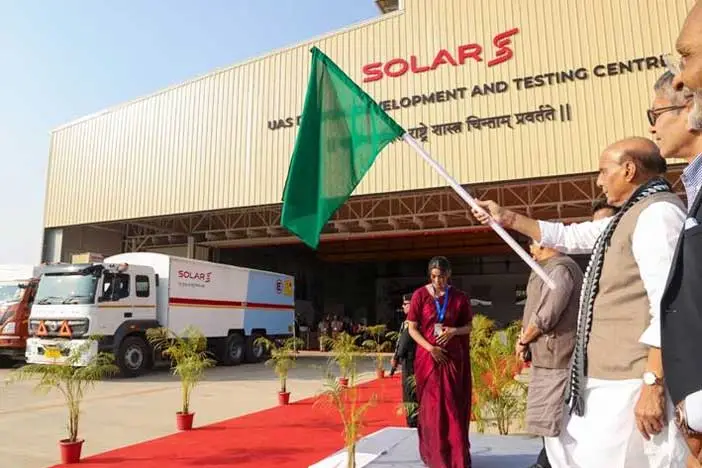
The initiative was formally launched with a groundbreaking ceremony on March 7, 2026, at the MIHAN Special Economic Zone, a rapidly developing logistics and manufacturing hub.
Nagpur’s central location, combined with strong connectivity via road, rail, and air, is expected to position the new facility as a key centre for both domestic production and defence exports.
Focus on Advanced Warfare Technologies
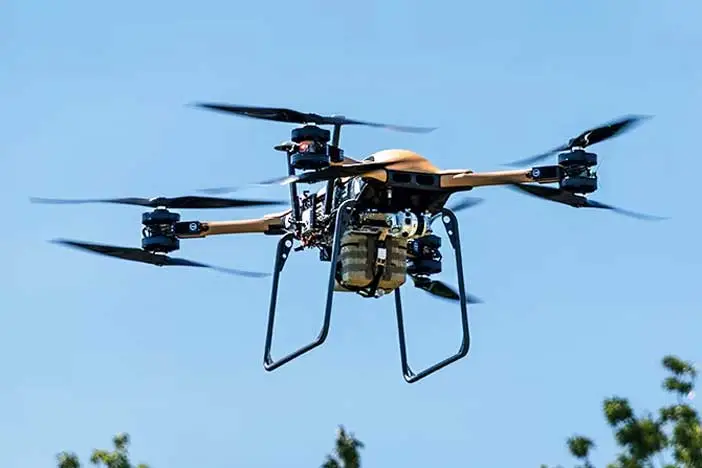
The upcoming plant will manufacture next-generation UAVs for surveillance, strike, and logistics missions, along with robotic systems designed for ground operations. The company is also exploring advancements in long-range missile technologies.
A major focus area will be the integration of artificial intelligence and automation, enabling capabilities such as coordinated drone swarms—an emerging trend in modern warfare that enhances operational efficiency while reducing human risk.
Ambitious Production Plans
Solar Defence has outlined an aggressive timeline, with full-scale operations expected within three to four years. Once operational, the facility aims to produce:
- Up to 10,000 drones annually
- Around 1,000 robotic systems annually
The company is also targeting the rollout of its first robotic prototype within the next year, signaling a rapid innovation cycle.
Economic Boost and Job Creation
The large-scale investment is expected to generate significant employment opportunities, particularly in high-skill sectors such as aerospace engineering, robotics, and AI development. It is also likely to support local supply chains, benefiting small and medium enterprises involved in components and software systems.

The project aligns with national initiatives like Make in India and Aatmanirbhar Bharat, which aim to strengthen domestic manufacturing and reduce reliance on imports.
Expanding Beyond Traditional Capabilities
Traditionally known for its expertise in explosives and ammunition, Solar Industries is now expanding into high-tech defence domains such as autonomous systems. This shift reflects broader global trends, where UAVs and robotics are becoming central to modern military strategies.
The move complements India’s growing defence ecosystem, alongside established players like Hindustan Aeronautics Limited and Bharat Electronics Limited.
Export Potential and Strategic Impact
With global demand for cost-effective drones on the rise, the Nagpur facility is expected to target export markets across Asia, Africa, and the Middle East. India’s competitive manufacturing costs and expanding technological base could give it an edge in the international market.
Strategically, the project is expected to enhance India’s capabilities in surveillance, reconnaissance, and border security, where UAVs and robotic systems are playing an increasingly critical role.
Challenges Ahead
Despite its potential, the project will need to address challenges such as workforce development, supply chain resilience, and cybersecurity risks associated with AI-driven systems. Regulatory frameworks, especially for exports and technology transfer, will also be crucial for long-term success.
A Transformational Step
Industry observers view this investment as a landmark moment for India’s defence sector. If successfully implemented, the Nagpur facility could emerge as a major defence manufacturing hub, accelerate innovation, and strengthen India’s position in the global defence technology landscape.