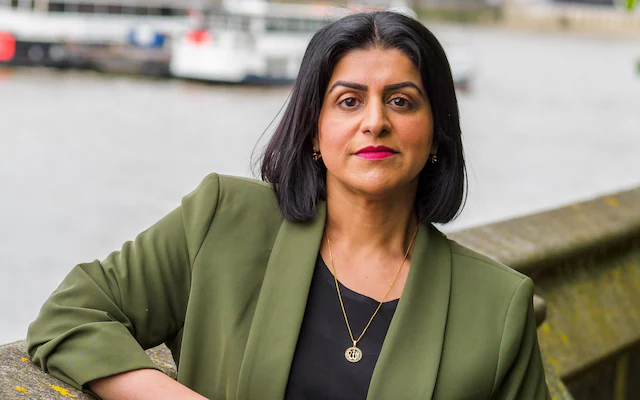
London | Political uncertainty is mounting in the United Kingdom amid speculation that Prime Minister Keir Starmer’s government could face collapse. Against this backdrop, discussions have intensified over the possibility of the UK getting its first Muslim woman prime minister, with Shabana Mahmood emerging as a leading contender.
Currently serving as the UK Home Secretary, Mahmood is regarded as one of the most influential leaders within the Labour Party and a potential successor to Starmer should a leadership transition take place. The speculation has gained momentum as governments across the world grapple with political fallout linked to the renewed controversy surrounding the so-called Epstein files.
A Rising Leader in Labour
At 45, Shabana Mahmood is a trained lawyer and is considered part of a younger generation of British political leadership. She is known to be close to Keir Starmer and has built a reputation within Labour as a sharp orator and effective organiser.
Mahmood was born in Birmingham, England, to parents originally from Mirpur in Pakistan-administered Kashmir (PoK). Her mother, Zubaida, and father, Mahmood Ahmed, migrated to the UK before her birth. She studied law at Lincoln College, Oxford, and entered Parliament for the first time in 2010.
She is among a small group of Muslim women to have served as Members of Parliament in the UK, alongside figures such as Rushanara Ali and Yasmin Qureshi.
Role as Home Secretary
Since taking charge as Home Secretary in 2025, Mahmood’s most significant responsibility has been strengthening the UK’s border security framework. Her tenure has been closely watched, particularly as immigration and citizenship remain central political issues in Britain.
Despite her advocacy for humanitarian causes abroad, Mahmood has consistently argued for stricter British citizenship and border rules, a position that has won her support among voters concerned about national security.

Stance on Gaza and Party Dynamics
Mahmood has also played a key role in reconnecting segments of the electorate that had distanced themselves from the Labour Party in recent years. This shift is largely attributed to her open criticism of Israel’s military actions in Gaza, at a time when Labour leadership faced backlash for its perceived support of Israel.
Her stance has resonated with pro-Palestinian voters and activists, many of whom have since re-engaged with Labour under her influence.
Leadership Speculation Grows
Speculation about Mahmood’s rise has intensified amid rumors that Prime Minister Starmer’s position could be weakened by ongoing controversies linked to the Epstein case. Further complicating matters is the recent appointment of Peter Mandelson as the UK’s ambassador to Washington, a move that has sparked criticism due to allegations linking Mandelson to Epstein-related networks.
As political pressure builds, Shabana Mahmood is increasingly being viewed as a credible successor within Labour—one whose ascent could mark a historic moment in British politics.
Whether she ultimately reaches Downing Street remains uncertain, but her growing prominence suggests she is now firmly at the center of the UK’s evolving political landscape.