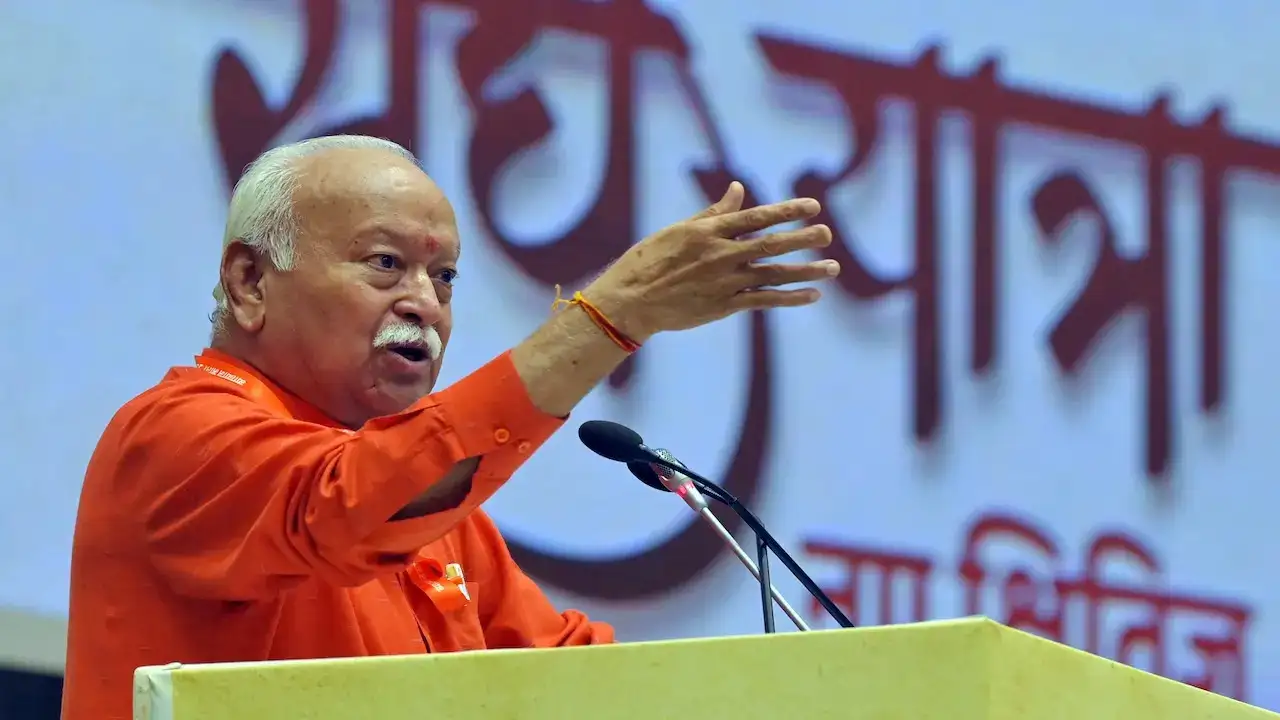
New Delhi – Rashtriya Swayamsevak Sangh (RSS) Sarsanghchalak Dr. Mohan Bhagwat has set forth the organization’s vision for the next century while dispelling long-standing misconceptions about the Sangh. Speaking at a three-day lecture series titled “100 Years of Sangh’s Journey – New Horizons” at Vigyan Bhawan, New Delhi, on August 26–28, Bhagwat reflected on the Sangh’s century-long journey and presented goals for the next hundred years.
The RSS chief addressed wide-ranging themes including Hindutva, nationalism, and Akhand Bharat, while also responding to questions about Islam, Christianity, and religious conversions within the framework of Indian thought. His lectures, observers noted, offered not only historical clarity but also a forward-looking roadmap.

Reaffirming the Core Ideology
Dr. Bhagwat emphasized that the RSS remains firmly rooted in the principles laid down by its founder, Dr. Keshav Baliram Hedgewar. He reiterated three central tenets:
- Character-building of individuals as the foundation for societal transformation.
- Social organization as the key to holistic change.
- India as a Hindu Rashtra, not as a political declaration but as a cultural reality.
“These were the same principles Hedgewar Ji spoke of. The RSS has not deviated from its core ideology,” Bhagwat stated, countering claims that the Sangh has shifted from its original path.
Inclusivity and the Question of Identity
Responding to debates around Muslims in India, Bhagwat remarked: “Islam has been in India since the day it arrived, and it will remain here.” He stressed that adopting a foreign religion does not alter one’s nationality. “Our DNA has been one for 40,000 years. Foreign religions may have been accepted, but national identity remains unchanged.”
On the idea of a Hindu Rashtra, Bhagwat said, “India is already a Hindu nation. There is no need for an official declaration. Shared ancestry, culture, and values bind us together. Our belief is that even if some do not accept this today, they will eventually recognize it.” He underlined that Indian culture is inherently inclusive, rooted in universal brotherhood, environmental stewardship, and global harmony.
The Next Century: Panch Parivartan (Five Transformations)
Looking ahead, Bhagwat identified five focus areas that the Sangh and society at large must prioritize in the coming century:

- Strengthening family values (Kutumb Prabodhan)
- Fostering social harmony to eliminate discrimination and inequality
- Environmental conservation as a survival imperative
- Building the spirit of self-reliance (Swadeshi) in production and national pride
- Cultivating awareness of civic duties among citizens
“These are not just tasks for RSS volunteers but responsibilities for the entire society,” Bhagwat stressed, calling them essential to confront future challenges.
A Century of Struggles and Maturity
Reflecting on the Sangh’s first 100 years, Bhagwat acknowledged the trials of bans, ideological attacks, and unproven allegations. Despite these, he said, the RSS has continued its mission with clarity of purpose, gaining maturity and resilience.
Quoting from RSS leaders and texts, Bhagwat highlighted the Sangh’s unwavering commitment to its ideals of Hindutva, nationalism, and service to Bharat Mata. He reminded the audience of the Sangh’s prayer, ending with “Bharat Mata ki Jai,” which symbolizes its India-centered foundation.
A Vision for Bharat as Vishwa Guru
Concluding his lectures, Bhagwat emphasized India’s role as a Vishwa Guru (world teacher), a nation whose inclusive culture, social cohesion, and moral strength could guide humanity.
With the RSS marking its centenary, the lecture series not only reflected on its past but also set a roadmap for its next hundred years—anchored in tradition, yet responsive to future challenges.