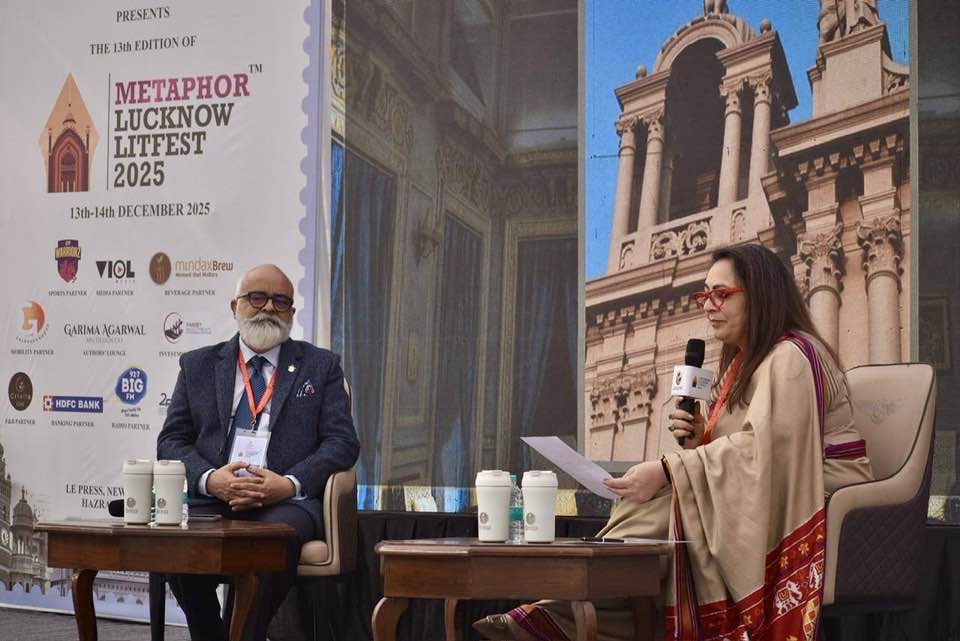
Lucknow: Restoring Constantia offers a remarkable insight into how vision, craftsmanship and respect for history combined to revive one of Constantia’s most distinctive heritage structures. In a recent interaction, Carlyle McFarland shared the philosophy, challenges and revelations that shaped the long restoration journey.
Recalling the condition of the building when restoration began, McFarland was frank about the scale of the task. The structure was in severe disrepair, and neglect had pushed it to the brink of collapse. According to him, preservation demands the right expertise and timely intervention, without which historic buildings simply do not survive.
The structure was originally planned as a crypt or tomb, but over the years it expanded far beyond its initial purpose. In its earliest form, Constantia was simple and functional, reflecting the limited materials and finishes of the time. Interiors featured muted, matte colours without polish or sheen, mirroring the restrained aesthetic of the era.
McFarland was quick to credit the foundational work carried out before his involvement. He acknowledged that much of the essential groundwork — including stabilising the structure and raising funds — had been completed by his predecessor, who retired after laying the base for the restoration.
Heritage conservation, as discussed with Vandana Sehgal, is a layered process that goes well beyond cosmetic repairs. It involves reinforcing foundations, sealing structural damage and understanding how historic buildings were originally designed to function — often very differently from modern constructions.
One of the most striking discoveries during the restoration was the original ventilation system, designed by architect Major General Claude Martin. The building had been ingeniously planned to remain cool through natural airflow, a feature far ahead of its time.
Years of neglect had, however, left the system compromised. Almost every ventilation shaft had been taken over by bats, with one shaft alone holding more than 120 kilograms of bat droppings. Along with this, the team uncovered layers of hidden materials, offering fresh insights into both the building’s past use and the sophistication of its original design.

A key principle guiding the project was respectful reuse — restoring the building while remaining as true as possible to its original intent. Recreating the historic ambience required meticulous attention to detail, from materials to finishes.
The quality of the restoration received international recognition when the French Ambassador personally awarded a silver medal to Ansaruddin, who led and assembled the restoration team. His work stood out not only for craftsmanship but also for achieving excellence within a reasonable budget.
Architect Dr. Nita Das played a crucial role by preparing a phased restoration plan that balanced structural stability with historical authenticity. McFarland also reflected on his own personal connection to the building, while emphasising that the success of the project belonged largely to the skilled team that brought it back to life.
Today, Constantia stands restored not merely as a structure, but as a living narrative of the past.
As McFarland aptly observed, if buildings could speak, Constantia would have extraordinary stories to tell.
The restoration of Constantia demonstrates how thoughtful planning, expert craftsmanship and deep respect for heritage can ensure that history is not only preserved, but allowed to breathe and endure for generations to come.